


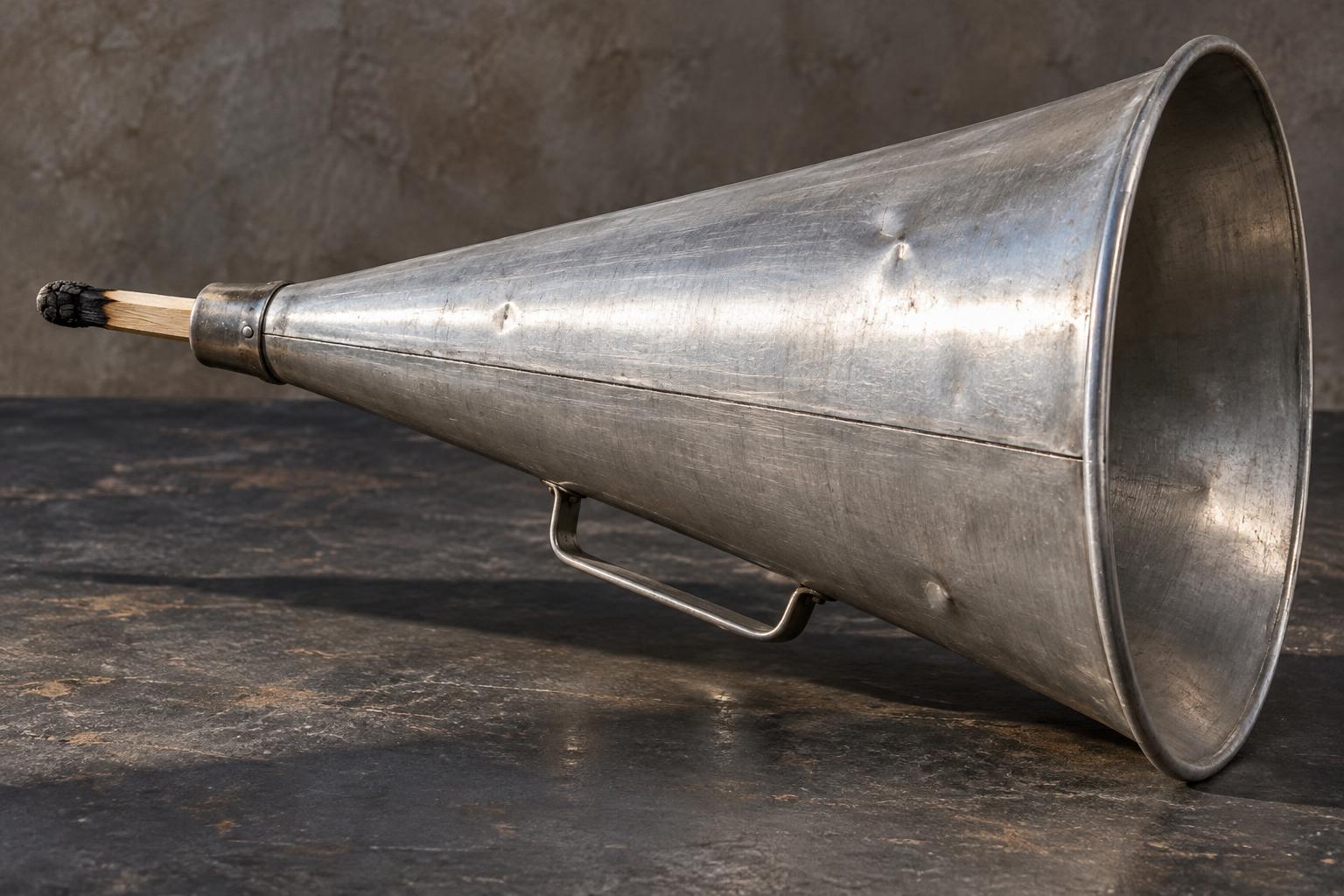
On Monday morning, 12 October, the manager of a supermarket in Étréchy, south of Paris, walked into cold rooms that normally run at minus 30°C. They were overheating, and smoke was starting to come out. Marie estimates that about €60,000 of stock went in the skip. One of her cashiers asked the obvious question: "Quel est l'intérêt ? Il n'y en a aucun." What's the point? There isn't one.
Afterwards Marie unplugged the box that connected her fridges to the internet. I think that was the most useful thing anyone in Europe did about this whole campaign, more useful than anything a minister has said since. The fridges were online so the refrigeration engineer could spot faults remotely. That was handy for him, and the risk was hers. So I want to follow that one box from the wall to the ministers, asking the same question at each step: who's in charge of this freezer?
Why was it online at all? For the contractor. Belgium's cyber agency, in its advisory on these devices, tells shops to "review contractual and insurance requirements" before cutting the data feed to their refrigeration provider. So the contractor uses the connection, the insurer has a say in it, and the shop pays when it goes wrong. Three parties, and none of them fully in charge.
How was it found? It was found, not chosen. France's technical report says the attackers used FOFA, a search engine for internet-connected devices. Danfoss, which made the controllers, said the units hit were end-of-life models, no longer updated and open to the public internet, and that it had long urged customers to move to newer systems. A European intelligence officer told El País that attackers don't even have to make a crack, only exploit the ones already there. Nobody picked Étréchy off a map.
Étréchy picked itself by having a box nobody was minding.
So at this stage the person in charge of the freezer was whoever was running the scan.
Then came Monday morning. Defrost settings were pushed to high temperatures at about 700 French sites, there were at least 15 fires, and France's foreign ministry puts the food losses at "plusieurs dizaines de millions d'euros." There was no ransom and no data theft. The damage is real, but it's the kind a shop can absorb. What a spoiled freezer can't give the attacker on its own is a story. Somebody has to tell it.
So he tells it himself. France named the unit, Shahid Kaveh, which is tied to Iran's Revolutionary Guards, and the report lists its "hacktivist" personas: CyberAv3ngers, Soldiers of Solomon, Mr. Soul, Cyber Isnaad Front. It also names the unit's propaganda outlet, CyberbanNews, which publicised the attack from 13 October. Fake activists are deniability bought off the shelf. The Revolutionary Guards then announced that "civilians have no place on the target list of the Islamic Revolutionary Guard Corps," which must have been a great comfort to the croissants. A second wave hit Belgium, Ireland, Sweden and others in November, and two Kremlin-linked groups claimed that one. Nobody has verified their claim.
Then the ministers. On 9 November, four weeks after that Monday, France named Shahid Kaveh for the October attacks in a single statement backed by a published report. It summoned Iran's ambassador and proposed EU sanctions: slow, one voice, documented. On 12 November, Belgium's interior minister, Bernard Quintin, said Iranian involvement in his country's November attacks was "very likely." The same day the foreign minister, Maxime Prévot, replied in writing that the data didn't support holding Iran responsible, and that making such an accusation was his ministry's job. The federal prosecutor couldn't confirm Quintin's statements either. Romania's cyber director called the wave "semi-amateurish" and ruled out a state actor. The EU's spokesman named no one. One freezer, four answers.
| Who | When | What they said |
|---|---|---|
| France — foreign ministry | 9 November | Named the Shahid Kaveh unit for the October attacks, with a published report |
| Belgium — interior minister Bernard Quintin | 12 November | Iranian involvement “very likely” |
| Belgium — foreign minister Maxime Prévot | 12 November | The data didn’t support holding Iran responsible |
| Romania — cyber director Dan Cimpean | — | The wave looked “semi-amateurish”; no state actor |
| EU — spokesman | — | Named no one |
Earlier this year I was helping draft a message about an outage, and I thought the timing of the next update was clear. A reviewer pointed out that a reader could take it two ways, because an email and a status-page update weren't the same promise. I fixed the wording. In a disruption people are answering practical questions under pressure, and they shouldn't need the comment thread to know where to look. Belgian shoppers needed the foreign ministry's internal rulebook to work out which minister counted. That's the comment thread, read out on the evening news.
That's why I think Quintin was wrong. Iran may well be guilty, and for October, France's case is the best evidence anyone has published. But he named a culprit for November before his own government had a view, and the only party certain to gain from the muddle that followed was whoever did it. I can't prove anyone planned to make Europe feel badly run. Attacks that start with a scan probably weren't designed to make anyone feel anything. But once the food is in the skip, the officials arguing about it are doing the attacker's storytelling for free.
Naming fast raises the attacker's costs. France's sanctions may well deter. But France named the attacker once, slowly and with evidence. The speed added nothing, and the second voice took something away.
The other end of the chain looks better. In Ireland, Musgrave's monitoring alerted staff at 13 SuperValu stores, chilled and frozen goods were pulled, and the problem was fully resolved the same day. Delhaize kept its deliveries running. Ikea Mons was the only Ikea hit, because it used a different service provider. Recovery like that gives the attacker nothing to post about.
Meanwhile Coop Sweden says it's moving its fridges from old 4G networks to 5G. Belgium's agency says a 4G or 5G modem alone is not a security measure. The EU's Cyber Resilience Act, which would make secure-by-design kit compulsory, applies from 11 December 2027. Italy's defence minister says Europe will have to get used to it.
So who's in charge of this freezer? Not the vendor, not the contractor, not the insurer, and not either Belgian minister.
As far as I can tell, it was a woman in the Essonne with smoke in her cold room and her hand on the plug.


Comments