



Europe has a new safety label. Childproof, waterproof, and now, if Friedrich Merz gets his way, Le Pen-proof.
The German chancellor wants Ukraine's future funding written into the EU's next seven-year budget behind a gate. Every country has to agree to open it once. After that, raising more money for Kyiv would need only a qualified majority, so no single government could stop it. The officials describing the plan spoke anonymously, and so far it's a German push rather than an agreed scheme. They're open about which election worries them.
Germany is pushing to lock a durable funding scheme for Ukraine into the EU’s next long-term budget that will be difficult for potential opponents such as Marine Le Pen to veto should she win next year’s French presidential election.
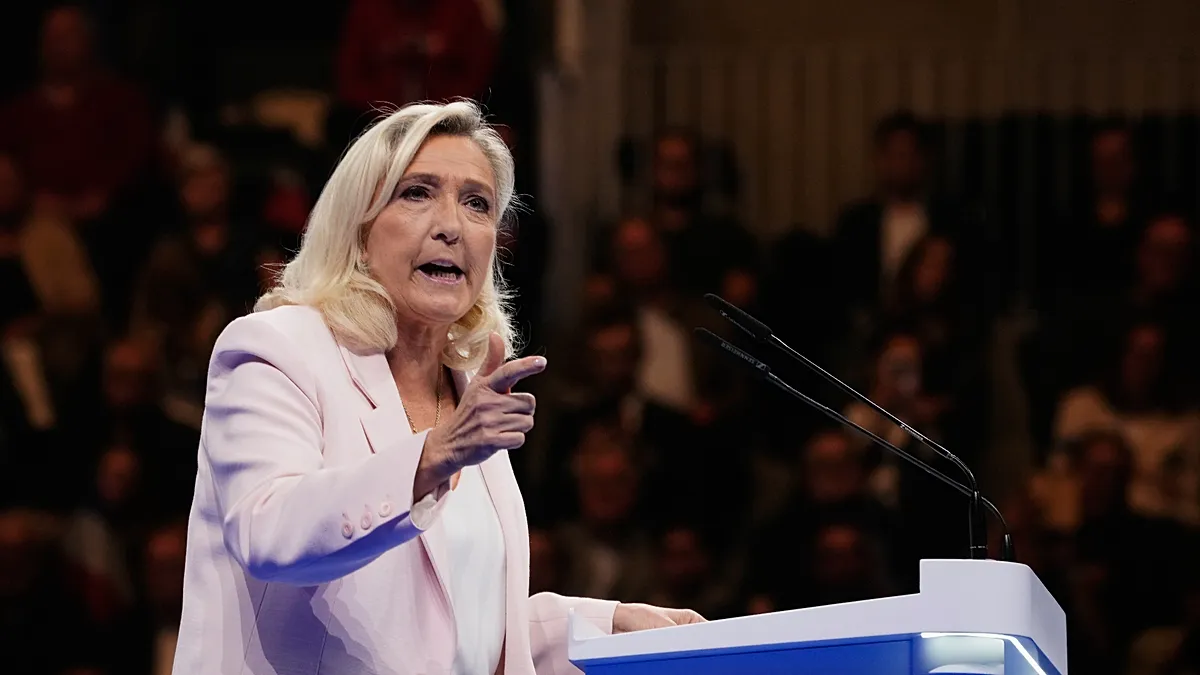
View on XThe funny part is that the product has already been tested, and on exactly the right person. Three days before the plan leaked, Marine Le Pen met Ukraine's ambassador. Her party said afterward that France could no longer give Kyiv financial help, but would honor its "existing commitments." The first one it named was the EU's €90 billion loan.
So what's already signed survives her, and what isn't signed doesn't. I think that tells you most of what you need to know. Sometimes a government owes something to someone else and expects to lose the argument for it at home. Locking it in before the vote is fair, and it works. What it costs is a separate question. Merz is the one European leader who already knows the answer, because he's paid it before.
His method this time is a letter to António Costa, who chairs the European Council. It says Germany won't back the next budget unless it includes €45 billion for Ukraine in 2027 and a "financing perspective for Ukraine from 2028 onwards." Germany pays more into that budget than anyone else by a long way, so this isn't a polite suggestion. Slovakia's prime minister called it "typical blackmail." And it's hard to miss the shape of it: a chancellor using his veto once so that nobody gets a veto over this money later.
But the trick isn't new. The EU did the same thing in 2024 with the €50 billion Ukraine Facility. Everyone agreed once, and after that payments went through by qualified majority. Viktor Orbán wanted a vote every year, which would have handed Hungary a fresh veto every twelve months. He got a yearly discussion instead. (Anyone who has asked for a raise and been offered "a conversation" knows how that goes.) Then in December 2025 the EU moved the freeze on Russian assets onto a legal basis that needs only a qualified majority, so it no longer hung on a unanimous renewal every six months. Each time someone held a veto, and each time the decision moved somewhere the veto didn't reach.
Le Pen's statement shows why this matters. A populist who wins national power treats national money as hers to cut. An EU obligation with other governments' signatures on it is different. It stays put, even for the people who campaigned against it. The new €45 billion loan for 2027 even comes with the same clause as the €90 billion one: Ukraine repays it only once Russia pays war reparations. Ursula von der Leyen calls that the way to give Kyiv "a strong hand at the negotiation table." I'd call it a loan whose due date is a Russian apology, which in practice makes it about as permanent as anything Brussels has.
The person matters here because Merz has done this before, at home. After Germany's February 2025 election, the new Bundestag was due to sit on March 25. The reported fear was that the new parliament, where the AfD and the Left could block things, wouldn't give him the two-thirds majority needed to loosen the constitution's debt rules for defense. So the outgoing parliament was called back for a special session on March 18 and voted the change through. Opponents called it undemocratic. The policy held, and the public even backed it. But voters also came away feeling that Merz was not honest with them during the campaign, and within weeks one Forsa poll put the AfD in first place for the first time, 26 to 25 over his conservatives.
That's how these locks work. The policy survives and the trust account gets charged. Merz is now attempting the European version from a weaker position than the original. The AfD has a wide polling lead, built partly on attacking him for spending on Ukraine instead of at home, and he barely kept his job this fall.
The bill shows up faster than the lock does. Within hours of the story breaking, Eurosceptics had the slogan ready: however you vote, the EU wins.
The French are about to learn that no matter how you vote, or who you vote for, the EU wins:
View on XSome Ukraine supporters would rather nobody said this out loud, as if naming the cost hands the other side a weapon. But the other side picked it up on their own, the same afternoon. The only choice left is whether Merz's camp says the honest version first: yes, we're making this hard to undo, because we think it's owed and we don't think the next government should be able to walk away from it. You can defend that sentence in public. Calling it budget housekeeping is how you get "not honest with them" twice.
Merz agrees with me, I think. That's why he's building a line item nobody can cut alone.
Promises used to hold because people believed in them.
Now they hold because of how the rules are wired, and I'm not sure that's progress, but I'm sure it's better than the alternative on offer.
Where I'm less sure is whether he can finish in time. A leaders' deal on the 2028–34 budget realistically lands in the first quarter of 2027. Last cycle, leaders agreed in July 2020, the decision that let the EU borrow was adopted that December, and the last of the 27 national approvals came in on May 31, 2021. France votes on April 18, with a runoff on May 2. Le Pen is polling 32 to 36 percent in the first round in Ifop's numbers and wins the runoff in every scenario they tested. On the old timetable, the gate would still be open when she arrives, and a new French government could hold the one unanimous step itself.
Even a finished lock has a gap. A qualified majority removes a single veto, not a coalition. Four countries holding more than 35 percent of the EU's population can still block, and France plus a few friends gets there quickly. Berlin also says it worries that letting Slovakia opt out would give a future France a precedent. But that precedent already exists. Last December's €90 billion loan shields Czechia, Hungary and Slovakia from its financial obligations, and that was the price of getting their yes. Germany signed it.
So I'm with Merz, and I think he should expect to pay for it. In 2025 he learned that you can't always win the argument, but sometimes you can win the calendar, and that the voters notice either way. This time the date that matters is set in another country's election, not by him.


Comments