
Chapter 1 The Bus That Wouldn’t Stop
The first thing Maui did was refuse to stop.
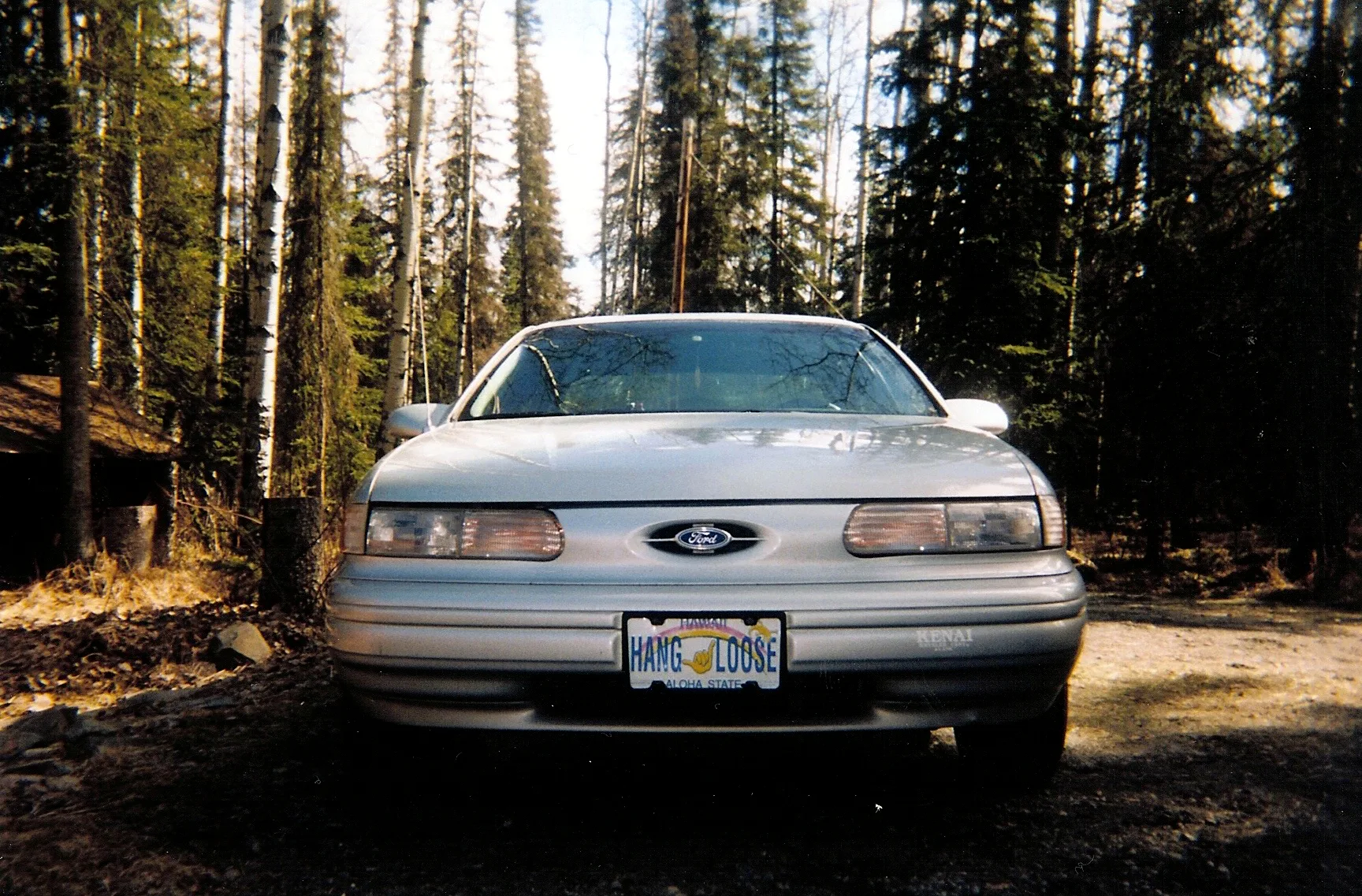
Keith Parker had imagined the island for years before he arrived on it. Not vaguely, not in the lazy way people imagine places they may one day visit if the calendar opens and the money works and the world gives them permission. He had made Hawaii practical in his mind long before it was practical in his life. He had worn the dream like clothing. He had driven it around Alaska in a 1995 Ford Taurus with a decorative Hawaii license plate and a hula girl trembling on the dash. He had put sunglasses on his face in weather that wanted to punish the gesture. He had walked through winter as if winter were the mistake.
By the time he stepped out of the airport in Maui, the place was not new to him. It was a room he had been rehearsing how to enter.
Still, the air surprised him.
He had crossed an ocean to make a dream real, had arrived with a plan, had followed the plan, had stood within sight of the vehicle meant to carry him into the life he had chosen, and the vehicle had twice gone by without him.
It hit with a warm, wet force, pressing against his arms and face as if the atmosphere itself had hands. Alaska had made air feel like an object, something sharp and clean that entered the lungs and clarified the body. Maui’s air was different. It did not clarify. It enveloped. It carried salt, cut grass, airport exhaust, damp asphalt, flowers he could not name, and the green, living rot of a place that did not have to ask permission to grow.
Keith stood outside the airport with one bag and about three hundred dollars.
That was not a metaphor. That was the operating budget.
He had planned carefully, or at least as carefully as a young man can plan a life that exists mostly in conviction. He had researched the bus schedule before arriving. He knew where he was going. He had a hostel booked by email, which gave the whole undertaking the fragile legitimacy of a printed confirmation. He had resumes ready, sealed flat and clean in a folder, the paper still crisp from whatever printer had last touched it. He had not come to find himself. He had come to start.
There is an important difference. Finding yourself permits a lot of drifting. Starting requires action by morning.
When he described this to me, years later, Keith did not romanticize the logistics. He did not turn the airport into destiny. He remembered the practical details first, the kind that make a story human instead of legendary: the bag, the bus schedule, the money, the resumes, the taxi fare he misunderstood before the island had even let him unpack.
“I had the bus figured out,” he said. “Or I thought I did.”
That sentence could sit under half the chapters of his life.
He walked to the bus stop. In his mind, this was already a small victory. He was being efficient. He was not wasting money. He was not the kind of person who arrived in Hawaii with nearly nothing and then spent it immediately on a cab. The bus stop was near a building, and the building offered shade, which seemed sensible. He could see the road from there. He could see the place where the bus would come. He did not know yet that in Maui, at that stop, the driver needed to see him standing outside.
So Keith waited inside.
The bus came.
The bus went.
At first he assumed he had misunderstood the schedule. This was irritating but not yet disastrous. Travel had a way of introducing itself through small humiliations. A missed bus was not failure. It was merely information. He checked the time, checked the road, checked the stop, and waited again. Cars moved by in the glare. Palm fronds shivered. The humidity thickened under his shirt. A few people passed in that island gait, unhurried in a way that can make urgency feel almost indecent.
Then the bus came again.
And again, because Keith was not standing outside, the bus passed.
This is where the opening scene of Keith Parker’s adult life becomes almost too neat, the sort of symbolic moment a writer might invent if life had not already done the work. He had crossed an ocean to make a dream real, had arrived with a plan, had followed the plan, had stood within sight of the vehicle meant to carry him into the life he had chosen, and the vehicle had twice gone by without him.
He did not collapse. He did not interpret the moment as a warning. He did not call anyone and say he had made a mistake. He waved down a taxi.
The taxi driver pulled over with the mild, practiced patience of someone who had seen many young people misjudge an island. Keith asked the fare to the hostel. He heard, or thought he heard, “sixty.”
“Sixty?” Keith asked.
The driver nodded in a way that could have meant yes, no, get in, or you will learn.
Keith got in.
The folder of resumes sat with him in the back seat. Outside the window, Maui opened itself in flashes: roadside scrub, low buildings, sudden green, the blue suggestion of water, sunlight hard on windshields, mountains shouldering up through haze. He should have been triumphant. Some part of him was. The smell alone had done something irreversible. The dream had crossed over from image to weather. He was inside it now. Not wanting it. Not talking about it. Inside it.
Then he noticed the meter.
Numbers rose on the dashboard with the cold indifference of arithmetic. At first he watched them the way a person watches a foreign machine, assuming the mechanism must mean something other than what it appears to mean. Then the numbers kept rising. They rose past comfort. They rose past the story he had told himself about sixty dollars. They rose into the territory where denial becomes mathematically difficult.
He leaned forward.
“Sorry,” he said. “Did you say sixty?”
The driver looked at him in the rearview mirror. Half amused, half unreachable.
“One-sixty.”
There was no dramatic music. No lesson announced itself. The cab did not stop so he could reconsider his options. He was already halfway there, moving through the life he had insisted on entering, watching more than half his money convert into transportation.
Keith looked at the meter. Then at the road. Then at the folder of resumes.
There are moments in ambitious lives that later get polished into courage, but at the time are mostly a person trying not to look stupid in front of a stranger. This was one of them. He did not make a speech. He did not say, “This is the cost of destiny.” He sat there and absorbed the fact that before he had earned a dollar on Maui, the island had taken one hundred and sixty of them.
The driver delivered him to the hostel.
The essential thing is that he had already made a decision internally, and once he did, the outside world became a sequence of problems to solve rather than a tribunal with the authority to dismiss him.
Keith paid.
He had crossed the ocean and arrived diminished, which is often how freedom begins.
The hostel was not the Hawaii of brochures. It was the Hawaii of bunk beds, damp towels, luggage half-zipped on floors, sunburned strangers, ceiling fans pushing warm air from one side of the room to the other. It had the temporary intimacy of places where everyone is between identities. People arrived as students, escapees, waiters, surfers, drifters, optimists, and people who had told their parents something vaguer than the truth. They slept near one another without knowing one another. They guarded their passports. They compared beaches. They learned which jobs were hiring and which managers were impossible. They smelled faintly of sunscreen, laundry soap, beer, and the particular anxiety of trying to make a cheap life in an expensive paradise.
Keith fit and did not fit.
He was not there to dissolve. He was not trying to become a beautiful beach ruin. He had brought resumes in a folder.
That folder matters. In every life there are objects that reveal the whole person more honestly than any personality test could. For Keith, on Maui, it was the folder. Not a surfboard. Not a journal. Not a backpack covered in flags. A folder. It had been packed with care because the future, in his mind, deserved clean paper.
The next morning, or close enough to morning for a young man living hostel hours, he began walking into businesses.
“Hi,” he would say, “I’m looking for work.”
The island did not immediately recognize his seriousness. Why would it? Maui had plenty of young men with one bag and a plan. Paradise attracts plans the way porch lights attract moths. Every restaurant, shop, and beachside business had seen arrivals like him: eager, underfunded, sunstruck, certain they were different. Certainty, in places like that, is a renewable resource.
At Bubba Gump Shrimp Co., they told him no.
The first no was ordinary. The second had a little more shape. The third should have been clarifying.
Keith kept coming back.
This is not a subtle trait in him. It appears early and then never really disappears. Later, it would show up in conference rooms, executive offices, large-scale projects, corporate transformations, endurance races, and family moves across continents. But on Maui it was still raw, uncredentialed, and slightly comic: a young guy with a folder of resumes returning to a theme restaurant that had already declined him.
I asked him once whether he thought of that as confidence.
“No,” he said. “I just knew I needed the job.”
Need is underrated as a character builder. It removes the decorative parts of ambition. It sharpens the day. A person with too many options can spend a lifetime curating identity. A person with one bag, one folder, and a shrinking pile of money has to become legible quickly.
By the third attempt, the manager had noticed.
She came out, not annoyed exactly, but curious. Managers in tourist restaurants develop a taxonomy of applicants. There are the ones who want free time more than work. The ones who are passing through. The ones who will be gone in a week. The ones who seem friendly but allergic to schedules. Keith must have looked like some strange hybrid: young enough to underestimate the job, persistent enough to maybe deserve it.
He would imagine a future before there was evidence for it, then submit the imagined thing to reality until reality either broke it or became it.
“You’ve been here three times,” she said.
Keith stood there with the folder.
“Yes.”
“Either you’re lost,” she said, “or you actually want this.”
“I actually want it.”
She studied him for a moment. A restaurant is not a charity. It is a machine made of timing, stamina, mood, and repetition. Hosts seem ornamental to people who have never had to run the front of a busy dining room, but the host stand is the first border of order. It decides who waits, who sits, who complains, who gets reassured, which server is about to be buried, which table can turn, which small failure is about to become a visible one. It requires cheerfulness under pressure, a high tolerance for impatience, and the ability to make people feel seen while denying them what they want.
In other words, it was not bad training.
The manager sat him down.
“I admire the persistence,” she said.
Then she gave him a job as a host.
The sentence looks small on the page because most turning points do. A job as a host at Bubba Gump Shrimp Co. is not the sort of event that appears, later, in a polished executive biography. It does not sound like the beginning of a global life. It does not announce the later high-stakes rooms, the desert chapters, the corporate machinery of AI, the long endurance races, the children in a camper playing Uno on a queen bed, the man stopping mid-run years later in Austin to type an idea into his phone before finishing the miles.
But lives rarely begin at the scale they later require.
They begin with a bus that will not stop.
They begin with a meter climbing past what you thought you heard.
They begin with a hostel bed, a damp towel, a folder of resumes, and the private embarrassment of having mispriced your own beginning.
They begin with returning after refusal.
That is the part of the Maui story that matters. Not that Keith Parker got to Hawaii. Lots of people get to Hawaii. Not that he wanted something badly. Wanting is common. Not even that he was persistent, though he was. The essential thing is that he had already made a decision internally, and once he did, the outside world became a sequence of problems to solve rather than a tribunal with the authority to dismiss him.
The bus did not stop, so he took a taxi.
And he learned something else, though it would take other islands, other countries, other rooms, and other lives to fully name it: movement changes the scale of what feels possible.
The taxi cost too much, so he paid and kept going.
The job said no, so he came back.
The manager saw persistence, so she converted it into permission.
Years later, sitting across from him, I noticed that Keith tells this story without trying to make himself sound heroic. He is more amused by it than proud. There is a small wince in his voice when he gets to the taxi fare, as if some part of him is still in the back seat watching the meter rise. But there is also pleasure in the memory. The pleasure is not nostalgia. It is recognition. Maui did not give him the life he imagined simply because he had imagined it. Maui made him pay, misunderstand, wait, sweat, ask, get rejected, return, and stand there long enough to be taken seriously.
That was the bargain.
A lesser dream might have died at the bus stop. A softer one might have turned bitter in the cab. A more performative one might have lasted until the first rejection and then dressed surrender up as wisdom.
Keith’s dream survived contact with logistics.
This would become one of the quiet patterns of his life. He would imagine a future before there was evidence for it, then submit the imagined thing to reality until reality either broke it or became it. Hawaii was not the exception. It was the first clean proof. He had made the dream visible in Alaska, then made it physical in Maui, and now the island had answered in the only language that matters.
Do the work.
So he did.
He stood at the front of a tourist restaurant and learned the choreography of strangers. He watched families arrive sunburned and hungry, watched couples negotiate the fragile politics of vacation, watched servers move through pressure with smiles fixed in place, watched a business depend on dozens of small human signals being read correctly and quickly. He learned that charm helped, but reliability mattered more. He learned that a place could be beautiful and still require rent. He learned that a dream, once achieved, immediately becomes a schedule.
And he learned something else, though it would take other islands, other countries, other rooms, and other lives to fully name it: movement changes the scale of what feels possible.
The young man who arrived in Maui with one bag did not yet know the whole pattern. He did not know he would keep doing versions of this. He did not know that years later he would research expat cities and choose Dubai because the ski slope in the desert felt like a city refusing to wait for permission. He did not know he would live in a maid’s room behind a villa in Umm Suqeim 1, or help make complex work legible, or sit in rooms where a word could move more than a sentence. He did not know he would help shape narratives around ambitious places, institutions, and AI-era companies. He did not know he would become a father, lose sleep for a year and a half, take up Ironman training because ordinary difficulty no longer seemed sufficient, and eventually compress his whole restless life into the small joy of Uno cards on a camper bed.
He knew only that he had arrived.
The air was warm.
The money was low.
The bus was gone.
And the future, irritatingly, was still waiting for him to stand where it could see him.
Chapter 2 The Place That Taught Silence
Before Maui taught Keith Parker what it felt like to make a dream physical, Alaska taught him what the world sounded like when it stopped trying to entertain you.
This is not a small distinction.
Maui was humid, fragrant, full of motion. The island announced itself through smell and heat and the small public humiliations of buses, taxis, hostels, and job applications. Alaska did the opposite. Alaska withdrew. It gave him distance. It gave him cold air so clear it seemed almost mathematical. It gave him the kind of silence that does not merely surround a person, but enters the body and asks what is left when the noise falls away.
Keith was not born there. He was born in Sacramento, then spent his earliest years in the Bay Area, where childhood still had the smaller geometry of screen doors, sidewalks, office parks, warm afternoons, and ordinary suburban assumptions. The first act of escape came when he was five. He pushed through the screen door and walked several blocks down the street.
It gave him the kind of silence that does not merely surround a person, but enters the body and asks what is left when the noise falls away.
Nobody had authorized this.

He was not running away, exactly. At five, a person does not need a theory of departure. He simply sees a door, understands that the other side of it exists, and tests whether the world will open.
It did.
When Keith told me the story, he did not present it as evidence of early courage. He laughed at it, the way adults laugh at the child version of a trait that has since become impossible to miss. A five-year-old pushing through a screen door and wandering away is, in one reading, a household scare. In another, it is the first crude sketch of a lifelong pattern: an impatience with being contained by whatever room he happened to be in.
“Were you trying to get somewhere?” I asked him.
He considered it.
“I think I just wanted to see what was out there.”
There are children who wait for the adult world to narrate itself to them. Keith was not one of them. He was already testing the perimeter.
Then, when he was seven, the perimeter broke for reasons he could not control.
His father left.
The family version of the story has the bluntness of a sentence nobody has successfully softened with time: one day, his father ran off with the assistant at his office and did not come home. In some families, absence arrives slowly, through dimming affection, long arguments, doors closed a little harder each week. In Keith’s childhood, it arrived like an edit. There was the life before, and then there was the next page.
For a child, betrayal is not yet a moral category. It is weather. It changes what can be expected of the sky. Adults may discuss motives, consequences, money, embarrassment, custody, anger. A child notices the missing car, the altered voice of his mother, the way rooms feel different when one adult’s things have stopped belonging to them.
I asked Keith what he remembered of that period. He did not offer a melodramatic answer. He is wary, even now, of turning difficulty into theater.
“You understand more later,” he said. “At the time, you just know something has changed.”
His mother did not respond by shrinking the world. She enlarged it.
This is one of the essential facts of Keith’s life. His mother, faced with the wreckage of one version of stability, chose motion. She did not simply endure the collapse of the family arrangement. She made an adventurous, radical decision: she took the children to Alaska to start again.
Imagine the audacity of that move. A mother in California, family life suddenly broken, looking north not as exile but as possibility. Alaska was not an incremental adjustment. It was not a smaller house in the same school district, not a move closer to relatives, not a cautious attempt to preserve the outer appearance of continuity. It was a new map. It was a declaration that rupture did not have to mean diminishment. It could mean distance, reinvention, and a colder, clearer kind of beginning.
In the reconstructed memory of it, I imagine the packing happening without romance. Boxes on the floor. Tape shrieking off the roll. Children underfoot. A mother doing the brutal arithmetic of money, furniture, logistics, weather, school, and pride. The kind of courage involved in that decision would not have looked cinematic at the time. It would have looked like fatigue. Like lists. Like a woman trying not to cry in front of her children while also making sure somebody knew where the winter coats were.
“We’re going to Alaska,” she might have said.
“Like, for a trip?” one of the children might have asked.
In another, it is the first crude sketch of a lifelong pattern: an impatience with being contained by whatever room he happened to be in.
“No,” she would have answered, perhaps before even knowing whether the word made her feel terrified or free. “We’re going to live there.”
That is the kind of sentence that changes the operating system of a family.
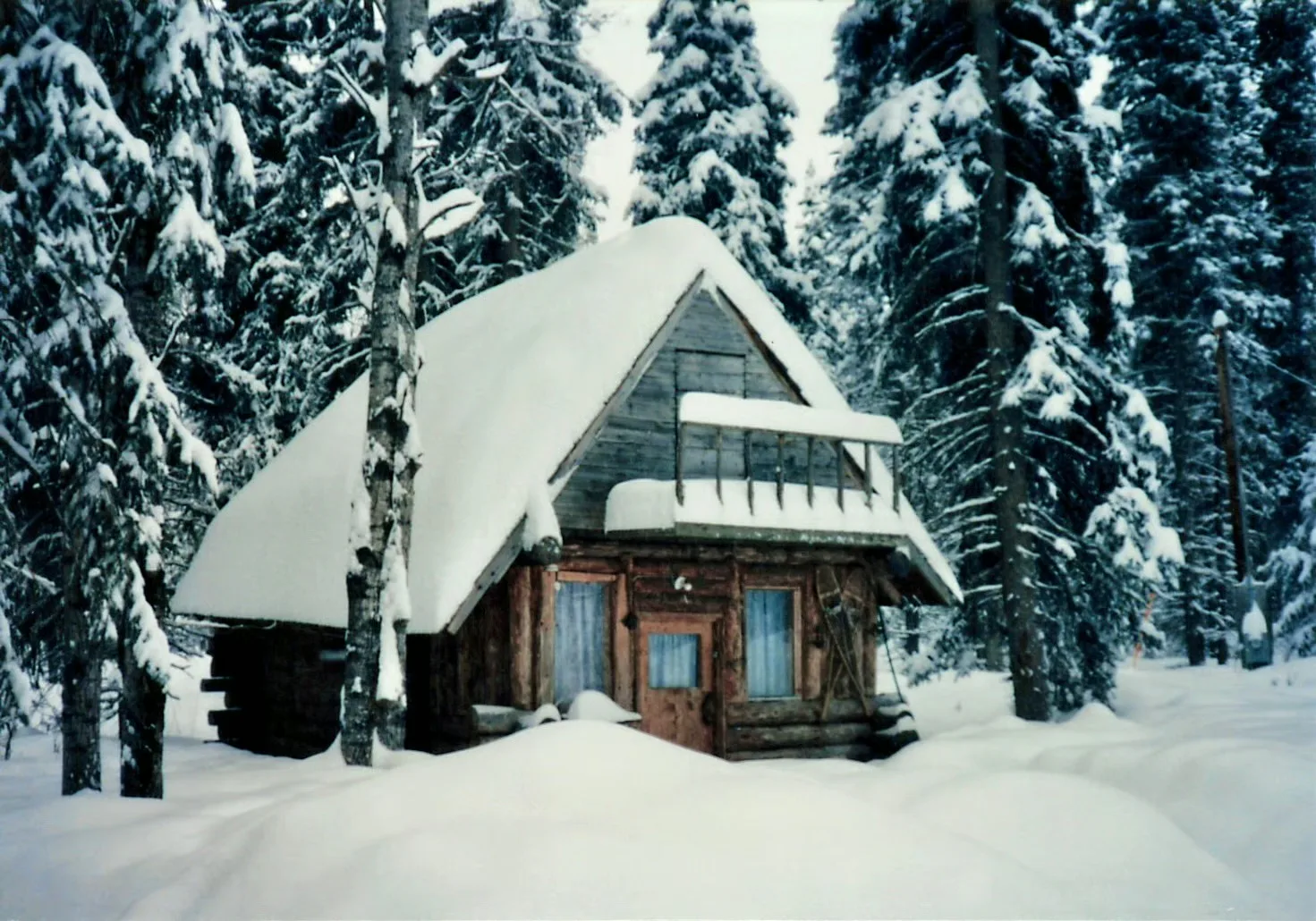
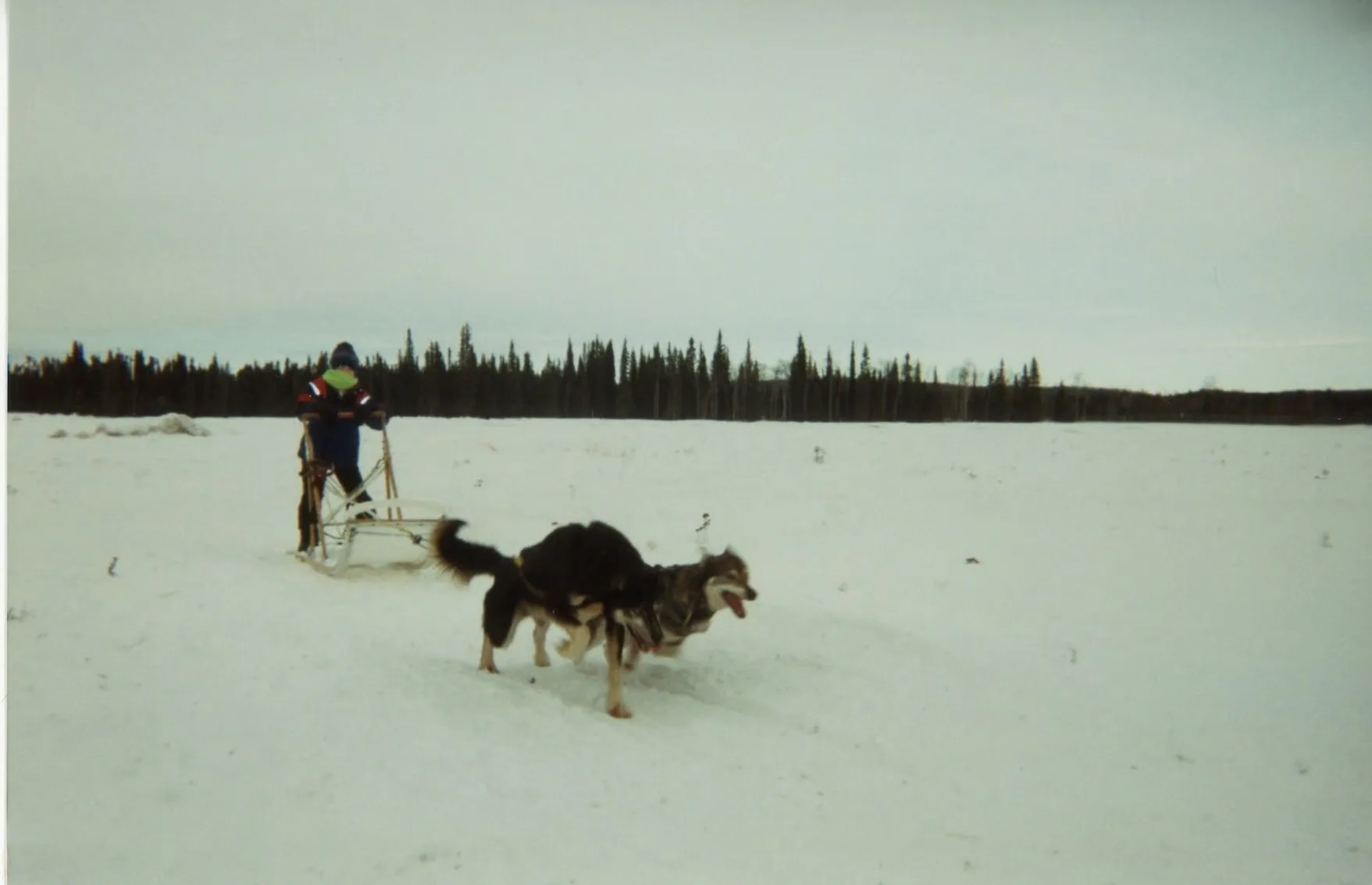
Sterling, Alaska, did not offer the soft consolation of a fresh start. It offered scale. It offered trees and cold and moose and woodsmoke and dark roads and the knowledge that people had to do things themselves because there was no frictionless alternative. The air had a physical purity to it. Keith remembers the crispness most of all, the bright little sparkles of frost suspended in winter light, the contrast of trees against snow, the eerie precision of the landscape.
“Alaska was quiet,” he told me. “Not quiet like a room. Quiet like the world had stopped performing.”
That line stayed with me because it explains more than geography. It explains his suspicion, later, of rooms that perform too much. Rooms full of status gestures. Corporate atmospheres where vocabulary outruns substance. Expensive settings where everyone appears to be signaling importance rather than doing the thing that would make importance unnecessary. Alaska gave him a baseline for realness that made decorative authority hard to take seriously.
The place was not silent in the literal sense. There was wind. There were tires on frozen road. There were dogs, engines, branches, the crack of ice, the distant working sounds of people managing their lives. But beneath all of it was a larger quiet, a silence with distance inside it. You could stand outside and feel the absence of clutter. No crowded skyline. No ambient urban hum. No soft layer of human convenience between your body and the conditions of the world.
In winter, light could seem like a blade. Frost hung in the air as if someone had shaken glass dust into the morning. Trees stood in sharp verticals, dark against white. Sound traveled strangely. A closing door could feel like an announcement. Footsteps in snow had weight. Breath made itself visible, then vanished.
This was the first place that taught Keith the authority of contrast.
Warm house, cold world. Silence, then the sudden movement of an animal. The bright interior of a classroom, then the enormous dark outside. Human plans, then weather. Resourcefulness, then consequences. Nobody had to explain that reality did not care whether you were ready. The lesson was everywhere.
Keith was good at math. This, too, matters. Math offered a cleaner social field than childhood often did. Numbers behaved. Equations did not smirk or change alliances at lunch. A problem had structure, and if you worked the structure correctly, something resolved. For a boy who describes himself as socially awkward, math must have been a relief: a place where clarity was not only possible, but expected.
School was not where he mastered ease. It was where he learned the difference between intelligence and fluency. He could solve the problem on the page before he could solve the problem of where to stand in a group. He could see patterns before he could always read the room. That awkwardness did not disappear so much as evolve. Later, in adult life, he would become fluent in rooms of serious consequence, but the fluency had been earned, not inherited. It began with observation. With noticing. With studying people the way another person might study a system.
There is a particular kind of adult confidence that comes from early social ease. Keith’s confidence is not that kind. His seems built more from repeated proof. He has a bias toward action partly because charm alone was never the thing that carried him. He had to learn what worked. He had to test. He had to return. He had to become useful.
That is the kind of sentence that changes the operating system of a family.
In Alaska, usefulness was not a corporate virtue. It was a survival grammar.
If something broke, you fixed it with what was available. If wood needed gathering, you gathered it. If a trip required preparation, you prepared. If a tool was missing, you improvised. It was not heroic. It was ordinary. That ordinariness is the point. Keith grew up in an environment where solving was not a specialized function delegated to a procurement process, a help desk, a vendor, or a chain of approvals. Solving was what people did because the alternative was standing there uselessly in the cold.
He still carries a version of this irritation. You can hear it when he talks about organizations that turn every missing object into a procedural delay.
“People jump to procurement too fast,” he told me once. “Sometimes you just need to figure out what you can do with what’s already there.”
That sentence sounds practical, but underneath it is almost a philosophy of life. Work with what is available. Make the move. Do not mistake lack of perfect conditions for lack of permission. Do not wait for the fully resourced version of yourself to begin.
The Alaskan childhood normalized a kind of risk Keith would later insist did not feel like risk at all. Riding bikes for long hours. Playing on an old broken bridge down the road. Gathering firewood at night and walking past moose, which are large in a way that makes the word “large” seem underbuilt. Heading out on weeklong kayak and foot-portage trips into remote places without cell phones, without satellite phones, with only a shotgun for bears and moose. Gold mining as a young teenager in fast, narrow rivers running through gorges, standing in hip waders where one wrong step could fill the waders and drag a body into cold, rocky violence.
He does not tell these stories as boasts. That is what makes them convincing. He tells them as if describing weather, chores, the texture of growing up. This was normal. That is the sentence that matters. His later appetite for movement, relocation, difficult work, endurance events, and large-scale ambiguity did not come from a taste for danger in the theatrical sense. It came from an early recalibration of what counted as ordinary.
When your childhood includes moose in the dark and river gorges that could kill you if you are careless, a difficult meeting is still a difficult meeting, but it is not the whole world.
I do not mean that Alaska made him fearless. Fearless people are often foolish, and Keith is not that. Alaska made fear practical. It taught him that danger is not always a reason to retreat. Sometimes it is a reason to pay attention. It taught him to distinguish discomfort from threat, uncertainty from impossibility, exposure from failure. These distinctions would become useful later in ways no child could have anticipated.
But before all of that, Alaska was simply home.
Austere, real, clarifying home.
There is a temptation, when writing about Alaska, to turn it into frontier mythology. Log cabins. Wolves. Rugged individualism. The usual American costume rack of toughness. But that is not the Alaska Keith gave me. His Alaska was quieter and stranger. It was less about conquest than atmosphere. It was the place where silence became a teacher, where clarity became beautiful, where a socially awkward boy good at math learned that distance could feel serene rather than lonely.
He would learn the power of narrative, but Alaska had already given him a permanent suspicion of narrative without proof.
The word he used was “realness.”
That word can be dangerous in profiles because it is often used as a compliment without content. But in Keith’s case, realness has a texture. It is frost in the air. It is trees in clean contrast. It is no one coming to solve the problem for you. It is a mother choosing the harder map. It is a child learning that a family can break and still move. It is a landscape that does not flatter you, but does not lie to you either.
Later, Keith would spend much of his career around language. He would sit in rooms where people debated how institutions should be understood, how leaders should be carried in public, how companies should explain what they made possible, how ambition could be translated into something others could believe and use. He would learn the power of narrative, but Alaska had already given him a permanent suspicion of narrative without proof.
The place had no patience for that.
A fire either caught or it did not. A river crossing was safe or it was not. A winter morning was cold no matter what you called it. A person could say anything, but the world answered in conditions.
This may be the deepest thing Alaska gave him: not toughness, exactly, but calibration. A way to measure words against reality. A way to distrust performances that did not survive contact with weather, money, deadlines, people, logistics, or consequence.
When Keith stepped into Maui years later with one bag and a folder of resumes, he looked like a young man making an impulsive tropical move. But Alaska was inside the decision. The silence. The resourcefulness. The child through the screen door. The mother who moved the family north instead of letting betrayal shrink the map. The boy who learned math because clarity was calming. The teenager who thought dangerous rivers were just part of a normal day.
That is the mistake people make about his story. They see the movement and think it begins with escape.
It begins earlier than that.
It begins with a family broken open and remade in a colder place. It begins with the discovery that a life can be moved. It begins with a mother who did not wait for the world to become kind before choosing a new one. It begins in air so crisp it seemed to sparkle, under trees that looked carved against the snow, in a silence large enough to strip the performance out of everything.
Keith did not leave Alaska because it failed him.
He left because it had done its work.
Chapter 3 The First Larger Room
Los Angeles did not teach Keith Parker ambition. It taught him scale.
Ambition he already had, though at the time it did not yet look like the adult version: precise, kinetic, slightly impatient with its own resting pulse. In Alaska, ambition had been private. It had lived beneath silence, under cold air, inside the head of a boy who was better at solving equations than entering groups, better at imagining departure than explaining himself inside the present tense. It had no audience there, which may have been useful. Some appetites grow better when no one applauds them too early.
But Los Angeles had no interest in keeping anyone’s hunger private.
The city made ambition visible. It put it on billboards, in traffic, in glass buildings, in restaurant conversations, in the sharp little machinery of introductions. It made people say what they wanted before they had earned it. It rewarded performance long before proof. Coming from Alaska, where the world had seemed to answer only to weather, work, and consequence, Keith found himself in a place where the air itself felt negotiated.
Keith had the north in him: distance, silence, practical discomfort, an instinctive distrust of polish that had not paid its dues.
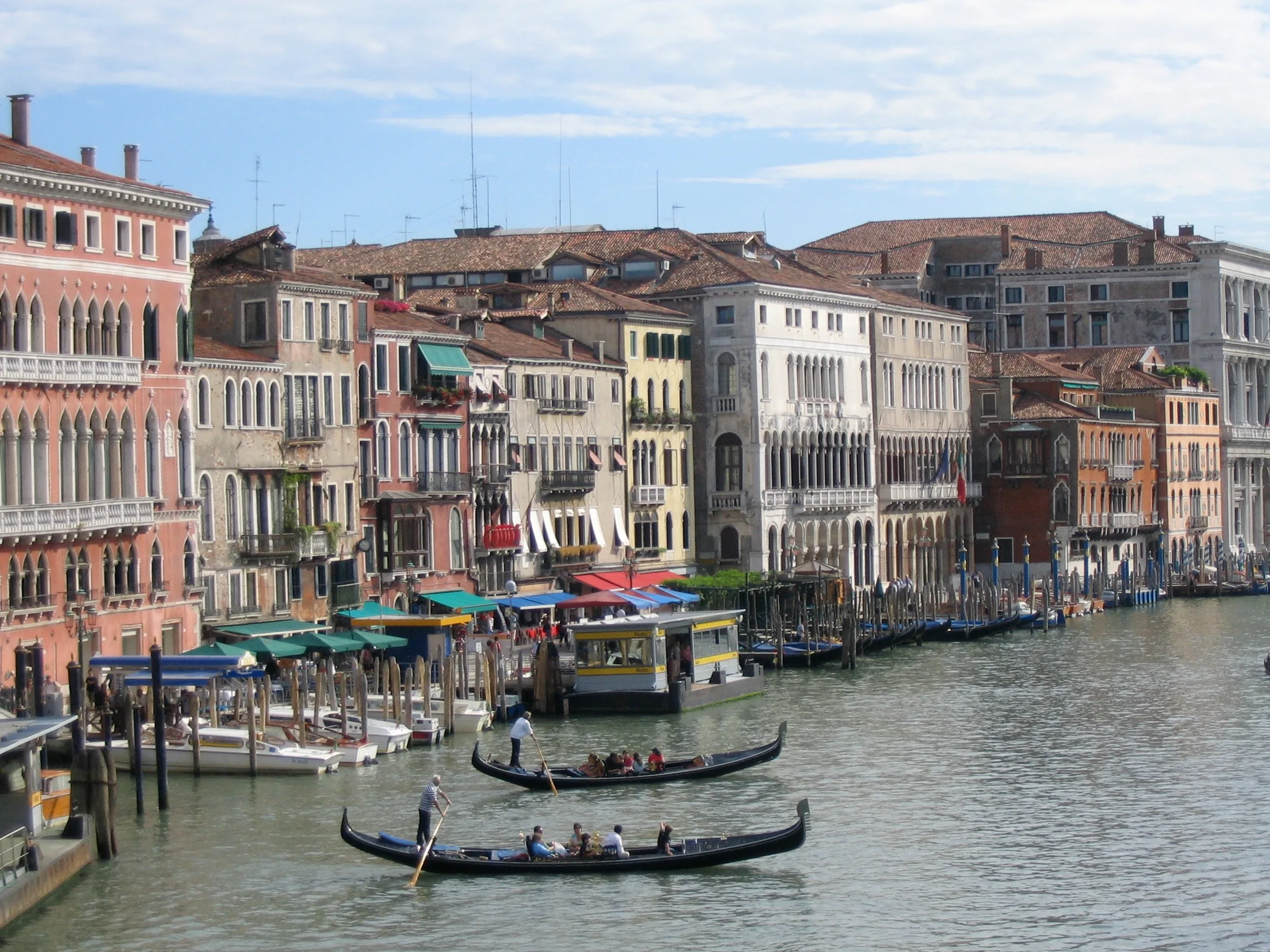
At USC, he entered a campus that looked almost too arranged to be real. Red brick. White stone. Fountains. Palms. Sunlight filtered through trees with a softness that would have seemed suspicious in Sterling. Students moved past him in confident streams, already fluent in a social language he was still decoding. They wore sunglasses not as an act of defiance against climate, but because Los Angeles had made glare part of its civic identity. They spoke quickly. They seemed to know where they were going. Some of them seemed to have been born networking.
Keith was not.
I asked him once whether arriving at USC felt like escape or exposure.
“Both,” he said.
That answer is better than either word alone. Escape flatters the person who leaves. Exposure tells the truth about what happens next.
At college, Alaska stopped being merely the place he had come from and became the contrast that explained him. In Los Angeles, people had stories about internships, parents with careers that came with recognizable titles, high schools with names that sounded like feeder systems, summers that had been curated into credentials. Keith had the north in him: distance, silence, practical discomfort, an instinctive distrust of polish that had not paid its dues. He was not embarrassed by where he came from, but he was not yet sure how to make it legible.
That would become one of the quieter skills of his life: translating the untranslatable thing. A childhood atmosphere into an adult posture. A private drive into public action. A place into a point of view.
In the beginning, he listened more than he spoke.
This is not the version of Keith that many people would meet later. Later, he would be direct. Later, he would become comfortable enough in rooms to change their direction. Later, he would sit across from ministers, CEOs, founders, senior advisors, and people whose calendars were treated by others as instruments of state. But before that, he was a young man watching Los Angeles teach him the cost of hesitation.
USC was full of rooms, and each room had a code. Lecture halls had one. Fraternity houses had another. Business-school classrooms had another. Career events had another. Parties had several, most of them unposted. Keith learned that intelligence did not automatically cross these thresholds. Being right on paper did not mean being read correctly in person. Knowing the answer was not the same as carrying the room.
This irritated him. It also sharpened him.
The math-minded part of him began to study people as systems. Who spoke first? Who interrupted? Who could make a weak idea sound confident? Who had actual substance and who was borrowing the appearance of it from vocabulary, posture, or proximity? What made professors pause? What made students lean in? What made a claim survive the first objection?
He did not yet have names for these patterns. He simply noticed them.
One afternoon, in a business class, a professor asked the room to explain why a company expanding internationally had misread a market. The first answers were clean and useless. The students talked about “cultural difference” and “localization” and “competitive pressures,” the kind of phrases that sound intelligent because they are broad enough to avoid contact with detail.
Keith sat near the middle, pen moving across a notebook.
Finally the professor looked at him.
“Parker,” he said. “You look like you disagree with everyone.”
Keith glanced up.
“I don’t disagree,” he said. “I just don’t think they’re saying anything yet.”
The room turned toward him. Some students laughed because they thought he was joking. The professor did not laugh.
“Then say something,” he said.
Keith looked down at his notes. He had not meant to perform. That was part of the problem. Los Angeles was always asking people to perform, and Keith had not decided yet whether performance was cheap or necessary. But the question was there, and he had a point to make.
“They’re talking about culture like it’s decoration,” he said. “Like you can translate the brochure and that means you understand the market. But if the company doesn’t understand how people actually make decisions there, who they trust, what status means, what risk feels like, what makes something credible, then the campaign is already wrong before it starts.”
The room changed slightly.
Not dramatically. There was no cinematic hush. No one dropped a pencil. But a few people stopped shifting in their chairs. The professor leaned back. Keith felt, perhaps for the first time in that setting, the strange physical sensation of an idea landing.
If you could see the real mechanism beneath the public explanation, you could make the room pay attention.
The professor nodded.
“That,” he said, “is closer.”
It was a small moment. Most important moments are small until retrospect starts feeding them lighting cues. But the lesson stayed: clarity did not have to be loud. It had to be exact. If you could see the real mechanism beneath the public explanation, you could make the room pay attention.
He was studying Global Business and International Relations, two subjects that could easily become ornamental in the wrong hands. The phrases were large enough to hide inside. Global. Business. Relations. Each one had the polished emptiness of a building lobby. But Keith was not drawn to them because they sounded impressive. He was drawn to them because they suggested that the map was bigger than the places he had been handed.
International business gave him the mechanics: markets, incentives, trade, strategy, the way money moved through systems and made certain dreams possible while killing others quietly. International relations gave him the human and political overlay: power, history, identity, alliances, national stories, the official language of states and the private motives beneath them.
He liked the seam between the two.
He liked that a company could fail because it misunderstood a country. He liked that a government could change public reality with a single institutional decision. He liked that stories did not float above economies, politics, and culture. They moved through them. He liked that the same sentence could mean one thing in Los Angeles, another in Abu Dhabi, another in Athens, another in Singapore. Meaning was not fixed. It traveled badly unless someone understood the terrain.
This was not yet a career. It was a sensitivity.
When I asked him what college gave him, he did not talk first about classes. He talked about the widening of the possible.
“USC made the world feel operational,” he said. “Not theoretical. Operational. Like there were systems everywhere, and if you understood them, you could move through them.”
That word, operational, matters. For some students, college is a credentialing exercise. For Keith, it became a set of levers. He was still restless, but the restlessness began acquiring structure. The world was no longer merely something to go see. It was something to understand, enter, and eventually influence.
Los Angeles helped by being almost comically unsubtle about desire.
The city ran on wanting. Wanting to be seen. Wanting to be chosen. Wanting to be upgraded. Wanting the callback, the table, the job, the apartment, the deal, the body, the future. The wanting could be exhausting, but it was also instructive. In Alaska, a person could pretend not to want much and still be respectable. In Los Angeles, pretending not to want anything was either a luxury or a strategy. Everyone wanted. The difference was whether they admitted it, disguised it, monetized it, or let it eat them.
Keith watched this with a mix of fascination and recoil.
He liked ambition. He did not like borrowed ambition. Even then, before he would have phrased it that way, he could sense the difference between a person chasing a life and a person chasing the approval attached to one. Los Angeles had many versions of both. It was a city of real builders and gifted pretenders, of discipline hiding beneath glamour and emptiness hiding beneath polish. It taught him not to confuse surface fluency with actual strength.
Even then, before he would have phrased it that way, he could sense the difference between a person chasing a life and a person chasing the approval attached to one.
This was useful training.
Years later, when he would enter executive rooms, he would recognize the same pattern in better clothing. There were always people who sounded expensive. There were always people who dressed uncertainty in confident vocabulary. There were always rooms where the official narrative was slightly cleaner than the operating truth beneath it. Los Angeles did not invent this pattern, but it gave him an early look at the machinery.
At USC, Keith began to understand that his own advantage might not be ease. It might be observation plus movement. He could study a room, find the real hinge, and act before the consensus had finished arranging itself. He did not need to become the most polished person in the room. He needed to become the person who saw what the room was missing.
This is the kind of realization that rarely arrives as a sentence. It arrives as a series of tiny corrections.
Speak sooner.
Be clearer.
Do not apologize for the sharpness of an observation if the observation is true.
Do not mistake confidence for accuracy.
Do not let the person with the cleanest language own the best idea by default.
Do not wait for the room to invite you twice.
There were still awkward moments. Many. Keith does not pretend otherwise. Confidence did not descend upon him like a film montage. He had to build it the slower way, through contact. The first time he tried to sound worldly and heard himself overreach. The first time someone with less substance got more attention because he spoke with better timing. The first time he realized that being underestimated was not always a disadvantage. The first time he chose not to correct the room immediately, waited, and then said the thing when it would matter more.
Los Angeles made him quicker.
Not louder, exactly. Quicker.
He learned the value of pace: when to enter, when to hold, when to let a bad idea expose itself, when to move the conversation to firmer ground. He learned that rooms are not neutral. They reward certain behaviors and punish others. They can mistake volume for leadership, pedigree for judgment, charm for depth. But they can also be turned. A precise sentence, delivered at the right moment, can redirect a room more effectively than a long argument delivered too early.
A precise sentence, delivered at the right moment, can redirect a room more effectively than a long argument delivered too early.
This was the beginning of a different kind of education, one not listed beside his degree.
He was learning how to become legible without becoming artificial.
That is harder than it sounds. For someone formed in a place where realness mattered, performance could feel like contamination. But adulthood, especially the kind Keith was moving toward, would require performance in the older sense of the word: not falseness, but execution. To perform a role well. To carry intent. To make an idea visible in a way others could use. To bring the inner thing into public form without cheapening it.
College gave him the first rehearsal space for that.
I imagine him walking the campus at night after class, the heat finally loosening, sprinklers ticking in the grass, bikes locked in racks, distant music coming from an open dorm window. Los Angeles never went silent the way Alaska did. Even at night, it hummed. Freeways breathed beyond the campus perimeter. Helicopters pulsed over the city. Somewhere, someone was rehearsing, pitching, studying, flirting, failing, beginning again.
Keith liked that.
Not all of it. Not the posturing. Not the easy confidence of people who had never had to make themselves from scratch. But he liked the motion. He liked being in a place where people expected the future to be negotiable. He liked discovering that scale did not have to intimidate him. It could feed him.
The north had taught him that the world was real.
Los Angeles taught him that the world was available.
Not easily. Not fairly. Not without money, timing, luck, and nerve. But available in a way that made passivity feel like a failure of imagination.
That may be the most important thing this chapter of his life gave him. Before the later travel, before the foreign work summers, before the friend in Germany, before Dubai opened like a wager, USC and Los Angeles expanded the room. They showed him people moving toward futures that had not yet solidified. Some were ridiculous. Some were brilliant. Some were merely loud. But all around him, life was being attempted at a larger scale.
And Keith, watching closely, began to understand that he did not have to choose between the two worlds that had shaped him. He did not have to abandon Alaska’s seriousness to live in Los Angeles’s possibility. He could carry the silence into the noise. He could bring the calibration of the cold place into rooms addicted to heat. He could learn the codes without worshiping them.
By the time the world began opening beyond California, he was ready in a way he would not have been before. Ready not because he was finished becoming himself, but because he had learned how to move while still becoming.
That distinction would matter.
The next lessons would not come from classrooms. They would come from cheap beds, strange buses, metal kitchen tables, other people’s countries, and the revelation that a person could own almost nothing and still feel, for the first time, extravagantly alive.
Chapter 4 The World Without a Map App
The first lesson of Corfu was silverware.
Not the sea, though the sea was everywhere. Not the cliffs, not the ferry wake, not the white buildings clinging to hillsides, not the olive trees with their old, twisted posture, not the heat that gathered over the island and stayed there like a second roof. Those came later, or at least they mattered later, after memory had edited the summer into color and weather and music.
But the first lesson was silverware.
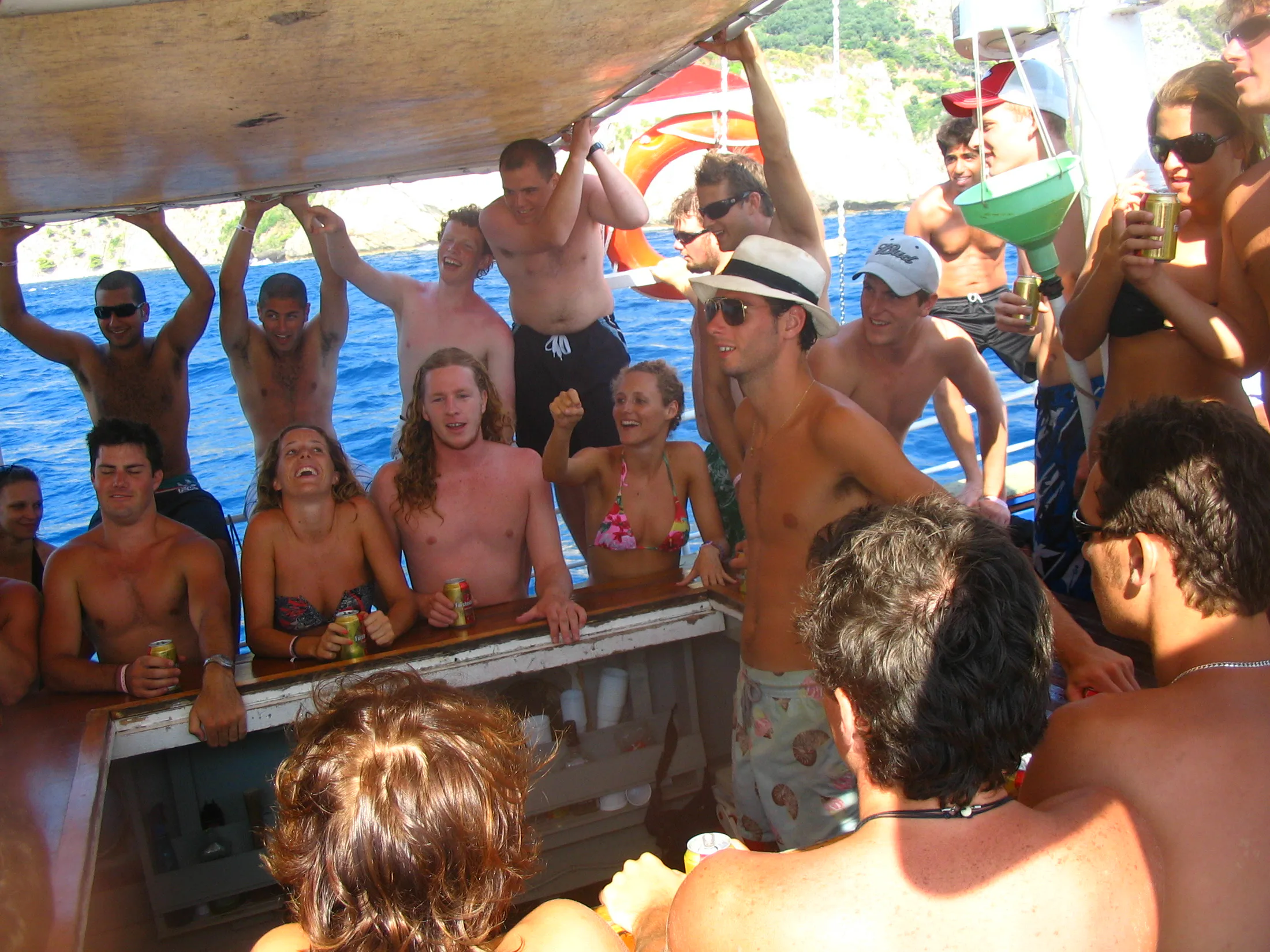
Every morning at the Pink Palace, the day began around a metal table in the kitchen, where Keith Parker and the others stood with forks, knives, and spoons coming hot out of the dishwasher. They took the pieces in their hands and shined them until the streaks disappeared. The table was scratched and industrial, the kind of surface that looked as if it had absorbed years of elbows, plates, spills, gossip, and exhaustion. Around it stood young people from everywhere and nowhere, Americans, Australians, Canadians, Europeans, travelers whose biographies were still short enough to be summarized by where they had just come from and where they hoped to go next.
Happy in the deep, surprised way a person becomes happy when the outer markers of success vanish and something more primitive still holds.
Someone would be sunburned. Someone would still be wearing last night’s wristband. Someone would have lost a sandal, a room key, a wallet, a moral principle, or a person they had been kissing at two in the morning. The dishwasher breathed steam into the room. The kitchen smelled of detergent, metal, old beer, breakfast, damp clothes, and whatever had been mopped badly from the floor after the night before.

“What happened to you?” someone would ask.
“What happened to me?” another would say. “What happened to you?”
The stories were never as good as the laughter around them. A person would begin an explanation, and three others would interrupt because they remembered the same scene differently. Somebody would claim innocence. Nobody would believe him. Somebody would announce a plan for the day: beach, nap, cliff jumping, town, scooter, ferry, recovery, repeat. Somebody else would say he was leaving tomorrow and then remain for another week.
Keith stood among them, polishing silverware for seven euros a day.
Seven euros. Twelve-hour workdays. A room with seven other guys in bunks. No privacy. Almost no money. No impressive title. No path that would make sense to a career counselor. No clean story to bring home except the one forming quietly beneath the noise: he was happy.
Not entertained. Not merely distracted. Happy in the deep, surprised way a person becomes happy when the outer markers of success vanish and something more primitive still holds. Friendship. Heat. Work. Sea. Music. Fatigue. Jokes. Shared food. Shared discomfort. Discovery. The feeling of being young in a place that did not care what you had been before you arrived.
When I asked Keith about Corfu, he did not describe it as a party first, though by all available evidence there was plenty of that. He described a mood.
“It was the happiest I had been,” he told me. “And by any normal measure, there was nothing to point to.”
This is the kind of sentence people usually earn later in life, after houses and promotions and money and comparative success have failed to do everything promised. Keith got an early version of it in a kitchen, standing over silverware.
The Pink Palace was less a hostel than a temporary nation-state of the underfunded and over-alive. People arrived with backpacks and stayed because departure felt too abstract. The place had its own laws, its own rhythms, its own gossip economy, its own founding myths repeated by people who had only been there four days. Morning was for damage assessment and chores. Midday was for the beach, where the sun flattened ambition into appetite. Afternoon was for slow recovery. Evening was for becoming ridiculous again.
The workers lived inside the machinery of other people’s escape. They cleaned, carried, set up, reset, handled the mess, kept the place moving. They were staff and travelers at once, which is to say they had just enough responsibility to stay useful and just little enough money to remain free of the burden of behaving like people with something to lose.
There was a strange democracy in that. Nobody had much. Nobody could retreat into status. The bunk room did not care about your résumé. The metal table did not care who you had been in college. The beach did not care what your parents expected. Everyone had a body, a story, a hangover, a shift, a country of origin, and some private reason for being there.
At night, the Pink Palace became a theater of temporary selves. People tried on versions of themselves they might later deny, defend, or miss. A quiet person found volume. A careful person found risk. A heartbroken person found an audience. A young man from Alaska by way of California and Los Angeles found that the world was bigger than ambition and, somehow, ambition grew larger because of it.
That sounds contradictory only if one thinks ambition is made of wanting more impressive things. Keith’s ambition was changing shape. It was becoming less American in the narrow sense, less tied to the visible ladder, less obedient to the idea that the correct life arrives through a sequence of approved steps. The more he saw, the less he trusted the smallness of inherited options. Travel did not make him less driven. It made him less willing to spend that drive on the wrong life.
There is a form of travel that simply decorates a person. It gives them photographs, stories, a few opinions about espresso and train stations. Keith’s travel did something harder. It rearranged his sense of what counted as possible.
After the first Corfu summer, he kept going.
This was before the phone became a second brain. Before maps glowed in everyone’s palm. Before location was a blue dot, before every restaurant had been ranked, before every hostel had a thousand reviews, before uncertainty could be converted into search results within three seconds. To move through the world then required a different relationship with not knowing.
A person had to ask.
A person had to guess.
A person had to look at the street, the bus, the paper schedule, the station board, the faces of strangers, the weather, the road, the uneasy feeling in the stomach, and decide.
To move through the world then required a different relationship with not knowing.
Keith traveled through roughly fifteen countries across Europe and Southeast Asia that summer. The number matters less than the method. He walked constantly. He got on buses without fully knowing where they would become interesting. Sometimes he stayed on until the landscape changed. Sometimes he got off because a town looked alive, or strange, or pretty, or because he had sat long enough and wanted the day to begin again outside the window.
“What made you get off?” I asked him.
He shrugged.
“Something looked interesting.”
This is the answer of a person who trusts motion more than certainty.
The world, in that period, had not yet been flattened by preview. A place could still surprise you because you had not already seen it from nine thousand angles. You could arrive in a town knowing almost nothing about it except the shape of the name and the mood of the bus ride. You could walk into a hostel and learn from the person at the desk where to eat, where not to go, who had left that morning, which beach was worth the hike, whether the ferry was running, and whether the nightclub was a trap or a miracle.
There were paper maps, folded badly and refolded worse. There were internet cafés with slow machines and sticky keyboards. There were handwritten directions that made sense until the third turn. There were train platforms where everyone pretended to understand the announcement. There were overnight rides in seats designed by someone indifferent to sleep. There were strangers who became essential for six hours and then vanished forever.
Keith loved the vanishing almost as much as the arrival.
A person you met at a hostel table could change the next week of your life. A suggestion over breakfast could become a border crossing. A casual “I’m heading there tomorrow” could reroute the entire summer. Nobody needed to calendar it. Nobody needed to optimize it. The world moved through rumor, instinct, and invitation.
One afternoon, somewhere in that long, unmapped season, I imagine Keith stepping onto a bus because the road out of town curved toward hills he had not seen yet. The bus would have smelled of hot vinyl, diesel, dust, and other people’s lunches. A grandmother might have held a plastic bag of fruit in her lap. A child might have stared at him without embarrassment. A man in the front might have argued with the driver in a language Keith did not speak. The windows would have been open just enough to move the heat around. Outside, buildings would thin, then return, then thin again. The landscape would make no promise. That was part of the appeal.
At some point he would see something: a cluster of tables under trees, a strip of water, a street climbing away from the road, a market, a sign, a color, a feeling. He would stand, gather his bag, and step down.
“Here?” the driver might ask.
“Here,” Keith would say, though he did not yet know what here was.
They taught him that no single room, city, country, job, or script had the right to describe the full circumference of a life.
That willingness to let the day become specific after the decision, rather than before it, became one of the hidden foundations of his life.
It is easy, now, to make youth travel sound charmingly irresponsible. In Keith’s case, it was more rigorous than that. Not disciplined in the tidy sense. Disciplined in the adaptive sense. He was learning how to enter unfamiliar systems and orient quickly. How to read social cues across languages. How to stretch money. How to handle discomfort without dramatizing it. How to recover from small mistakes. How to build temporary alliances. How to let curiosity override embarrassment. How to be alone without becoming small.
He was also learning the emotional economics of enough.
Enough did not mean having little and pretending not to want more. That would become just another pose. Enough meant recognizing which conditions made life feel vivid. Movement. Friendship. A little danger. Work with a clear purpose. Environments that demanded attention. People who were also choosing something alive over something approved. The best days, he learned, often looked unimpressive from the outside.
A kitchen shift. A cheap meal. A bus ride. A stranger’s joke. A beach after work. A room full of bunks. A plan made at midnight. A morning spent shining spoons under fluorescent light while everyone laughed too loudly for the hour.
The lesson did not make him anti-money. It made him suspicious of money as a proxy for aliveness. There is a difference. He would later pursue serious work, larger roles, difficult rooms, and consequential mandates. He would not become a minimalist poet of the backpack life. But Corfu and the travel that followed gave him a private measuring instrument. When an impressive life felt dead, he could tell. When an unimpressive life felt alive, he could tell that too.
That instrument would save him from certain traps.
It would also make him restless in ways that were not always convenient.
By the time he returned to more conventional settings, something in him had been altered. He had seen enough of the world to become less patient with the small performance of certainty. People spoke as if life had only a few respectable routes. Keith had been on buses that disproved this. People treated comfort as the highest good. He had been happier tired, underpaid, and half-lost. People confused sophistication with expensive taste. He had watched young travelers with almost nothing create whole emotional civilizations around a hostel table.
Travel did not make him feel finished. It made him feel unfinished in a more useful way.
That is an underrated gift. Some experiences give people confidence because they make the world seem conquerable. The better ones give confidence because they make the world seem inexhaustible. Keith’s travels did the second thing. They taught him that no single room, city, country, job, or script had the right to describe the full circumference of a life.
He carried that forward in visible and invisible ways.
A life, like an organization, becomes powerful when people feel they are part of something vivid enough to carry.
The visible ways are easy to name: dozens of countries, scuba diving, skydiving, later adventures, the appetite for movement that would keep pulling him toward new geographies and larger rooms. The invisible ways matter more. He became harder to convince that a door was closed simply because nobody nearby had opened it. He became less dependent on external permission. He became more alert to the relationship between environment and identity. He learned that a person can become different not by thinking harder about himself, but by placing himself somewhere that demands different behavior.
This is why the travel chapter is not a detour from the professional life. It is one of its origins.
Years later, when Keith would sit in rooms where institutions were trying to explain themselves, he would bring with him a traveler’s instinct: first understand the local logic. Do not assume the words mean the same thing here as they meant elsewhere. Do not mistake the brochure for the place. Do not mistake the official story for the lived one. Ask better questions. Watch who people defer to. Notice what embarrasses them. Notice what they are proud of but cannot yet say cleanly. Notice where the public language is too polished to be true.
Travel trained him in pattern recognition before he had a title for it.
The Pink Palace trained him in something even more basic: people will work hard for an atmosphere they believe in. They will accept discomfort if the life around the discomfort feels chosen. They will stay for less money than they should if the day has energy, if the people matter, if the story is worth retelling. That can be exploited, of course, and often is. But it can also reveal a truth about human motivation that corporate life frequently forgets. A life, like an organization, becomes powerful when people feel they are part of something vivid enough to carry.
At the metal table, nobody would have phrased it that way. They were not workshopping a theory of culture. They were shining forks.
“What are we doing tonight?” someone would ask.
“Same as last night,” someone else would say. “Making seven euros feel like a fortune.”
And for a while, unbelievably, they did.
The fork would catch the kitchen light. Someone would laugh too hard. Someone would tell Keith about a beach he had not seen yet, a village he should visit, a country he should add to the route, a bus he should take without asking too many questions. Outside, the island waited in heat and color. The day had not yet become itself.
That was the world before the map app: inconvenient, inefficient, occasionally stupid, frequently uncomfortable, and alive in a way that modern certainty has trouble producing.
Keith did not come out of that season with a plan. He came out with something more dangerous.
He came out with proof that the map was negotiable.
Chapter 5 Eight Hours a Day in Garmisch
The fantasy of Dubai began, for Keith Parker, with a ski slope in the desert.
Not a grand theory of the Middle East. Not a five-year career plan. Not a carefully researched conviction about emerging markets, trade corridors, sovereign ambition, or the strange new velocity of Gulf cities. Those ideas would come later, after the place had entered him and rearranged his sense of what a city could do. At the beginning, there was only an image: snow indoors, desert outside, a city outrageous enough to build winter under glass.
Keith saw it and felt something click.
“That’s it,” he thought.
He was looking for a place that had the same relationship to reality that he was trying to build in himself: do not wait for the world to agree that the idea is plausible.
The reaction was not sophisticated. It was better than sophisticated. Sophistication often arrives too late, already burdened by the need to sound reasonable. Keith was not looking for reasonable. He was looking for a place that had the same relationship to reality that he was trying to build in himself: do not wait for the world to agree that the idea is plausible. Make it visible. Put it under lights. Invite people in.
He had been looking at expat cities because he knew what he did not want. He did not want to graduate, settle into the United States by accident, and wake up years later with a life that had happened mostly because it was available. That, to him, seemed more dangerous than leaving. Hong Kong appeared. Singapore appeared. They had logic, shine, density, opportunity. But Dubai had the indoor ski slope.
The ski slope was absurd. That was the point.
A lesser city would have tried to convince you it was practical. Dubai, at least in the version Keith saw from afar, did not bother. It did not whisper ambition. It performed it at full volume, with snow machines humming inside a shopping mall while the desert waited outside like a dare. The city seemed to be saying, with almost comic directness: yes, this is improbable. Watch anyway.
Keith watched.
Then he began turning desire into logistics.
This is where many dreams become decorative. People announce them, repeat them, admire themselves for having them, then quietly wait for the world to deliver conditions under which the dream would no longer require courage. Keith was not immune to fantasy. No one who moves across oceans is immune to fantasy. But he had a useful intolerance for leaving fantasy unconverted. A dream, once chosen, became a sequence of operational questions.
Where should he be?
Who did he know?
What time zone would make the applications easier?
How long could he afford to wait?
What could he do each day that would bring the imagined life closer to the real one?
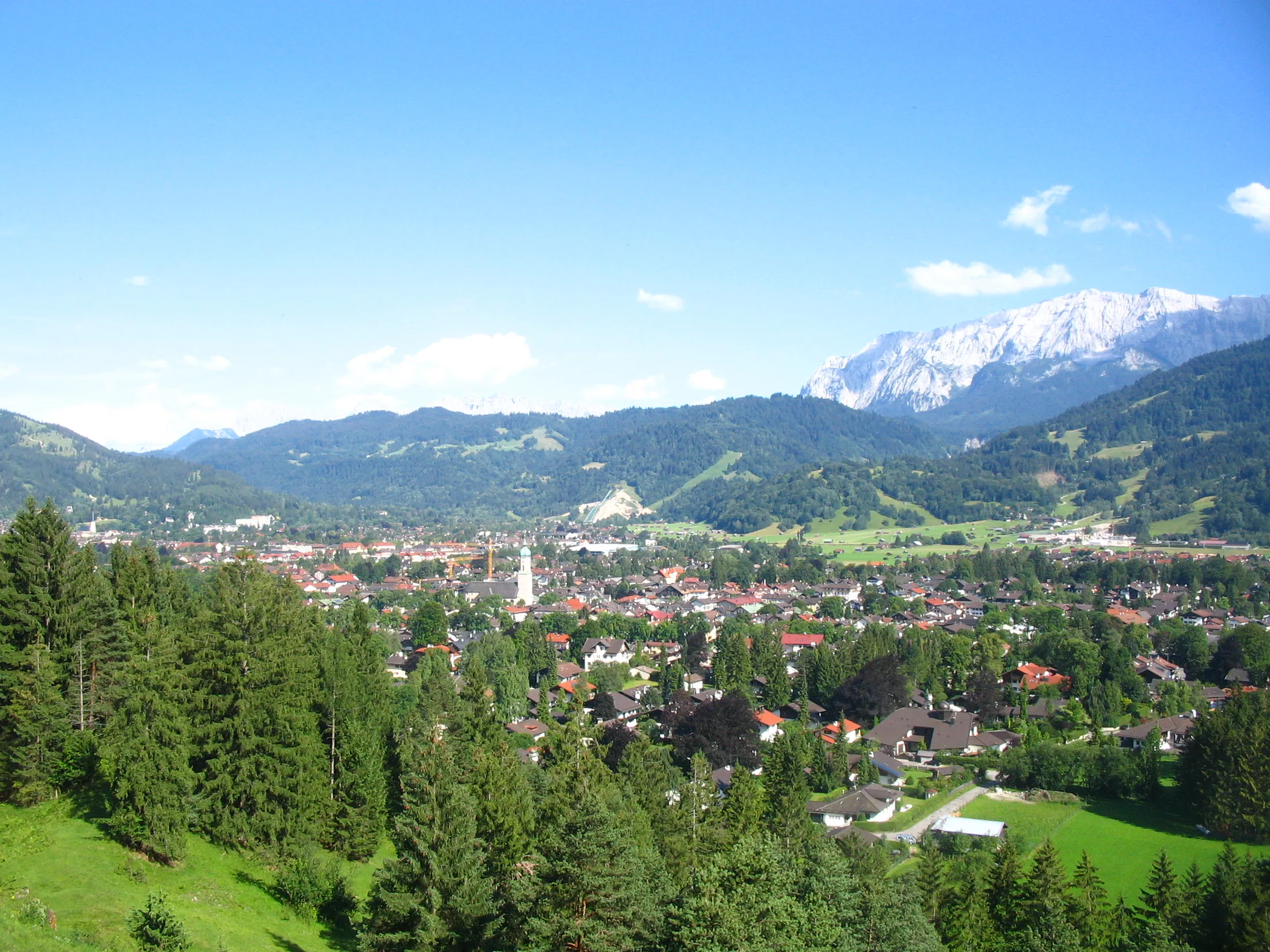
He had a friend from Greece who was living in Garmisch-Partenkirchen, Germany, a mountain town in Bavaria near the Austrian border. The name itself sounds like a place invented by altitude: long, hyphenated, alpine, full of consonants and chalet roofs. It was closer to Dubai’s time zone than California. That mattered. Keith reasoned that if he could get himself to Germany, he would at least be awake while Dubai was awake. He could apply, follow up, call, adjust, and live in the same broad business day as the future he wanted.
So he asked his friend.
“Can I come stay with you for a little while?”
“How long is a little while?”
“Until Dubai says yes.”
The friend, either generous or insufficiently warned, said yes.
Garmisch was not Dubai. It was almost aggressively not Dubai. Dubai existed in Keith’s mind as heat, glass, movement, possibility, desert ambition, and manufactured snow. Garmisch offered mountains with actual snow, clear cold mornings, timber balconies, church bells, wet boots by the door, and the dense quiet of a town that had already decided what it was. It had none of Dubai’s restlessness. It did not seem to be inventing itself. It seemed to have been there forever, watching young men come through with plans.
The town sat beneath the Alps with an almost storybook self-possession. Peaks rose beyond the roofs, white and gray and blue depending on the hour. Morning light slid down the slopes before reaching the streets. In winter, the air had a mineral sharpness. In warmer weather, the valley smelled of cut grass, damp stone, woodsmoke, and bakery bread. The mountains made human ambition feel both ridiculous and clarifying. They did not care where Keith wanted to go. That helped. He had always done well around landscapes that refused to flatter him.
He was staying near a U.S. military facility, close enough to need the rhythms and permissions of that world. To extend the stay and to move in and out more easily, he took work at the post exchange. The job was not the point, but the access mattered. An ID, in that period, was not just a card. It was a hinge. It meant he could enter and leave the facility without turning every movement into a negotiation. It gave the waiting period structure, and structure was essential because the waiting was longer than expected.
Two months.
That is a short phrase and a long experience.
Two months is long enough for a dream to begin sounding foolish in your own head. Long enough for friends to ask how it is going with a softness that implies concern. Long enough for the first energy to wear off, for the adventure to become routine, for the heroic version of the story to get replaced by laundry, passwords, cover letters, follow-up emails, job boards, forms, silence, and the particular humiliation of sending yourself into the world over and over and receiving nothing back.
Keith applied eight hours a day.
That detail has no glamour, which is why it matters.
He sat at a desk, or a table, or wherever the day allowed, and did the work. Search. Read. Adjust. Apply. Send. Track. Repeat. The process had a clerical brutality to it. There was no applause in it. No backpacker romance. No island air. No silverware laughter. No discovery bus stopping in some town because the street looked interesting. This was not travel as liberation. This was travel as discipline.
The cursor blinked.
What could he do each day that would bring the imagined life closer to the real one?
The inbox stayed quiet.
Another application went out.
He learned the physical feeling of applying for a life. The way the shoulders tighten after hour four. The way every job description begins to sound both promising and hostile. The way a cover letter can feel sincere in the morning and ridiculous by afternoon. The way hope refreshes itself against evidence, then weakens, then returns because there is no useful alternative.
I asked him, years later, whether those days felt exciting.
“Not most of the time,” he said. “Most of the time it was just work.”
That is the part of self-authorship that rarely makes it into the romantic version. There is the visible leap, and then there is the room where you sit afterward, trying to make the leap pay rent.
In Garmisch, Keith was not yet the person he would become in Dubai. He had no regional reputation, no Gulf network, no institutional fluency, no proof that the move would work. He had only the conviction that staying would be worse than failing. The United States, from that distance, did not look bad. It looked available. That was the danger. Availability has a narcotic quality. You can mistake the life nearest at hand for the life meant for you, simply because the paperwork is easier.
Keith did not want ease to become destiny.
So he made the days narrow. Eight hours. Applications. Dubai. Again.
The workday in Garmisch had its own strange geography. Outside were mountains, cafés, uniforms, tourists, soldiers, bicycles, church spires, the soft Bavarian orderliness of a town that knew how to fold itself neatly into the valley. Inside was Keith’s improvised command center. Laptop open. Notes scattered. Job posts marked. Contacts researched. Time zones calculated. A young man trying to persuade a city he had never lived in to recognize him as already on his way.
Sometimes his friend would pass through the room and look at the screen.
“Any luck?”
“Not yet.”
“You’ve been at it all day.”
“Then I’m due.”
At the post exchange, the work was practical, almost soothingly mundane. Shelves, customers, small transactions, the fluorescent neutrality of military retail life. It gave him something other than his own ambition to look at. It also placed him among a floating population of Americans abroad, people living inside a partial version of home set down in someone else’s country. That in-between quality suited the moment. Keith was not fully in Europe, not back in America, not yet in Dubai. He was in a corridor.
Corridors are uncomfortable places to live because they are designed for passage, not residence. But they reveal a great deal about a person. Some people, trapped between rooms, panic. Some decorate the corridor and pretend they chose it. Keith treated it as a work site.
You can mistake the life nearest at hand for the life meant for you, simply because the paperwork is easier.
He was learning something about persistence that was different from the persistence of youth. On Maui, persistence had been physical and immediate: return to the restaurant, stand there, ask again. In Garmisch, persistence was bureaucratic and invisible. There was no manager to impress by showing up three times. There was no single person watching his effort accumulate into proof. The proof had to be internal. He had to keep believing in the process while the process offered little evidence that it noticed him.
This kind of persistence is colder. It demands a private standard.
Every morning, Dubai was still not his.
Every evening, it was slightly more possible because he had spent the day behaving as if it would be.
That was enough.
The applications became a ritual of future construction. Each one was an argument with inertia. Each one said: I am not staying where the default would leave me. Each one pushed against the quiet, reasonable voice that asks why a person cannot simply begin nearby, accept something solid, and let life expand later if expansion becomes convenient.
Keith did not trust later.
Later is where unlived lives go to sound responsible.
So he kept applying.
There must have been moments when the whole plan looked faintly absurd. A young American in Bavaria, working at the post exchange, staying with a friend from a Greek summer, applying to jobs in a Gulf city because an indoor ski slope had convinced him that the place had the right kind of madness. Written badly, it sounds like randomness. Lived honestly, it was a pattern becoming clear before anyone could name it.
He was placing himself closer to the thing he wanted before the thing had accepted him.
That is a different move from waiting. It changes the psychology. Distance makes dreams abstract. Proximity makes them accountable. Once he had moved to Germany, Dubai was no longer an idea he could admire from California. It was the reason he was there. The plan now had rent, meals, hours, awkwardness, dependence on a friend, paperwork, and the daily risk of looking foolish.
All serious dreams need a phase in which they make you look foolish.
Otherwise, they are probably too small.
By the second month, the waiting had changed shape. He knew the job boards better. He knew the types of roles that might open. He knew which applications vanished into corporate systems and which seemed to have a human being somewhere near them. He adjusted language. He followed leads. He learned, without calling it that, how markets speak about themselves and what they think they are buying when they hire. Dubai became less of a symbol and more of an operating environment. Less snow dome, more employers. Less future, more process.
Then the yes came.
Every evening, it was slightly more possible because he had spent the day behaving as if it would be.
Not a life-changing yes in the way films like to frame it. No swelling score. No camera circling the room. Just the practical arrival of permission: an offer, a salary, a starting point. Twelve thousand dirhams a month. Roughly thirty-three hundred dollars. Enough to go. Not enough to feel grand. Enough to make the imagined place real.
Keith had done it.
He had converted a search result into geography.
When I asked him what he felt when the Dubai job finally came through, he did not give me a clean inspirational line. He remembered relief first. Relief has a way of arriving before triumph. It loosens the body. It turns the previous two months into evidence instead of anxiety. It makes the hours retroactively meaningful.
“I just thought, okay,” he said. “Now we go.”
Now we go.
That sentence carries much of Keith’s life inside it. Not now we celebrate. Not now we explain. Not now we wait until the plan is fully dignified. Now we go.
He packed the life he had been temporarily living in Germany and prepared to enter the city that had been waiting on the other side of all those applications. The Alps, which had held him in their cold, orderly patience, receded into the background. The military facility, the post exchange, the borrowed stay, the eight-hour days, the quiet inboxes, the awkward dependence, the small humiliations of wanting something not yet guaranteed, all of it became the corridor through which he had passed.
A person’s life often turns on the visible decisions: the flight, the job, the move, the arrival. But the truer turning point may have been less cinematic: Keith in Garmisch, alone with the applications, teaching himself that wanting a different life was not enough. The wanting had to become a schedule. The schedule had to become a habit. The habit had to outlast silence.
Dubai said yes only after Keith had spent two months acting as if yes were a matter of time.
This is not manifesting. It is not optimism. It is not the scented myth that the universe rewards desire because desire is pure. It is more stubborn than that, and more useful. Keith moved closer. He made the future logistically inconvenient. He worked at the edge of it until it opened.
The ski slope in the desert had caught his imagination because it represented a city willing to build the implausible in public.
Garmisch taught him the private cost of doing the same thing.
There, beneath the Alps, in a town that was not the destination but made the destination possible, Keith learned that the future does not only reward movement. It rewards repetition. It rewards the morning after conviction, the afternoon after no response, the next application after embarrassment, the ordinary day when no one is watching and the dream has stopped feeling romantic but has not stopped being true.
By the time he left Germany, Dubai was no longer fantasy.
It was an address waiting to be survived.
Chapter 6 The City That Was Also Making Itself Real
Dubai received Keith Parker not as a destination receives a traveler, but as a construction site receives another pair of hands.
This was not the Dubai most people imagine now, all perfected glass, branded skylines, choreographed luxury, and the weird museum quality of a city that has become famous for its own ambition. The Dubai Keith entered was younger, looser, more improvised. It had already begun performing the future, but the cables still showed. The city was not finished, and because it was not finished, it had room for people who were not finished either.
That was the seduction.
A polished city asks where you fit. An unfinished one asks what you can build.
The city was not finished, and because it was not finished, it had room for people who were not finished either.
Keith arrived with the offer that had carried him out of Germany and into the Gulf: twelve thousand dirhams a month, roughly thirty-three hundred dollars. It was enough to cross into the life he wanted, not enough to mistake the crossing for arrival. Dubai has always had a talent for making people feel rich and undercapitalized at the same time. It placed excess everywhere, then charged admission to the feeling.


Keith did not begin in excess. He began in a maid’s room at the back of a villa in Umm Suqeim 1.
The phrase “maid’s room” is almost too polite for what it often means in Dubai: a small service space attached to a larger household, tucked out of sight, built for utility more than comfort. In Keith’s case, it was tiny enough to make possessions feel accusatory. A bed, a bag, a few clothes, the minimum architecture of a beginning. The room did not flatter him. It did not care that he had moved across continents to get there. It did not glow with the cinematic promise of expatriate reinvention. It was just a small room behind someone else’s villa, and every morning he woke inside it as the city outside rehearsed grandeur.
When I asked him what he remembered most about that first period, I expected some grand image: the towers, the desert, the heat, the shock of money, the noise of the city trying to become itself.
He smiled.
“The room was small,” he said.
“How small?”
He looked away, measuring memory against exaggeration.
“Small enough that you knew you were there to move through it.”
That is one of the better definitions of a starting point I have heard.
The villa sat in a part of Dubai that still held the texture of neighborhoods before the city’s later layers of finish and scale accumulated around them. Umm Suqeim had walls, gates, sand-colored houses, bougainvillea spilling where it was allowed, satellite dishes, stray cats, the smell of irrigation hitting warm dust, and roads that could feel both suburban and temporary. The Gulf was not far. The Burj Al Arab stood like a sail-shaped rumor of money and imagination, visible from parts of daily life in a way that made extravagance seem almost civic.
In the mornings, heat gathered early. It did not rise gently. It appeared, pressed down, and made itself known. Car doors burned the hand. Steering wheels became small acts of punishment. The sky could be a pale, bleached blue, less like weather than exposure. Air-conditioning was not a luxury. It was habitat.
Keith loved it.
Not every part of it. No one loves every part of Dubai honestly. The city is too extreme for that. It is hot, transactional, thrilling, artificial, generous, exhausting, narrow in some ways, limitless in others. It gives people a future and then invoices them for the privilege. But the central energy of the place suited him. Dubai was not asking anyone to be subtle about wanting more.
It was a city where ambition had not yet learned to apologize.
That mattered. Keith had come from places that gave him other forms of training: silence, scale, discovery, discipline, hunger, movement. Dubai gave him velocity. It rewarded people who moved quickly, met people, said yes, figured things out, and did not require too much explanation before acting. The city was full of arrivals pretending to know exactly what they were doing. Some were frauds. Some were builders. Many were both in alternating hours of the same day.
Everyone was in motion.
You could feel it in the traffic on Sheikh Zayed Road, where the towers rose like a dare along the highway and the lanes seemed designed by someone who believed hesitation was a moral defect. You could feel it in hotel lobbies, where suits, abayas, polo shirts, perfume, construction dust, and opportunity passed through one another under chandeliers. You could feel it in the after-work crowds, in the accents braided through every room, in the sense that almost nobody’s biography had started there and almost everyone’s biography was being revised there.
Early Dubai had a social density that later polish would dilute. Keith describes it almost like a village disguised as a global city. There were fewer places to go, fewer circuits, fewer layers of private luxury separating one kind of person from another. You went out and saw the same faces again. Someone you met on a Thursday night might appear in a meeting the next week. A friend of a friend became a client lead. A conversation at one bar became a weekend plan, then a project, then a strange little strand in the city’s growing web.
“It was smaller then,” Keith told me. “You’d run into people all the time. It felt like everyone was building something, or trying to.”
The city had not yet become a finished mythology. It was still possible to feel close to the machinery.
At the marina, Keith and friends could back a Jeep up near the shore and play music. That image feels almost impossible now, or at least like something from a less managed Dubai, before every edge had been branded, permitted, patrolled, landscaped, and monetized. A Jeep, sand and pavement under the tires, music from the back, the water dark beyond them, towers rising with the faintly unreal glow of things still deciding how permanent they planned to be.
Someone would open the back.
It was enough to cross into the life he wanted, not enough to mistake the crossing for arrival.
Someone would say, “Turn it up.”
Someone else, already sweating through a shirt in the night heat, would laugh and say, “This place is ridiculous.”
And it was. That was part of its charm.
The marina air would carry salt, petrol, perfume, cigarette smoke, cologne, warm concrete, and the marine rot that even the most ambitious waterfront cannot fully abolish. The city lights would cut long, trembling lines across the water. In the distance, construction cranes blinked like patient insects. People stood around in the informal democracy of youth, nobody fully established yet, nobody fully sure what the next year would become, all of them temporarily held together by heat, music, movement, and the shared conviction that somewhere nearby, something was about to happen.
Dubai made that feeling feel reasonable.
In other cities, improbability requires defense. In Dubai, improbability had zoning approval.
Keith was young enough to absorb this without cynicism. Old enough to understand that the promise would still require work. That combination made him dangerous in the best sense. He was not there simply to consume the expat life, the brunches, the beach clubs, the apartments, the tax-free salary, the stories people tell back home to make their lives sound larger. He wanted those experiences, or at least some of them. But more than that, he wanted the city’s permission structure. Dubai gave him the feeling that a person could accelerate. Not gradually improve. Not patiently wait. Accelerate.
It also made visible a tension that would follow him for years: the difference between display and substance.
Dubai displayed everything. Wealth, certainty, modernity, scale, hospitality, possibility. Sometimes the display was astonishing because substance sat beneath it. Sometimes it was hollow, a theatrical surface stretched over speculation and debt. Learning to tell the difference became part of the education. The city’s genius was that both conditions could exist side by side, and both could wear the same suit.
A hotel lobby could hold a serious sovereign project at one table and a fantasy business at the next. A man could speak with enormous confidence about money he did not have. A development could be visionary, overbuilt, transformative, foolish, and commercially brilliant in the same paragraph. Dubai taught Keith not to be dazzled too easily, even while allowing himself to be energized.
That distinction matters.
Cynicism would have made him small. Naivete would have made him useful to the wrong people. Instead, he learned to stay alert. The city rewarded appetite, but it punished poor reading. You had to understand who mattered, who only looked like they mattered, which opportunities had machinery behind them, which promises were vapor, when to move, when to wait, when to follow up, when to disappear, when to look past the title and study the actual authority in the room.
At night, back in the maid’s room, the city’s scale condensed into practical facts. The job. The rent. The phone. The next day’s meetings. The strangeness of being in the place he had chosen and still being at the bottom of its ladder. It is one thing to imagine the future from far away. It is another to live inside the least glamorous version of it.
Every idea seemed to need a launch, a sponsor, a partner, a permit, a venue, a client, a deadline, a room full of people, a budget, and someone willing to make the thing happen by Thursday.
That is where many people become resentful. They wanted the symbol, not the terms. They wanted the new identity without the apprenticeship. Keith had enough earlier experience with underfunded beginnings to recognize the bargain. The small room did not contradict the dream. It proved he had entered it.
He was inside the city now. That was enough.
What Dubai offered him was not comfort. It offered a field of consequence. The city was moving too fast for anyone to hide forever behind theory. Every idea seemed to need a launch, a sponsor, a partner, a permit, a venue, a client, a deadline, a room full of people, a budget, and someone willing to make the thing happen by Thursday. This was the perfect next school for him because Dubai was not especially interested in the purity of intentions. It wanted execution.
This would matter when he moved into conferences and events. It would matter when technical projects had to become public artifacts. It would matter when government work needed structure, when national ambition needed language, when later corporate transformations needed speed. But in the beginning, before any of that could be named, it was simply the texture of daily life.
Say yes.
Find the person.
Make the call.
Get the room.
Move the date.
Fix the problem.
Do not wait too long.
Dubai was full of people who had come to reinvent themselves, but reinvention there was not contemplative. It was logistical. You could not sit around waiting to feel transformed. The city transformed people by placing them in situations for which they had to become adequate quickly.
Keith became adequate quickly.
Not perfectly. Not without mistakes. The first Dubai years were too fast, too social, too exposed for clean development. There were nights that ran too late, days that began too early, expenses that taught their lessons, contacts that went nowhere, small victories that felt enormous because the baseline was still that tiny room behind a villa. There were moments when the city must have felt less like a co-conspirator and more like a machine that did not notice whether he kept up.
The city transformed people by placing them in situations for which they had to become adequate quickly.
But that was also the appeal. Dubai did not wait for him. It required him to catch up.
The city had a way of collapsing distance between aspiration and attempt. In more settled places, people often spend years preparing to become the sort of person who might do a thing. In Dubai, the thing arrived first. A project, a meeting, a title, a client, a problem too large for the existing plan. You became the person by doing the thing before you had finished becoming the person.
Keith recognized this because it resembled his own operating logic.
He had moved before certainty. Dubai built before consensus.
He had made future lives visible before they were rational. Dubai made impossible projects literal before outsiders had finished laughing.
He had learned that a dream has to survive logistics. Dubai was nothing if not logistics wrapped in spectacle.
This is why the city and the young man fit. Not because Dubai was easy. Because it was unfinished in the right way.
When he talks about early Dubai now, there is affection in the details that would not impress someone looking for glamour. The smallness of the social scene. The recurring faces. The Jeep by the water. The strange intimacy of an expat city still becoming itself. The humble room. The salary that was enough but not too much. The sense of being present before the story became obvious.
That last part is important. Keith did not arrive after Dubai had completed its pitch to the world. He arrived while the pitch was still being built, argued, exaggerated, financed, embodied, doubted, and sold. He got to watch a city make itself real in public.
For a young man trying to do the same thing privately, it was almost too perfect.
The next phase of his education would be less romantic. It would involve carpeted conference rooms, speaker bios, sales targets, sponsor expectations, hotel staff, registration desks, agendas, deadlines, and the particular panic that arrives when an event is no longer an idea but a room about to fill with people.
Dubai had given Keith velocity.
Now it would teach him delivery.
Chapter 7 Operator School
A conference is a useful humiliation for anyone who thinks strategy lives in documents.
The document can be elegant. The agenda can be crisp. The theme can sound urgent, serious, commercial, future-facing. The brochure can promise transformation in three well-balanced phrases. The sales team can repeat the value proposition until it feels less like language than machinery. But at some point, early in the morning, in a hotel ballroom that smells of carpet glue, coffee urns, electrical dust, and chilled air-conditioning, the doors open.
Then the idea has to become real.
People arrive.
A conference was product, market, message, operations, customer experience, revenue, reputation, and performance review, all wearing lanyards.
They want badges. They want Wi-Fi. They want coffee. They want to know why their name is not spelled correctly. They want to know whether the minister is still speaking. They want a printed agenda even though the agenda changed at midnight. They want the vegetarian lunch they did not request but now insist they requested. They want the slides. They want the invoice. They want the sponsor table moved six feet to the left. They want to know whether the CEO flew in. They want to know why the CEO did not fly in. They want a return on the money someone approved weeks ago because the brochure had sounded convincing.

This was Keith Parker’s first real professional school in Dubai.
Not the business-school version of work, where ideas remain clean because nobody has yet tried to execute them. Not the glossy-expatriate version of Dubai, where young foreigners tell themselves they are in the future because the lobby is large and the elevator is mirrored. This was the operational layer: research, calls, agendas, speakers, sponsors, delegate sales, hotel contracts, room sets, margins, microphones, name cards, late confirmations, empty chairs, difficult clients, and the slow discovery that a weak premise will eventually embarrass you in public.
At IIR, IQPC, and later Informa, Keith learned that business content was only as good as its ability to survive a room full of people who had paid to be there.
“Events are brutal,” he told me. “Because the room tells the truth.”
He meant this literally. A conference room has very little mercy. If the topic is too vague, people drift. If the speaker is too polished and empty, phones come out. If the audience was sold one thing and receives another, the disappointment becomes physical. You can feel it in the posture of the room, in the way shoulders collapse after the first fifteen minutes, in the sudden traffic at the coffee station, in the delegate who stands at the back with arms crossed, already composing the complaint he will send after lunch.
In other kinds of work, failure can hide in the future. In conferences, failure takes a seat in the third row.
Keith liked that.
Not failure, exactly. He liked the honesty. He liked the fact that an event compressed the whole commercial system into something visible. You had to read a market, turn that market into a program, recruit speakers who gave the program credibility, sell the idea to attendees, make sponsors believe there would be a serious audience, deliver on time, manage the room, protect the margin, and then do it again. It was a business in miniature, but with less room for abstraction. A conference was product, market, message, operations, customer experience, revenue, reputation, and performance review, all wearing lanyards.
He was young. The work was not glamorous. That was good for him.
The day often began before the hotel felt awake. Banquet staff moved through the pre-function area in black trousers and white shirts, laying cups in straight lines and sliding silver urns into place. Someone tested the microphone and produced a small electric cough through the speakers. The ballroom doors were still closed. Inside, rows of chairs waited under light too bright for the hour. The stage had the faintly ridiculous solemnity of all temporary stages, as if eight inches of riser and a lectern could produce authority by themselves.
Keith would walk the room with a folder, a phone, and a list that was already wrong.
The first speaker had not arrived.
The sponsor backdrop had a wrinkle.
The hotel had set the room classroom-style when the contract said theater-style.
One of the panelists had emailed at 1:13 a.m. to say he had a conflict.
Someone from sales had promised a client that Keith would “take care of it.”
This phrase, he learned, was one of the great hazards of professional life. Take care of it. Three words by which one person transfers reality to another.
So he took care of it.
“Where’s the hotel manager?” he would ask.
“In the back.”
“Get him.”
“He’s busy.”
“So are we.”
That was the first kind of leadership Keith learned: not inspirational, not theoretical, not yet decorated with language about culture or empowerment. It was situational control under visible time pressure. The room opened at eight. The keynote started at nine. The sponsor had paid. The audience was coming. If the problem was not solved, the problem would become the event.
This is where he began developing an instinct that would later look like strategic judgment but began as logistics: find the hinge. Do not admire the whole mess. Find the thing that will make the mess move.
In a conference, the hinge might be the speaker who gave the agenda its authority. Or the topic that made the sales team believe. Or the sponsor whose logo carried credibility. Or the minister whose attendance turned a mid-level program into something people felt unable to miss. Or the single session title that made a technical subject commercially urgent.
Keith became good at finding the hinge because the business punished people who could not.
The first work was research. Not research in the academic sense, with the luxury of depth for its own sake, but market research as a hunt for urgency. What were people arguing about? What were companies buying? Which regulations were changing? Which industries were nervous? Which executives had budget? Which problems were irritating enough that people would leave their offices and pay to hear strangers discuss them in a hotel ballroom?
A conference producer, if he is doing the job properly, is part journalist, part salesperson, part product manager, part hostage negotiator, part amateur economist, and part stage manager. He has to call people who do not know him and make them tell the truth about what matters. He has to detect the difference between a fashionable subject and a commercially alive one. He has to hear the sentence beneath the sentence.
“What keeps coming up?” Keith would ask.
“Everyone’s talking about compliance.”
“Talking because they care, or talking because they think they’re supposed to care?”
There is a difference. The former sells. The latter fills panels and empties rooms.
He learned to listen for heat. Frustration. Budget. Fear. Opportunity. The topics that mattered had a pulse in them. People interrupted themselves when discussing them. They named names. They complained in detail. They said, “Off the record,” even when there was no record. Those were the moments when Keith leaned forward. A good agenda was not a list of respectable ideas. It was a map of live pain.
Then came the speakers.
Speaker recruitment sounds genteel until one has actually done it. In reality, it is pursuit. Calls, follow-ups, referrals, gatekeepers, assistants, calendars, declined invitations, tentative yeses, sudden withdrawals, and the constant need to persuade serious people that appearing on your stage is not a waste of their time.
Keith learned that important people say no in layers.
The first no is often automatic.
The second no is scheduling.
The third no is status.
The fourth no is fear of being trapped in a mediocre room.
So the task was not merely to ask. The task was to make the room sound worthy before the room existed.
He would call a senior executive, or more often the person protecting the executive from people like him, and make the argument.
The room becomes real because enough people act as if it is becoming real.
“This is not a generic industry update,” he would say. “The audience is senior. The topic is moving. We are building this around the actual decisions companies are making now.”
“How many people are attending?”
“We’re still finalizing.”
“So you don’t know.”
“We know who needs to be there.”
That was sometimes true before it was fully true, but not in the dishonest way. It was true as a construction principle. Conferences are built in public before the public has agreed they exist. You secure the first credible speaker to get the second. The second makes the third easier. A sponsor sees the names and buys. The audience sees the sponsor and believes. The room becomes real because enough people act as if it is becoming real.
Keith understood this. It was the old pattern again, but now professionalized. Make the imagined thing visible. Give others enough proof to join it. Keep building until reality catches up.
What made the work formative was not only the pressure, but the commercial accountability. There was a P&L. The numbers were not decorative. Revenue came in, costs went out, margin remained or did not. A program could sound intelligent and still fail as a business. A beautiful agenda with no buyers was an expensive hallucination.
Keith did not have the luxury of treating content as content alone. It had to perform. It had to attract. It had to hold. It had to justify the cost of the ballroom, the coffee, the travel, the printing, the staff, the speaker management, the sales hours, the marketing, the opportunity cost of doing this instead of something else.
This is why he would later be so impatient with professional worlds that confused activity with outcome. Early events made that confusion impossible. Nobody cared how much effort went into a conference that lost money, bored the audience, or collapsed on delivery. The effort might explain the failure. It did not redeem it.
One afternoon, during the run-up to a program that had become more fragile than anyone wanted to admit, Keith sat with a sales colleague over a spreadsheet and a speaker list. The room around them was ordinary: fluorescent light, old coffee, the hum of an overworked air conditioner, Dubai heat pressing invisibly against the glass outside.
“We need another name,” the sales colleague said.
“We have names.”
“We need a name people recognize.”
Keith looked at the agenda. It was structurally sound but not yet alive. The theme was right. The sessions were useful. But the program did not yet have the person whose presence made attendees feel the day had weight.
“Who is the person everyone wants to hear from but assumes we can’t get?” he asked.
The colleague laughed.
“That’s not a strategy.”
“It is if we get him.”
The next hours were calls, referrals, awkward asks, and a kind of professional stubbornness that had already shown up in other forms. Keith had learned something about refusal by then. A no was information, not always conclusion. The trick was to understand which kind of no you were hearing.
In conferences, this mattered constantly. The good speaker was unavailable until the right person asked. The sponsor was uninterested until the audience became specific. The audience was unconvinced until the topic became urgent. Everything was conditional. Everything moved if the pressure was applied in the right place.
This was operator school.
It taught him speed without sloppiness. It taught him that details were not beneath strategy. They were where strategy went to be tested. It taught him that a room has an emotional temperature, and that whoever owns the agenda does not automatically own the room. It taught him that authority could be built, but only if the proof arrived in time. It taught him that the phrase “we have a concept” means almost nothing until someone has agreed to show up, someone else has agreed to pay, and someone has responsibility for what happens when the microphone fails.
He became intolerant of vague ownership.
Events require names beside tasks. Not committees. Names. Someone has the badges. Someone has the speaker slides. Someone has the updated run sheet. Someone has the dietary list. Someone knows whether the sponsor video plays with sound. Someone knows where the driver is. Someone knows which ministerial protocol issue can derail the opening session. Someone knows what happens if the keynote goes long.
A system without ownership becomes a room full of people looking at one another.
A system without ownership becomes a room full of people looking at one another.
Keith hated that room.
He preferred the harder room, the one where expectations were sharp and deadlines were impolite. There was clarity in it. There was relief in the absence of pretense. At 8:55, when a ballroom was filling and a speaker still had not appeared, nobody could hide behind language. The problem had to be solved.
“Call him again,” Keith would say.
“He’s not answering.”
“Call the driver.”
“The driver says he’s in the lobby.”
“Which lobby?”
There is always another lobby.
That became a lesson too. Systems fail at points of assumption. The hotel lobby. The speaker entrance. The calendar invite. The version of the agenda someone printed yesterday. The sponsor’s expectation. The panelist who thought the session was moderated and the moderator who thought it was a presentation. Most failures begin not with incompetence, but with two people believing different things quietly.
Keith learned to surface the quiet difference before the room opened.
That skill would travel. Years later, in much larger environments, he would still be looking for the hidden mismatch: the leader who thinks the organization understands his intent when it does not; the company that thinks the market sees its value when it does not; the team that thinks activity is progress because the calendar is full; the institution that has substance but no usable architecture for carrying it outward.
The scale changed. The hinge-finding did not.
At the time, though, the work was not grand. It was busy, hot, caffeinated, commercially exposed, and often absurd.
A speaker would demand a hotel room for a thirty-minute keynote.
A delegate would insist he had registered even though nobody could find him anywhere in the system.
A sponsor would arrive with a booth that belonged to a different event.
Someone would print the wrong logo.
Someone would print the right logo in the wrong color.
Someone would ask whether the CEO could speak first because he had another appointment, and someone else would ask whether the CEO could speak last because he had not yet landed.
Keith learned to absorb the absurdity without letting it become the tone of the day. That is its own discipline. Panic is contagious. So is competence. In live work, people look for the person who seems to know which problem matters most. Keith became that person not because he was always calm by nature, but because the work gave him repeated practice in becoming calm quickly.
He also learned that polish is often the last thing that matters and the first thing people notice.
A stage can look perfect and the program still fail. A brochure can be beautiful and the audience wrong. A sponsor can have the largest logo in the room and still feel invisible if the room does not deliver the right conversations. The work underneath the work is what counts: the market read, the commercial proposition, the sequence, the credibility, the audience design, the follow-through.
This is why Keith’s later view of narrative would never be ornamental. He had seen too many ideas collapse under fluorescent lights.
In live work, people look for the person who seems to know which problem matters most.
The early conferences also gave him a durable respect for audiences. Not audiences as demographic abstractions, but as living groups of people with attention, impatience, intelligence, vanity, fatigue, and choice. An audience is not a passive recipient of content. It is a verdict waiting to form. It can be generous if the work respects it. It can be ruthless if the work wastes its time.
The first time an event truly worked, Keith felt the difference.
The room held.
The speaker landed.
Questions came fast and specific.
People stayed through the final session instead of slipping away after lunch.
Sponsors talked to real prospects.
The sales team looked relieved.
The hotel staff stopped being visible because nothing was breaking.
For a moment, all the invisible labor aligned, and the conference became what the brochure had promised before it had the right to promise it.
That feeling was addictive. Not because it was glamorous, but because it was proof. The imagined thing had become physical. People were sitting in the room. The conversation was happening. The business case had survived the day.
Keith would carry that feeling forward into work that looked, on the surface, more prestigious. Government projects. Public institutions. Major artifacts. Sovereign rooms. Corporate transformations. But the foundation stayed the same. Strategy had to open its doors eventually. Narrative had to stand in front of people. Authority had to earn the room.
I asked him once whether he missed that early event work.
He gave the kind of answer people give when they do not want to sound sentimental about a punishing chapter that formed them.
“I don’t miss everything about it,” he said. “But it taught me more than people would think.”
Then he paused.
“It taught me when something is real.”
That, finally, is the point of operator school.
It did not teach Keith to love logistics for their own sake. It taught him that logistics are where many ideas reveal whether they deserve to exist. It taught him that a program is not real because it has a title. A strategy is not real because it has a deck. A promise is not real because it has been approved. A future is not real because people have agreed to use the language.
The room has to open.
The people have to come.
The thing has to work.
Dubai had given Keith velocity. Conference production gave him consequence at human scale: a room, a clock, a budget, a margin, an audience, a speaker, a problem, a solution, a finish. Again and again, he learned to bring an idea to the threshold where it could no longer hide behind intention.
Then he watched it walk in.
Chapter 8 Flagship Artifacts
The next education was made of objects.
Not objects in the small, sentimental sense. Not souvenirs, keepsakes, or the little private relics people use to prove to themselves that a period of life happened. These were heavier things: books, atlases, summits, magazines, training platforms, institutional launches, public rooms, national programs, printed pages thick enough to hold a country’s seriousness.
After the conference years, Keith Parker began moving into a different kind of work in Abu Dhabi. The rooms became quieter. The materials became denser. The stakes became more difficult to explain to outsiders. Instead of an audience arriving with badges and sponsor lanyards, there were government entities, technical experts, scientists, educators, executives, committees, designers, consultants, approval chains, and people whose authority was not always visible on the org chart.
The work was no longer only to make the room function.
The work was to give complicated public effort a shape other people could carry.
The work was to give complicated public effort a shape other people could carry.

This is an underrated act. Institutions often produce substance long before they produce meaning. They commission research. They build systems. They gather data. They convene experts. They approve strategies. They generate binders, charts, memos, drafts, diagrams, studies, and minutes from meetings that end with the phrase “next steps” and then produce another meeting. Inside the institution, this can feel like progress. Outside it, nothing has happened yet.
Keith began to learn the difference.
At The GPC Group, a geographic information systems consultancy in Abu Dhabi, he found himself around a kind of work that was both highly technical and strangely beautiful. GIS is easy to flatten into a software category, which is how people who do not understand it usually escape having to understand it. But in practice, it is a way of making invisible systems visible. Land. Water. Roads. Utilities. Coastlines. Boundaries. Habitat. Urban expansion. Environmental pressure. The hidden grid beneath public life.
Maps, properly made, are not illustrations. They are arguments.
In the offices where this work happened, the day had a different texture from the hotel ballrooms. Screens glowed with satellite imagery, layers of data, coastline lines, utility corridors, municipal districts, environmental zones. Designers leaned in close to color-correct a wetland. Consultants argued over labels. Someone from a client entity would stand beside a monitor and say, “No, that is not the boundary,” and someone else would reply, “It is the boundary in the current data,” and then the real conversation would begin.
Keith liked that kind of tension. It was precise. It had consequences. If a map was wrong, it was not wrong in an abstract way. It could mislead a decision. If a technical explanation was unclear, it did not merely bore people. It prevented the work from being used.
He was not the scientist in the room. He was not pretending to be. But he had begun developing something that would become central to his later life: a respect for expertise combined with impatience toward expertise that could not travel.
“Technical people sometimes think the work speaks for itself,” he told me. “It doesn’t. Not because the work is weak. Because the work is trapped until someone gives it a form other people can use.”
This was the chapter in which form became serious.
The Environmental Atlas of Abu Dhabi Emirate was the clearest example. It was, in one sense, a book. But that word undersells it. A book can be a container for text. The Atlas was closer to an institutional object, a way of saying: this place has been studied, understood, rendered, and dignified. Here are its islands, deserts, mangroves, sabkhas, waters, birds, plants, mammals, pressures, patterns, fragilities, and futures. Here is the country not as slogan, not as skyline, not as oil wealth or diplomatic phrase, but as terrain.
In my mind, I picture Keith in a room full of spreads.
Pages laid flat across a table. Maps with legends still being adjusted. Photographs of landscapes that looked almost lunar beside images of sudden, improbable life. Arabic and English text moving in parallel columns. Designers arguing about bleed lines. Experts asking whether the nuance had survived the caption. Someone worried about a species name. Someone else worried about a deadline. The air-conditioning too cold. Coffee going stale in paper cups. The table slowly disappearing under proof after proof after proof.
Keith would move through the room asking the kinds of questions that sound simple until no one can answer them cleanly.
“What is this page supposed to make someone understand?”
“Who needs to believe this?”
“If a minister opens here first, what does he see?”
“If this goes to a school, does it still work?”
“If this is handed to someone outside the UAE, what does it say about the country before anyone reads a word?”
These were not decorative questions. They were questions about public meaning.
The Atlas eventually became more than a deliverable. It was sold in bookstores across the UAE. It was handed internationally as a diplomatic gift. That detail matters because it reveals what kind of object it had become. A diplomatic gift has to carry more than information. It has to carry dignity. It has to say, silently, this is what we value; this is what we know; this is what we have taken the trouble to understand.
A PDF cannot always do that. A talking point cannot do that. A speech may do it for a moment, then vanish into memory. But a physical artifact sits on a table. It has weight. It can be opened by someone who was not present for the meeting. It can travel without its creators. It can outlast the calendar that produced it.
Keith became interested in that kind of durability.
The Eye on Earth Summit carried the same lesson at a different scale. If the Atlas turned the environment into an object, the summit turned environmental data into a public room. More than 2,000 participants. International keynote figures, senior public-sector participants, scientists, advocates, technologists, experts, delegates, all gathering around the idea that better environmental information could change public decisions.
A summit of that scale has its own weather. Before it opens, everything is pressure. The guest list, the seating plan, the security flows, the speaker sequence, the translation headsets, the ministerial protocols, the sponsor expectations, the technical rehearsals, the late changes that arrive dressed as instructions. But unlike the commercial conferences Keith had built earlier, this room was carrying a different kind of claim. It was not selling a market opportunity. It was staging a public argument about knowledge, governance, and the planet.
That made the room feel heavier.
He had known events as products. Now he was seeing events as institutional proof.
The summit had to work at several levels at once. It had to satisfy the senior people who needed the room to feel credible. It had to respect the scientists, who did not want their work flattened into ceremony. It had to hold the attention of participants who had flown in from many countries with their own agendas and fatigue. It had to give Abu Dhabi a role in a conversation larger than Abu Dhabi. It had to turn environmental data into something urgent enough to convene around.
In the backstage version of the scene, Keith is not thinking about grandeur. He is thinking about the next problem.
“Where is the speaker?”
“Which entrance?”
“No, not that entrance.”
“Who has the revised order?”
“Do we have the final remarks?”
“Who approved that version?”
Someone says, “The delegation is moving.”
But he had begun developing something that would become central to his later life: a respect for expertise combined with impatience toward expertise that could not travel.
Someone else says, “The screen is wrong.”
A headset crackles. A door opens. A senior figure appears earlier than expected. A staff member looks across the room for the person who can decide.
Keith learned that institutional seriousness does not eliminate chaos. It only makes chaos wear better clothes.
But when the doors opened and the room held, the work became something else. It became a public fact. People who had never read the underlying research could feel its significance because the event gave it scale. People who could not interpret the technical systems could still understand that environmental data had become a matter worthy of leaders, media, experts, and international attention.
That was the point.
The work was not to make government sound interesting. The work was to make serious public effort legible enough that others could believe it, support it, repeat it, fund it, teach it, and carry it into other rooms.
There is a certain kind of career that moves upward by shedding the concrete. People begin with logistics, then graduate into language, then into strategy, then into rooms where the physical world is treated as someone else’s responsibility. Keith moved differently. The deeper he went into strategy, the more he seemed to trust things he could point to.
A summit.
An atlas.
A magazine.
A school launch.
A training platform.
A national program.
A room that had opened.
A book that could be held.
At the Abu Dhabi Chamber, overseeing the UAE Academy, the artifacts changed again. Education is full of invisible work: curriculum design, accreditation, partnerships, institutional positioning, employer needs, student pathways, training frameworks, faculty expectations, executive approvals. Much of it is deeply consequential and almost impossible to make vivid. That is why it so often gets buried under dull language.
The UAE Academy was meant to support Emiratis in professional growth and entrepreneurial ventures. It had a practical mandate, but practical mandates still need public shape. Keith worked on the relaunch of the Abu Dhabi School of Management, in partnership with a renowned UK university and major professional partners. He helped formulate NQA-aligned vocational business training programs for corporate and public-sector clients. He launched Insight Magazine, an entrepreneurship-focused publication.
Seen carelessly, these are bullet points. Seen properly, they are a pattern.
A school is an artifact of ambition. A training program is an artifact of workforce strategy. A magazine is an artifact of a community trying to see itself as more entrepreneurial than it had been. Each one says, in a different register, here is the future we are trying to make normal.
That word, normal, is important. Institutions do not transform only by announcing ambition. They transform when enough artifacts exist that the ambition can be practiced by ordinary people. A student enrolls. A manager attends a training. A young founder reads an interview and feels slightly less alone. A government partner sees a program and understands where to send people. A chamber stops speaking only in broad economic language and begins producing mechanisms.
Keith’s role in these settings was not to stand outside the work and decorate it with language. It was to help the work acquire handles.
The work was to make serious public effort legible enough that others could believe it, support it, repeat it, fund it, teach it, and carry it into other rooms.
“You have to give people something to grab,” he told me. “Otherwise even good ideas stay too abstract.”
That could be the governing sentence of this chapter.
The same pattern continued around Masdar Institute, ADNOC, Abu Dhabi Ports, Dubai Creative Clusters Authority, and other public and semi-public entities whose work sat at the intersection of national ambition and operational complexity. Each had its own grammar. Energy had one. Ports had another. Sustainable technology had another. Education another. Creative industries another. Traditional institutions often behaved as if their complexity should impress people into understanding. It rarely did.
The task was to enter each system and ask: what is actually happening here, what matters, who needs to understand it, and what form will let the truth move?
At Masdar Institute, the challenge was science-to-public translation. Research visibility. Sustainability without slogan. Technical credibility without academic enclosure. The place had intellectual seriousness, but seriousness has a way of becoming invisible if it cannot cross the border between expert and public. A lab, a research project, a faculty achievement, a partnership, a student story, all of it needed a shape that did not insult the science by simplifying it into mush.
At ADNOC and Abu Dhabi Ports, the language of national infrastructure brought another challenge. These were not lightweight brands. They were institutions attached to energy, logistics, state capacity, economic movement, and the practical machinery of a country. Work in those environments requires a different posture. Less sparkle. More gravity. The sentences have to hold more weight. They cannot sound like they were borrowed from a consumer campaign and dressed in a kandura.
Keith learned to feel those differences.
This was one of the hidden benefits of the UAE years: range without abstraction. He was not moving between sectors as a tourist. He was moving through real institutional differences and learning how each one created, protected, distorted, or released meaning. A technical consultancy did not think like a chamber. A chamber did not think like a research institute. A port did not think like a creative cluster. An environmental authority did not think like an energy company. Each had its own anxieties, incentives, gatekeepers, vocabulary, approvals, blind spots, and internal myths.
The lazy version of strategic work treats all of this as messaging.
Keith was learning to treat it as architecture.
Architecture asks whether the thing can stand. Whether the load is distributed. Whether people can move through it. Whether the entrance is clear. Whether the beautiful part collapses when used. Whether the whole structure makes sense from inside and outside.
That is what flagship artifacts do at their best. They let a complicated institution stand in public without explaining itself to death.
The Environmental Atlas could sit on a table and speak before anyone presented it. Eye on Earth could gather thousands of people and make data feel like a shared global problem. The UAE Academy could become more than a name through programs, partnerships, and publications. Insight Magazine could turn entrepreneurship from a policy aspiration into a recurring public conversation. Masdar Institute’s research could reach beyond specialist corridors. A national address system, GIS program, or municipal framework could become more than internal modernization if people could understand why it mattered.
In this chapter, Keith also learned the politics of contribution. In public-institutional work, almost nothing belongs to one person. That is both true and maddening. The better the artifact, the more fingerprints it contains. Designers, writers, scientists, officials, consultants, vendors, photographers, translators, executives, reviewers, printers, protocol teams, and people who appear late to ask why something already approved cannot be changed. Everyone touches the work. Some improve it. Some slow it. Some protect it from errors the ambitious people were too impatient to see.
This requires a particular kind of ego management.
Too little ego, and you get swallowed by the process.
Too much, and the process rejects you.
Keith had to learn when to push, when to absorb, when to let someone else own the sentence, when to insist that the page was not ready, when to let a room feel heard before moving it, and when to stop debating because the deadline had become more important than the preference.
There were days when the work must have felt absurdly granular. A caption. A comma. A logo. A protocol issue. A speech draft. A seating plan. A print proof. A training outline. A partner name that needed to appear in one place and absolutely not in another. The same man who had crossed oceans chasing larger life was now spending afternoons inside institutional details so small they could seem almost comic.
But that was the paradox. Large work is made of small decisions that do not feel large while they are being made.
Large work is made of small decisions that do not feel large while they are being made.
A diplomatic gift is made of paper weight, image selection, factual accuracy, binding quality, translation choices, and the absence of embarrassing mistakes. A summit is made of arrival flows, sound checks, agendas, delegate confidence, and the delicate art of making powerful people feel oriented without making the staff disappear. A school relaunch is made of accreditation steps, partner trust, public explanation, internal behavior, and the first cohort that proves the thing is not merely announced. A magazine is made of editorial judgment, layout, distribution, voice, and whether anyone feels compelled to pick up the next issue.
The artifact is the visible end of an invisible discipline.
This is where Keith’s earlier operator training met something larger. Conferences had taught him that ideas must survive a room. Abu Dhabi’s institutions taught him that ideas must also survive time, translation, authority, and public use. The thing must still make sense after the launch. It must make sense when handed to a visitor. It must make sense when opened by someone not present for the internal meetings. It must make sense when a minister references it, when a journalist describes it, when a partner repeats it, when a student encounters it, when a future team inherits it.
The artifact has to travel.
Not geographically, though sometimes it does. It has to travel from expert to public, from institution to audience, from policy to practice, from ambition to proof.
That became one of Keith’s deeper professional instincts. Do not leave seriousness trapped inside the serious people. Do not let institutions confuse internal effort with external understanding. Do not let complexity become an excuse for illegibility. Build the thing people can point to. Make it good enough that it does not need constant defense. Give the work a form that can carry authority without shouting.
When I sat with Keith and asked him about this period, he did not talk about it with the swagger of someone who believed he had shaped a country. He talked about it with the satisfaction of someone who had discovered a medium.
“Those projects taught me that the artifact matters,” he said. “Not because the artifact is the work. Because the artifact is how the work escapes the building.”
That is the line between a project and a public fact.
The Environmental Atlas escaped the building. Eye on Earth escaped the building. Insight Magazine escaped the building. The UAE Academy’s programs escaped the building. The work at Masdar and other institutions escaped the building when it found forms that could be understood by people who had not sat through the internal debates.
This was not the glamorous part of the global life, not in the obvious sense. It was not beaches, hostels, buses, or the easy romance of movement. It was government offices, expert reviews, high-stakes deliverables, institutional patience, and the slow accumulation of judgment. But in some ways it was the chapter where Keith’s earlier life became professionally legible. The boy from Alaska who trusted realness. The traveler who learned to read local systems. The young man in Dubai who liked velocity. The conference operator who knew the room would tell the truth. All of that now met public institutions trying to make complex work visible.
He had learned to move first.
Now he was learning to make meaning move.
The next rooms would become more unstable. America would re-enter the story. Family life would thicken. The neatness of career ambition would collide with cost, children, exhaustion, geography, and the strange emotional fact that the place you return to is not always the place you left. But before that, Abu Dhabi gave Keith one of the permanent tools of his life: the belief that serious work deserves a form strong enough to survive beyond the people who made it.
A book on a table.
A room full of delegates.
A school with a new name.
A magazine with ink still drying.
A map that turned hidden systems into public knowledge.
A country, in fragments, learning how to show its work.
Chapter 9 The Room Gets Unstable
The first warning was brunch.
Keith Parker and Cherise had come back to California with the practical optimism of people who had lived abroad long enough to believe they could make almost anywhere work. They had been in cities that moved quickly, where the week seemed to assemble itself out of ambition, heat, aircraft, hotel lobbies, late dinners, borrowed confidence, and the strange velocity of expat life. They had spent years in a place where scale was not theoretical. Scale was across the street, under construction, lit up, valet-parked, publicly overpromising and then, often enough to keep the faith alive, delivering.
Sacramento was different.
This was not immediately a tragedy. Sacramento had its charms: river light, old trees, summer heat that rose off the pavement, neighborhoods with porches, civic pride, a certain capital-city earnestness that could be honorable when it was not being parochial. It was near where Keith had been born. It carried a kind of biographical symmetry. After so much motion, there was something almost sensible about returning to the region where the story had begun.
There are moments in a marriage when the truth arrives not through argument, but through search results.
Sensible, however, is a dangerous word in Keith’s life. It often appears just before a new plan forms.
One morning, he and Cherise wanted brunch.
Not a dramatic desire. Not a life philosophy. Just brunch. They had been in Dubai long enough that this meant something specific. In Dubai, brunch was not a meal so much as a civic infrastructure. A dozen five-star hotel options could appear within minutes, each one promising towers of seafood, endless desserts, champagne flutes, outdoor terraces, theatrical abundance, and the faintly absurd feeling that Saturday could be engineered into a spectacle if one simply selected the right property.
Keith picked up his phone.
“Let’s find the nearest five-star hotel,” he said.
Cherise waited.
The map loaded.
There are moments in a marriage when the truth arrives not through argument, but through search results.
Keith stared at the screen.
“That can’t be right,” he said.
“What?”
“There isn’t one.”
“In the city?”
“In the city.”
Cherise looked over his shoulder.
“In the whole city?”
That was the line that stayed with them. Not because they required luxury. This is important. The brunch story is easy to misread if one wants to make it small. It was not about needing white tablecloths or imported oysters. It was about psychic scale. They had come from a city where ambition was ambient, where even the excessive things carried a certain public confidence. Now the map itself seemed to have answered in a smaller register.
Sacramento did not lack brunch. It lacked the feeling Keith and Cherise had become used to living near: that anything might be available, that the city was trying to exceed itself, that absurdity and possibility were cousins.
Keith told me the story with amusement, not contempt.
“It wasn’t that we needed the brunch,” he said. “It was that the map suddenly felt smaller.”
That sentence is a private geography.
The work in Sacramento had value. Keith led marketing and communications for the Greater Sacramento Economic Council, supporting the region’s effort to make itself more legible as a business destination. There were campaigns, videos, regional partners, civic leaders, business attraction efforts, and the kind of coalition work that requires patience with people who all agree they want growth until the growth requires a shared script. He understood the mandate. He could respect the ambition. He knew that places do not become more competitive simply by wishing to be seen differently.
But the job was not the real story. Not in the way the Gulf had been, not in the way the later rooms would become. Sacramento was a hinge in the life, not a throne room in the career. Its significance was environmental. It taught him how quickly a place can become too small not because it is inadequate in the abstract, but because it no longer matches the life a family is trying to build.
At work, Keith could talk about regional competitiveness, investment, talent, infrastructure, economic narrative. At home, the question was more intimate and less polite.
Is this us?
The answer did not come all at once. Life rarely gives that courtesy. It arrived in errands, weekends, weather, childcare logistics, the comparative flatness after Dubai, the small-town feeling that became comforting for a week and constricting by the month. It arrived in the brunch search. It arrived in the quiet after the joke, when both of them understood they were not really talking about a hotel.
San Francisco helped for a while.
San Francisco had pulse. San Francisco had water and hills, fog in cinematic habits, streets that seemed to tilt toward possibility, and the ferry across the bay, which gave the workday a ceremony Sacramento could not provide. Keith liked the ferry. Anyone who has taken a ferry to a city understands why. It turns commuting into a small act of arrival. The boat pushes out, the shore loosens, gulls cut across the wind, and the city appears not as a grid of responsibilities but as a skyline, which is to say as an argument for itself.
He would stand outside when the weather allowed, jacket pulled against the damp air, watching the water break white against the hull. The bay had a metallic color in the morning. The city seemed to rise out of it with practiced drama. Around him were other commuters with coffee, bags, headphones, faces prepared for their professional selves. Everyone was going somewhere. That helped.
San Francisco made the room larger.
At Hotwire, Keith entered the world of B2B technology communications in a more formal way, working with companies whose problems came wrapped in earnings pressure, product launches, corporate transitions, data incidents, investor scrutiny, and executives who needed to sound steady before everything actually was. Dell Boomi, Avaya, Sierra Wireless, Commvault, Wrike, Forge Global, EvidentID. Public companies and private companies. Tech companies with real offerings and rooms full of people trying to decide how much reality could be spoken at once.
The work had its moments. There were CEOs who called when the planned answer was not enough. There were transitions that required calm language because the underlying situation was anything but calm. There were enterprise stories that needed to survive analyst questions and customer skepticism. There were moments when a company’s old narrative no longer fit the business, but the new one had not yet stabilized. That in-between state interested Keith. He had lived enough in in-between states to recognize their danger and usefulness.
Commvault was one such account, though he does not treat it as mythology. There was an activist investor push. A CEO transition. A company that needed to sound stable without pretending nothing had changed. In a conference room somewhere, probably too cold and too clean, people would have been deciding how much of the shift to name, how to introduce new leadership, how to reassure customers and employees without sounding anesthetized.
Someone would say, “We need to project confidence.”
Keith would hear the weakness in the phrase.
“Confidence in what?” he would ask.
The room would pause, because that is what rooms do when the question moves from tone to substance.
This is the professional thread that matters in the chapter, but only as thread. The larger story was not that Keith became a tech agency executive. The larger story was that the room was becoming unstable in several directions at once. Geography. Work. Parenthood. Money. Energy. Body. The shape of the life.
San Francisco had the feeling. It did not have the math.
The city was expensive in a way that made ordinary family ambition feel like a negotiation with gravity. Housing, childcare, parking, food, the thousand invisible tolls of raising children near a beautiful city that charged families for the privilege of being inspired by it. Keith and Cherise liked the walking, the ferry, the energy. But liking a city and building a life inside it are different acts.
There were children now, and children change the moral status of place.
Before children, a city can be assessed by energy, opportunity, weather, restaurants, work, friends, romance, and the stories one gets to tell about living there. After children, the questions multiply and become more stubborn. Where do they sleep? Where do they play? What does Saturday feel like? Are we always calculating? Does the place give more than it takes? Does the family feel enlarged here, or merely employed?
Keith and Cherise began hearing things about Austin.
Austin had a different promise. It was not Dubai. It was not San Francisco. It did not need to be. It sounded like a base camp: warm, growing, young enough to still feel open, established enough to support a family, creative without being precious, ambitious without being entirely consumed by its own reflection. People spoke about it with the tone people use when they have discovered a place before it has become impossible.
The decision formed in the way decisions often formed for them: first as conversation, then as conviction, then as logistics.
“We should go to Austin,” Cherise said, or perhaps Keith said it first. In their marriage, the origin of an idea seems less important than the speed with which it becomes shared.
They had come from a city where ambition was ambient, where even the excessive things carried a certain public confidence.
“I’ll talk to work,” Keith said.
This is where the old pattern reappeared, domestic now but no less revealing. He did not wait for the job to offer the perfect arrangement. He decided the life should move, then worked to make the job follow.
He talked to his boss and made the case for remote work from Austin. Remote work had not yet become the cultural default it would later become. This was not a minor administrative request. It required trust, leverage, argument, usefulness, timing. Keith had to convince someone that geography did not need to own performance.
“What changes if you’re in Austin?” the boss might have asked.
“Nothing that matters,” Keith would have said.
“People always say that.”
“Then measure me.”
It is possible this exchange happened differently. But the spirit of it is true. Keith was not asking for indulgence. He was asking the organization to separate presence from output. That distinction would become obvious to much of the world later, but he wanted it before the evidence culture had caught up.
They moved to Austin.
Again, the imagined thing became real.
But the instability did not stop at geography. It moved into the body.
Their first daughter had colic.
There are many forms of exhaustion, but infant sleep deprivation is one of the most efficient humiliations ever designed. It strips adulthood of its costumes. It makes intelligent people stupid, patient people brittle, ambitious people primitive. It reduces the day to feeding, rocking, shushing, counting minutes, bargaining with darkness, and trying to remember whether the bottle was washed, whether the appointment was Tuesday, whether anyone had eaten, whether the person standing in the kitchen at 3:17 a.m. was still recognizably oneself.
Their daughter woke every couple of hours. Not for a week. Not for a difficult month that could later be folded into a charming story. For around a year and a half.
A year and a half is long enough for fatigue to become architecture.
The house at night had its own map. Bedroom, hallway, crib, kitchen, rocking chair, dim light, the slow circle of a parent’s body moving through the same path with a crying child against the shoulder. The world outside slept with offensive ease. Inside, Keith and Cherise took turns entering the small, desperate theater of soothing. The baby would cry, settle, wake, cry again. They would rock her until their thoughts began losing grammar.
“You go,” one of them would mumble.
“I just went.”
“No, I just went.”
“Did you?”
Neither could be trusted.
At some point, Keith would stand in the dark holding his daughter, both of them exhausted, her small body furious with some invisible discomfort no adult could negotiate with. He would sway, bounce, whisper, count breaths, check the clock, promise himself sleep in twenty minutes, then watch twenty minutes dissolve. The ambition that had crossed oceans, found jobs, built rooms, shaped projects, and moved cities was now narrowed to one impossible task: get this child back to sleep.
Cherise remembers that period with the kind of laugh that comes only after survival.
“We were delusional,” she told me.
It taught him how quickly a place can become too small not because it is inadequate in the abstract, but because it no longer matches the life a family is trying to build.
That word is precise. Not tired. Delusional. Tired is wanting rest. Delusional is putting the milk in the cabinet, answering an email with half a sentence, staring at a wall because the mind has temporarily left the building.
Keith got out of shape.
This bothered him more than he wanted it to. The body, for him, had never been separate from agency. Movement had always been a way of thinking, testing, becoming. Now the body had become evidence of compression. He was not training. He was surviving. The family system was doing what it had to do, but no one would call it elegant.
Then, finally, after roughly eighteen months, their daughter began sleeping through the night.
The first nights must have felt suspicious. Parents who have endured colic do not trust silence immediately. Silence becomes a trap. They wake anyway, listening for the cry that does not come. The body has memorized emergency. Peace feels like a malfunction.
But gradually, the mornings opened.
Keith still woke early because the body had been trained by hardship. But now he did not always have to use that hour to rock a baby back to sleep. The hour existed, raw and strange, like a room he had forgotten he owned.
He decided to get back in shape.
This is where a normal person might join a gym, begin jogging, download a plan, buy reasonable shoes, and reintroduce moderation into life. Keith proposed a marathon.
Cherise looked at him.
“You’ve already done a marathon,” she said.
“So what then?”
“Do an Ironman.”
It was the kind of suggestion a spouse makes when she knows exactly whom she has married and is not entirely innocent in what happens next.
Keith had not grown up as a triathlete. He was not born knowing the rituals of neoprene, transition bags, bike fits, open-water panic, brick workouts, energy gels, or the peculiar social world of people who consider a century ride a Saturday. But that was part of the appeal. He did not know the ropes, so he learned them. He got a bike. He figured out the training. He turned the early morning from a residue of parental suffering into a system of chosen difficulty.
The first Ironman was in Nice, France.
Nice is an almost insulting place to suffer beautifully. The Mediterranean lies there in impossible blue, the old city warm and close, the hills rising behind it with their hard, scenic indifference. An Ironman takes all that beauty and turns it into backdrop. The body does not care about the view after a certain point. It cares about salt, heat, cramping, pacing, breath, chain noise, the terrible honesty of distance.
Keith swam, biked, ran.
At some point in every endurance event, the event stops being about fitness and becomes a conversation between the person and the part of him that wants to negotiate. The negotiating voice is reasonable. It does not say quit immediately. It says slow down. It says this is enough. It says nobody needs this. It says the story will still sound impressive if you stop before the private standard is met.
Keith had heard many versions of that voice in life. On job hunts. In moves. In difficult rooms. In the long domestic fog of colic. Endurance gave the voice a body and a clock.
He finished.
Then he did another Ironman in Klagenfurt, Austria, where the water is clear enough to make swimming feel briefly ceremonial before the work takes over again. He did Oceanman, a 10K swim in Dubai. He signed up for desert ultras, ran through heat and sand, entered Spartan races in the desert, competed at the Spartan World Championship in Abu Dhabi, and later ran ultras in the United States, including 100K races.
The endurance thread could be mistaken for hobbyism if one reads it too quickly. It is not. It is one of the clearest windows into his relationship with pressure. When life became hard in ways he could not entirely control, he created hardship he could structure. This was not self-punishment. It was translation. Anxiety became mileage. Fatigue became training. Restlessness became a route. The body became a place where ambiguity had numbers.
Miles.
Elevation.
When life became hard in ways he could not entirely control, he created hardship he could structure.
Checkpoints.
Splits.
Hours slept.
Hours remaining.
Years later, at Swiss Peaks, he signed up for the 360K race and completed 180K of it, with roughly 30,000 feet of incline and 30,000 feet of decline, sleeping about ninety minutes a night before being cut off by checkpoint timing. It was not, technically, a finish. He does not pretend otherwise. But listen to the scale of the unfinished thing: 180 kilometers through huge mountain terrain on almost no sleep, a body climbing and descending until time, not willingness, became the limiting factor.
A person learns something from that kind of non-finish. Maybe more than from an easy victory. The mountain does not care about personal mythology. The checkpoint closes. The race moves on. You carry the distance you completed and the distance you did not. Both become part of the truth.
That is why endurance fits this chapter. The room was unstable. The old geographies did not fit. The new ones had to be argued into existence. The work was useful but not central. The children were young. The body had slipped. Sleep had broken. The family was becoming itself through fatigue and improvisation.
Keith did not respond by seeking only comfort.
He added a harder thing he had chosen.
This can sound insane unless one understands the difference between pain that diminishes and difficulty that organizes. The colic year diminished. It scattered everyone. Ironman organized. It gave suffering a start time, a plan, a finish line, a reason to wake before dawn other than crisis. It restored the feeling that the body could be asked to do more and answer.
Cherise, for her part, became both witness and accomplice.
“He’ll say he’s just going for a run,” she told me, “and then he comes back with three ideas and a training plan.”
She said this with affection and a little accusation, as if the man had turned even exercise into a meeting with himself.
Keith does still think while running. That habit will matter later. On runs, ideas come fast enough that he stops to type them into his phone, then acts on them later in the day. But in this chapter, before that habit becomes part of the closing image of his life in Austin, the running served a more elemental purpose. It gave him proof that the self was still in motion.
The American return was not a failure. That would be too clean and too false. It gave him important work, a new city, a family base, and a different kind of maturity. It taught him that scale is not only external. A five-star hotel can be missing from a map, but a life can still enlarge. San Francisco can have the feeling and fail the family math. Austin can become real because two people decide it should. A child can break sleep for eighteen months and still leave behind a family more durable than the version before her.
But the return also showed Keith something he would need to keep admitting: the right life is not always the respectable life nearest at hand.
The old pattern had not ended. It had simply become more complicated. Before, he had moved for himself. Now movement had passengers. Cherise. A daughter who had once turned night into a battlefield. Another daughter who would soon deepen the family story. Decisions were no longer just expressions of appetite. They were acts of stewardship.
That made them heavier.
It also made them more important.
By the end of this chapter, Keith and Cherise had learned how to move as a family. They had learned that place was not background. It was a force. They had learned that comfort could be too small, that energy could be too expensive, that exhaustion could be survived, and that the body, if trained back into motion, could become a compass again.
Soon, they would decide that Austin, for all its virtues, was not the whole answer either.
They would begin to feel that their daughters were missing something essential, something harder to define than school quality or neighborhood safety or career convenience. They wanted the girls to know a larger world while they were still young enough for that world to feel normal. They wanted to give them the expat childhood not as résumé garnish, but as inheritance: accents, airports, different assumptions, the practical elasticity that comes from learning early that home can exist in more than one country.
So they decided to return to Dubai.
A job appeared. A lease ended. A car was sold. A flight was booked.
Then the world closed.
Chapter 10 The Border Was Closed
The plan was clean until the world touched it.
Keith Parker and Cherise had decided the girls needed Dubai. Not needed in the narrow sense. Not because Austin was failing them, not because America had become impossible, not because there was anything wrong with the life they had built there. Austin was warm, open, livable. It had room for a family to breathe. It had parks, breakfast tacos, lake light, trails, friendly people, and that particular Central Texas looseness that makes ambition feel less neurotic than it often feels in coastal cities.
But Austin did not give their daughters what Dubai had given them.
That was the problem.
The girls were not going to stay little while the adults waited for perfect timing.
For Keith and Cherise, the international life was not a decoration on adulthood. It was part of the architecture. It had changed the size of the map inside them. It had changed what felt normal, what felt possible, what counted as far away. To live abroad is not just to collect airports and languages and stories. It is to discover that home can be portable, that assumptions are local, that comfort is not the same thing as belonging, that children who grow up around multiple cultures learn early what many adults never fully accept: the world is not organized around the place you happened to start.
They wanted Alexandra and Savannah to have some of that while they were still small enough to receive it as weather, not theory.
One night in Austin, after the girls were asleep and the house had entered that parental hour when the toys remain where they fell and the dishwasher sounds louder than it should, Keith and Cherise talked about it in the kitchen.
"We should go back," one of them said.
Not someday. Not as nostalgia. Not as a vacation. Back.
Dubai.
The word had a charge in the room. For them, it was not just a city. It was youth, heat, scale, old friends, international schools, long flights, strange errands, hotel lobbies, beaches, desert roads, ambition, absurdity, and the part of their lives where everything had seemed harder and larger at once.
Cherise leaned against the counter.
"If we don't do it while they're young," she said, "we'll miss it."
Keith understood immediately. The girls were not going to stay little while the adults waited for perfect timing. Childhood does not preserve itself for logistics. It moves whether the parents are ready or not.
The girls were not going to stay little while the adults waited for perfect timing.
That sentence became the pressure underneath the plan.
Once the decision entered the house, it behaved like many decisions in Keith's life. It stopped being abstract almost immediately. The conversation became a search. The search became outreach. The outreach became possibility. Possibility became a new role, a return toward the wider frame they wanted for the girls, and the feeling that the map was opening again.
Then the old life began to come apart on schedule.
He resigned from his current job in early March. They gave up the lease. They sold the car. They booked the flight for the end of the month. The house became a sorting machine: keep, sell, donate, pack, ship, discard. Drawers emptied. Closets exposed their useless depths. The ordinary objects of family life became decisions. A child's shoe with no match. A stack of school papers. Chargers belonging to devices nobody owned anymore. Half-used sunscreen. Plastic cups. A toy found behind a sofa as if it had been hiding from the move.
The girls watched the house turn temporary.
"Are we taking this?" one of them asked, holding up something small and emotionally critical for reasons no adult could understand.
Cherise looked at Keith.
"Ask your dad."
Keith looked at the object.
"Absolutely," he said, because fathers preparing for international moves learn quickly that logic has limits.
The calendar sharpened. Each day carried them closer to departure. There is a strange emotional high that comes when a family commits to a major move. It is part terror, part efficiency, part grief, part adrenaline. Problems become satisfying because solving them proves the move is real. Forms submitted. Tickets booked. Goodbyes arranged. Furniture gone. Car sold. Lease ended. Everything that once made the life feel stable now became evidence that they were serious.
They had resigned from the old life more efficiently than the world allowed them to enter the new one.
Then the pandemic arrived with the force of unreality.
At first, like many people, they watched it as news. Something happening elsewhere. Something concerning, then strange, then suddenly close. A case count. A travel advisory. A school email. A canceled meeting. A phrase repeated until it became atmosphere: out of an abundance of caution. The world began to stutter.
Then it accelerated.
Flights vanished. Borders tightened. Airports became images of masked faces and empty corridors. Countries began closing themselves like windows before a storm. Dubai closed its borders.
The flight at the end of March was no longer a plan. It was a line on a document belonging to a world that had just expired.
Keith and Cherise stood inside the remains of the life they had already dismantled.
No lease.
No car.
No old job.
No flight.
Two daughters.
A new role beginning anyway.
The future had not disappeared, exactly. It had become inaccessible.
"So where do we live now?" Cherise asked.
Keith looked at the luggage, the girls, the calendar, the closed borders of the world, and whatever was left of the plan.
"This week?" he said.
That was how they entered the rental-car chapter.
Keith looked at the luggage, the girls, the calendar, the closed borders of the world, and whatever was left of the plan.
There is a version of this story that could be told as pure stress, and it would be true. A family with young children living week to week during a global pandemic, between countries, between jobs, between homes, with their belongings reduced to what could fit in a rented vehicle and whatever had already been shipped toward a destination they could not enter. It was uncertain. It was inconvenient. It was absurd. It was the kind of logistical purgatory that makes adults speak in clipped sentences and check email too often.
But Keith does not remember it only that way. Neither does Cherise. They remember it also as an adventure.
This is one of the more revealing things about them.
Some families need stability before they can feel close. Keith and Cherise had a talent for finding closeness inside improvisation. Not always calmly. Not always gracefully. But with a kind of shared willingness to keep moving before the next answer had arrived.
They rented a car and drove through the South.
Mississippi. Texas. Places chosen not because they formed a grand itinerary, but because they were available, affordable, open, plausible for a week, then another week, then maybe a month. Airbnbs became temporary habitats. Each one had its own personality, which is to say its own flaws. A sofa that looked better in photos. A kitchen drawer with three spatulas and no sharp knife. Towels too thin for a family. A bedroom with floral curtains. A porch where the evening air smelled of wet grass, barbecue smoke, or river mud. A washer that sounded like it was full of gravel. A coffee maker that became, in each new house, one of the first objects Keith learned.
The girls adapted faster than adults.
Children are ruthless in this way. What parents experience as displacement, children often turn into setting. A new bedroom is not necessarily instability. It is a fort. A different yard is not uncertainty. It is a place to run. A rental car is not a symbol of international paralysis. It is where the snacks are.
"Is this our house?" one of the girls asked when they arrived at yet another Airbnb.
"For now," Cherise said.
"How long is for now?"
Keith carried a bag through the doorway.
"Long enough to unpack the cereal," he said.
That became a kind of philosophy.
Long enough to unpack the cereal.
Long enough to make coffee.
Long enough to take a call.
Long enough to find the nearest grocery store.
Long enough for the girls to claim a bed.
Long enough to learn which light switch did what.
Long enough to pretend, convincingly, that this was normal.
The new work had started before the family could reach the new life. So Keith began working before dawn from Airbnbs across the American South.
Home became the four of them, the bags, the car, the next door code, the breakfast routine, the charger that must not be lost, the laptop opening in darkness, the joke made at the right time.
He would wake when the house was still black.
Careful not to disturb Cherise, he would move through rooms that did not belong to him. Every Airbnb has its own nighttime acoustics. Floorboards announce the stranger. Cabinets close too loudly. The refrigerator hums with borrowed intimacy. The heating or air-conditioning clicks on at odd intervals. Keith learned each house in darkness first, navigating by phone light, making coffee with the caution of a burglar.
Then he would sit at whatever surface the rental provided.
Dining table. Kitchen counter. Desk under bad art. A small round table meant for vacation breakfasts. Laptop open. Headphones in. Another day beginning somewhere else before the children woke.
This was not remote work in the cozy, optimized sense that would later fill business articles with home-office setups and ergonomic chairs. This was remote work as bridge, improvisation, and corridor. The work had started before the life around it could stabilize. Keith was again in a corridor, but this time the corridor had a wife, two daughters, suitcases, a rental car agreement, and pandemic headlines refreshing by the hour.
Cherise carried the daytime version of the improvisation. She handled children waking in unfamiliar rooms, breakfast in kitchens that were never stocked quite right, laundry logistics, grocery runs, the emotional work of making temporary places feel safe enough for the girls not to absorb the adult uncertainty. She did this while the broader world was frightened, while everyone was learning new words and habits: lockdown, quarantine, case numbers, hand sanitizer, social distance, border closure.
At times, she must have looked at Keith after one of his predawn workdays and seen not a global operator, not a man moving toward the future, but a tired husband with laptop eyes and a coffee cup he had forgotten to finish.
"You look awful," she might say.
"I'm on the wrong time zone."
"You're in Mississippi."
"That's the issue."
They laughed because the alternative was not better.
The family developed rituals out of necessity. Drives became transitions. Airbnbs became chapters. The girls learned to ask what state they were in. Keith learned to work with less sleep and fewer assumptions. Cherise learned which belongings had to remain accessible and which could vanish into the luggage system for a week. The rental car became part closet, part pantry, part schoolroom, part escape pod.
The South passed by in fragments.
Gas stations with handwritten signs taped to doors. Long roads bordered by pine, pasture, scrub, or flat heat. Small towns where the courthouse square looked both proud and sleepy. Drive-through meals eaten in the car because the world had become suspicious of interiors. Motels with empty parking lots. Churches with letter boards offering comfort in blocky plastic theology. Grocery stores where everyone seemed to be pretending not to be afraid. Fields in early light. Thunderstorms that arrived with theatrical authority. The girls' voices from the back seat, asking how much longer, then singing, then arguing, then falling asleep with their heads tilted at impossible angles.
Keith, who had spent much of his life choosing movement, now found himself inside movement without arrival.
That is different.
Chosen movement usually carries a destination. This movement carried only postponement. Week to week. Month to month. Refresh the border news. Check the flight situation. Wait for Dubai. Wait for the airports. Wait for the world to become porous again.
Waiting did not suit him, but this kind of waiting was not passive. It had to be managed. The family had to live. The job had to begin. The girls had to be steadied. The money had to be watched. The next Airbnb had to be found before the current one expired. The car had to be extended. The time zones had to be survived. The plan had to remain alive without pretending it remained intact.
That was the discipline of the chapter.
Not endurance in the mountain-race sense. Not the clean suffering of an event with checkpoints and aid stations and a finish. This was domestic endurance: uncertainty without scenery, fatigue without medal, improvisation without applause. A family holding shape while the world changed the rules.
And yet, when Keith talks about it, he keeps returning to the word memorable.
Before the girls even arrived, they had already been given the first lesson: the world is larger than your plan, but a family can keep moving inside the interruption.
"It was stressful," he told me. "But it was also fun in a strange way. We were just out there, figuring it out."
This is either madness or temperament. In Keith's case, it may be both. He has a way of remembering inconvenience as texture once it has been survived. The disaster becomes a chapter. The chapter becomes proof. The proof becomes part of the family mythology.
Years later, Alexandra and Savannah may remember only pieces: a house with a funny smell, a bed they shared, a road trip that seemed too long, a rental car, their mother making an unfamiliar kitchen work, their father awake at strange hours, the feeling that adults were worried but also somehow excited. Children often remember the atmosphere more accurately than the facts. They may not know what borders were closed, what job had started, what lease had ended, or what work waited on the other side. They may remember that for a while the family lived everywhere and nowhere, and that their parents made it feel, if not normal, then survivable.
That was no small thing.
For Keith and Cherise, the pandemic limbo became a test of the very belief that had sent them toward Dubai in the first place. They wanted the girls to learn that home could stretch. Before they reached the international version of that lesson, they lived the American emergency version. Home became the four of them, the bags, the car, the next door code, the breakfast routine, the charger that must not be lost, the laptop opening in darkness, the joke made at the right time.
Home became the four of them, the bags, the car, the next door code, the breakfast routine, the charger that must not be lost, the laptop opening in darkness, the joke made at the right time.
The borders stayed closed for roughly four months.
Four months is long enough for temporary life to acquire habits. Long enough for a child to stop asking when the real house begins. Long enough for adults to become experts in a system they never wanted to learn. Long enough for the imagined move to feel both delayed and already underway.
Then the airports opened.
Not all at once. Not with certainty. The world did not return to normal; it merely allowed passage. But passage was enough.
The flight became possible again.
The bags were gathered. The rental-car chapter ended. The last Airbnb was stripped of their small evidence: socks under beds, toothbrushes from bathroom cups, chargers from walls, a cereal box from the counter, a toy wedged behind a cushion. The family compressed itself again into luggage and motion.
This time, when they moved, the world let them through.
Dubai waited on the other side, altered by pandemic protocols, quieter than memory, but still Dubai. Beyond it was the next demanding chapter, one Keith had been working toward from rented rooms in the dark, where every delay mattered and every plan had to be rebuilt around reality.
When the family finally crossed into the life they had tried to enter in March, the victory was not clean. It was tired, complicated, masked, bureaucratic, and relieved. That made it more real.
They had wanted their daughters to experience an international life. Before the girls even arrived, they had already been given the first lesson: the world is larger than your plan, but a family can keep moving inside the interruption.
Before the girls even arrived, they had already been given the first lesson: the world is larger than your plan, but a family can keep moving inside the interruption.
The old life was gone.
The new life had been late.
In between, in the American South, under pandemic skies, Keith had taken calls before dawn while Cherise made temporary houses feel inhabited and the girls turned uncertainty into childhood.
The border had been closed.
The life had not.
Chapter 11 A Place Older Than Ambition
The next chapter did not announce itself as a promotion. It announced itself as scale.
After months of closed borders, temporary houses, early calls, and family logistics held together by patience, Keith found himself inside work that made ordinary ambition feel suddenly small. The landscape was ancient. The schedules were modern. The human problem sat between them.
A place can be powerful enough that the most responsible thing is to let it remain larger than the campaign around it.
That was the lesson he kept returning to. Some work asks for volume. This work asked for proportion. It was easy to make a place sound important. It was harder to protect the part of its importance that did not want to be converted into a slogan.
A place can be powerful enough that the most responsible thing is to let it remain larger than the campaign around it.
The silence changed the way he thought.
He had known silence before. Alaska had given it to him as weather. Maui had interrupted it with heat, buses, restaurants, and the noise of starting. Dubai had replaced it with velocity. But this was a different kind of silence: not emptiness, not peace, not scenery. It was age. It was mass. It was the feeling of standing near something that had outlasted every urgent person who had ever tried to describe it.
The work around that kind of place required a different temperament. Say too much and the thing becomes smaller. Say too little and the work around it cannot move. Move too quickly and the future looks careless. Move too slowly and the moment passes into someone else's interpretation.
The work was not to make the silence useful. It was to keep usefulness from making the silence smaller.
That tension suited Keith because it was not simply a communications problem. It was a judgment problem. What belongs in front? What should wait? What is true but not yet ready? What is impressive but not load-bearing? What should be removed because it makes the whole thing feel less honest?
The work was not to make the silence useful. It was to keep usefulness from making the silence smaller.
He had spent much of his life moving toward futures before they were fully visible. This chapter asked him to stand beside something already real and become more careful. The old instinct was to make the future physical. The new discipline was to ask whether the future deserved the place it wanted to enter.
That distinction mattered at home too.
The girls were still small. Cherise was still making order from movement. The family had crossed from one temporary chapter into another, and every professional decision sat beside the ordinary facts of family life: meals, sleep, school rhythms, luggage, time zones, small jokes, tired mornings, and the continuing effort to make the adventure feel inhabited rather than merely survived.
Keith's life had always been attracted to difficult rooms. But here the room was not only professional. It was domestic, geographic, and internal. He was learning that scale is not always a reason to expand yourself. Sometimes scale is a reason to become more exact.
Scale taught him a quieter discipline: sequence before speed, proportion before volume, restraint before display.
Scale taught him a quieter discipline: sequence before speed, proportion before volume, restraint before display.
The lesson did not make him less ambitious. It made the ambition more accountable. He could still move quickly. He could still push work into form. He could still find the hinge in a crowded system. But he was becoming less interested in motion that only proved appetite.
Some chapters in a life give a person a new credential. This one gave Keith something less visible and more useful: a sharper respect for limits. Not small limits. Not fear. Limits as a way of protecting meaning from the people most eager to use it.
The life lesson was not professional glamour. It was the humility of standing near something older than your own ambition.
That humility would matter in the next room too, though the room would look different. It would not be defined by landscape. It would be defined by consequence, by words that carried more weight than their length, and by the need to be useful without becoming the center of the story.
The life lesson was not professional glamour. It was the humility of standing near something older than your own ambition.
Chapter 12 The Room With Weight
The room with weight was not a single room.
That was the first thing Keith Parker had to understand.
It could be a meeting where everyone understood that the small sentence on the page mattered more than the long presentation around it. It could be a late revision when the tired answer was almost right but not right enough. It could be a quiet conversation after a formal session, when the real issue finally stepped out from behind the approved language. It could be a draft moving through careful hands. It could be a line so brief that someone careless would miss the load it carried.
The room with weight was not an address. It was a condition.
In the room with weight, language was not decoration. It was a responsibility.
In that condition, the air changed. People spoke more carefully. Not slowly, necessarily, and not always softly, but with the awareness that language had consequence. A sentence did not merely describe. It directed attention. A phrase could steady one audience and confuse another. A word could move through a system long after the meeting ended.
Keith had worked in difficult rooms before. He had managed rooms that could embarrass you by breakfast if the speaker did not arrive. He had built public artifacts for institutions whose work required translation. He had stood near landscapes that made ambition feel temporary and learned that scale demands restraint.
But this was different.
In the room with weight, language was not decoration. It was a responsibility.
He did not experience that as theater. Keith has a low tolerance for people who turn proximity to consequence into costume. He treated it as a technical condition. The room had rules whether anyone named them or not. Cleverness was not enough. Polish could become a liability. A true thing could still move badly if the surrounding system did not understand how to carry it.
The work began with listening.
Not listening as courtesy. Listening as excavation. What was the real intent underneath the formal adjective? What did a word mean in practice? What tradeoff sat behind the preferred phrase? What was the line trying to protect? What would become distorted if the room accepted language that merely sounded good?
He learned to ask what the sentence needed to do before asking how impressive it could sound.
That question changed the work. A sentence might need to steady a moment. It might need to remove confusion. It might need to preserve proportion. It might need to keep several people aligned without giving everyone a slogan to admire. It might need to be simpler than the draft because the draft was trying to prove too much.
This was hard for the younger version of him to accept. Earlier in his career, visibility had often been the point: fill the room, make the object, land the message, help the future become public. In this chapter, the strongest work often became less visible as it improved. The sentence got quieter. The frame got cleaner. The unnecessary flourish disappeared. The system became easier for someone else to use.
That taught him discretion.
Discretion was not secrecy. It was proportion.
It knew that not every detail belongs in public simply because it is interesting. It knew that access is not a trophy. It knew that the closer one gets to consequence, the less useful self-importance becomes. It knew when to compress, when to wait, when to let someone else own the decision, when to keep a line out of the room until it was ready, and when to let silence do work.
Keith had enough ambition to want consequential rooms. He also had enough judgment to understand that the room punishes appetite when appetite becomes visible.
He learned to ask what the sentence needed to do before asking how impressive it could sound.
The useful person clarifies the next move.
That became the standard he trusted. Not grandeur. Usefulness. Someone says the direction has shifted. Someone else says the line cannot be used. A concern arrives late. A phrase that worked yesterday no longer works because the context changed overnight. The wrong person amplifies panic. The useful person narrows the problem.
In one imagined late evening, after a long chain of revisions, a sentence is on the screen.
The sentence is close.
Everyone can feel it.
Close is the dangerous stage of important writing because people grow tired enough to accept almost-right. Almost-right is seductive. It promises sleep. It flatters the hours already spent. It says the remaining flaw is too small to matter.
Keith reads the line once.
Then again.
"It's doing two things," he says.
Discretion was not secrecy. It was proportion.
A colleague asks whether that is a problem.
"At this level, yes."
The sentence wants to express continuity and change. It wants to sound warm and strong, immediate and durable. It is working too hard.
"What does it need to do first?" someone asks.
Keith does not answer immediately. He looks at the line as if listening for the hidden demand inside it.
"Steady the moment," he says.
So they remove the part that reaches too far. The sentence becomes simpler. Less impressive. More useful.
The closer the work came to consequence, the less useful self-importance became.
That was the paradox of the chapter. It was one of the most formative professional periods of Keith's life, yet the work itself required him to suppress the instinct that makes ambitious people visible. He had to enter the room without making the room about his entrance. He had to shape language others would carry. He had to build clarity that could survive without his name attached to it.
The closer the work came to consequence, the less useful self-importance became.
When I asked him what stayed with him most from that period, he did not mention scale first. He mentioned consequence.
"You learn that language can move a whole system," he said. "And once you know that, you can't treat it casually again."
That sentence explains the next chapter.
After the room with weight, Keith would eventually move into a very different environment: a global technology company trying to make itself understood in the AI era. The carpets would change. The tempo would change. The stakes would become commercial rather than institutional. The rooms would be louder, faster, more impatient, filled with product leaders, marketing teams, executives, analysts, agencies, customers, proof points, dashboards, competitive pressure, and a market drunk on artificial intelligence vocabulary.
But the deeper problem would be familiar.
Something real existed underneath the public understanding.
The system around it was not yet carrying the truth.
Keith had learned that a word is not just a word. It is a direction.
Soon, in the AI era, he would have to make a company move.
Chapter 13 The AI Era Without the Costume
The AI era arrived wearing borrowed clothes.
Every company had found the jacket. Every executive had learned the words. Every product announcement seemed to have been dragged through the same bright tunnel of synthetic confidence: intelligence, automation, copilots, transformation, responsible AI, trusted AI, enterprise AI, AI-ready, AI-powered, AI-native, AI-everything.
The language multiplied until it began to cancel itself out.
A market drunk on possibility had become, almost overnight, a market crowded with costumes. Some companies had bodies underneath them. Many did not.
AI did not remove the need for coherence. It exposed the cost of not having it.
That was the first thing Keith Parker noticed.

Artificial intelligence had given companies a new way to sound ready before they were useful. It allowed executives to speak fluently about the future while avoiding the more brutal present: bad data, disconnected systems, weak governance, brittle workflows, unclear ownership, and the old corporate habit of mistaking a promising demo for an operating model.
AI did not remove the need for coherence. It exposed the cost of not having it.
Keith entered Qlik in October 2023, just as the market was losing its ability to distinguish substance from vocabulary. ChatGPT had already turned AI from a technical subject into a boardroom obsession. CEOs wanted a point of view. Investors wanted exposure. Customers wanted advantage and reassurance at the same time. Product teams wanted credit for what they were building. Marketing teams wanted language that moved fast enough to survive the news cycle.
But speed was also the danger.
The faster the AI conversation moved, the easier it became for companies to borrow language they had not earned.
Qlik was not that kind of company. That was what interested Keith.
From the outside, the move could be misread as a pivot from advisory into corporate technology, as if he had stepped away from consequence and into software. But that is not how he saw it. He had spent years near high-pressure rooms, helping substance become legible without flattening it. In earlier chapters, he had learned to stand near consequence without making the room about himself. At Qlik, he wanted to be inside the machine.
Advisory work had its appeal. It placed him beside important decisions. It demanded judgment, discretion, language, and calm. But advisory also had a limit. At some point, the advisor gives the work back to the organization. The organization either has the internal machinery to carry the truth, or it does not.
Keith wanted the next test to be different.
He did not want only to help leaders see the move. He wanted to find out whether the move could survive the company.
Qlik had the raw material for a stronger AI-era story than the market was giving it credit for. Its substance sat in the less glamorous but essential layers of enterprise AI: data integration, data quality, analytics, governance, and the movement from information toward action. These were not accessories to AI. They were the floor beneath it.
A model could impress people in a demo. A business had to survive Monday.
Monday was where the data had to be current. Monday was where systems had to connect. Monday was where governance could not remain theoretical. Monday was where insight had to move into decisions, workflows, teams, customers, and commercial outcomes.
That was where Qlik lived.
The market, however, was not fully reading it that way.
This irritated Keith in the particular way under-read substance tends to irritate him. It was not a vanity problem. It was an operating mismatch. The company had real relevance in the moment, but the public read was not yet sharp enough, fast enough, or coordinated enough to match the opportunity.
A lesser problem would have been simpler: a company with nothing meaningful underneath the language. Keith had no patience for that. Dressing up emptiness was not interesting. The more compelling problem was the opposite: a company with genuine substance whose market machinery was not moving with enough force.
That was the Qlik problem.
The role title was global corporate and executive communications. Useful enough. Incomplete.
The actual mandate was broader: make Qlik more legible in the AI era by aligning product truth, executive voice, marketing motion, external proof, and market speed. This was not about making a sentence prettier. It was about making a system behave differently.
The first rooms told him as much.
The faster the AI conversation moved, the easier it became for companies to borrow language they had not earned.
Inside a company like Qlik, the problem rarely announces itself as chaos. It arrives as activity. Calendars are full. Regional plans exist. Agencies are working. Product leaders are briefing. Marketing is building. Executives are speaking. Analysts are asking questions. Customers are producing proof somewhere in the system. Dashboards have numbers. Slides have language. People are busy.
But busy is not the same as aligned.
Keith began looking for the mismatch beneath the motion.
Where was the story too generic? Where had the company allowed competitors to occupy language Qlik could have owned more credibly? Where was proof trapped inside product teams, customer teams, or regional pockets? Where were agencies optimizing for activity rather than consequence? Where was the AI narrative too broad to be useful? Where did executive visibility need sharper substance underneath it? Where had the company confused coverage with market understanding?
The work began with diagnosis.
The AI language in the market had become a costume rack. Keith wanted to strip the costume away and ask a harder question: what could Qlik say that the AI tourists could not?
The answer was not louder futurism.
It was readiness.
The AI tourists could sell possibility. Qlik could talk about conditions. The AI tourists could sell imagination. Qlik could talk about what had to be true inside an enterprise before imagination became advantage. The AI tourists could point to models. Qlik could point to the operational layer that made enterprise AI usable: governed data, integrated systems, analytics, decision flows, and proof that could survive real business complexity.
This was a less glamorous argument than the market’s favorite AI fantasies.
It was also more durable.
Enterprise technology often suffers from a theatrical imbalance. The most important part of the system is rarely the most photogenic. Infrastructure lacks drama until it breaks. Data quality sounds dull until a model produces nonsense at scale. Integration sounds technical until the CEO realizes five systems are carrying five versions of the truth. Governance sounds bureaucratic until risk walks into the room with legal counsel. Analytics sounds familiar until intelligence without action becomes just another expensive toy.
Qlik lived in those unglamorous, essential layers.
This was not about making a sentence prettier. It was about making a system behave differently.
Keith liked that.
He had always been drawn to the underside of visible success: the part that actually makes the thing work. The schedule behind the event. The proof behind the artifact. The operating structure behind the leader’s public meaning. The sequencing behind the destination. At Qlik, it was the data layer beneath the AI claim.
The task was to make that layer visible without making it sound small.
That required resisting two temptations at once.
The first was AI washing: attaching fashionable language to everything and hoping the market rewarded the association. The second was technical retreat: describing the product so accurately and narrowly that only specialists could feel the stakes.
Keith wanted the harder middle.
The company needed to sound serious without sounding dull, ambitious without sounding inflated, technical without sounding trapped, confident without sounding like every other enterprise software company trying to catch the AI wave.
It also needed to move faster.
Market speed is ruthless because it makes internal comfort look unserious. The market does not care that one region has a different agency cadence, that product language is still being debated, that proof points are scattered, that customer stories need approval, or that the teams have not yet agreed on the hierarchy. The market hears what is available. If a company does not provide the sharper version of itself, weaker versions fill the space.
Keith had seen this before in different clothing.
In earlier public-facing work, the danger had been abundance without hierarchy. In the weighted rooms that followed, the danger had been language drifting from lived truth. At Qlik, the danger was market opportunity outrunning internal coordination.
The lesson was the same: the system had to carry the truth, not merely approve it.
So he began pushing the company toward a tighter center.
“There was real substance,” he said. “And there was a machine around it that needed to move faster and with more clarity. That’s the kind of problem I like.”
Qlik was not just a data company. Not just an analytics company. Not just another enterprise platform trying to borrow heat from AI. The sharper frame was that enterprise AI required trusted, integrated, timely data and analytics that connected intelligence to action, and Qlik had spent years building in precisely that terrain.
Everything had to orbit that.
Executive voice had to orbit it. Product narratives had to orbit it. Agency activity had to orbit it. Measurement had to orbit it. Customer proof had to orbit it. Regional execution had to orbit it. The brand could not say one thing, the business units another, and the market something else entirely.
This is why the Qlik chapter was not a departure from Keith’s previous work. It was the modern corporate version of the same pattern.
A future was present before the room fully understood it.
The job was to make the room catch up.
When I asked Keith why Qlik interested him after the scale of the work that came before, he did not describe it as a safer move or a simpler one. He described the appeal of an unfinished system.
“There was real substance,” he said. “And there was a machine around it that needed to move faster and with more clarity. That’s the kind of problem I like.”
That line could sit under much of his life.
Not the easy problem. Not the decorative problem. Not the problem of making emptiness sound expensive.
The better problem: substance under-read, ambition under-coordinated, a market moving quickly, a company needing to become more legible before the moment passed.
The AI era had arrived wearing borrowed clothes.
Keith’s work was to make Qlik show up without the costume.
Chapter 14 The Machine Learns to Move
The first numbers were not numbers to Keith Parker. They were symptoms.
Four top-tier engagements in 2023.
A company sitting in the middle of the AI moment with real product substance underneath it, and the market-facing machinery had produced four.
The number had the clean cruelty of a lab result. It did not explain everything, but it made denial harder. It suggested not absence of effort, but absence of force. The organization was active. People were working. Agencies were sending updates. Plans existed. Coverage existed. Slides existed. Meetings existed. Somewhere in the system, competent people were doing competent things.
A machine can hum without moving. It can generate noise, temperature, reports, opinions, status calls, calendar holds, and a comforting sense of professional busyness while failing to change its position in the world.
But the machine was not moving.
That distinction became the center of Keith’s Qlik chapter. A machine can hum without moving. It can generate noise, temperature, reports, opinions, status calls, calendar holds, and a comforting sense of professional busyness while failing to change its position in the world. Keith had seen this pattern in different forms for years: institutions mistaking internal effort for public meaning, leaders assuming activity would accumulate into understanding, destinations treating beauty as strategy, agencies presenting outputs as if outputs were outcomes.
At Qlik, the symptom was sharper because the market was moving so fast. AI had become the loudest business conversation in the world, and Qlik had a legitimate claim to the grown-up part of that conversation: data integration, data quality, analytics, governance, operational readiness, the layer that made AI useful after the demo ended and the workday began. Yet the system around that truth was not behaving with enough urgency.
Keith did not treat the story as a sentence problem.
He treated it as a systems problem.
This is easy to say and difficult to do because systems hide inside normal behavior. They hide in agency scopes, regional habits, measurement dashboards, executive calendars, approval chains, product language, launch processes, customer-reference bottlenecks, brand preferences, budget protections, field-marketing needs, partner priorities, and the thousand tiny ways an organization teaches people what will be rewarded and what will merely be admired.
To change the public story, Keith first had to change the operating rhythm underneath it.
The agency map was an early target. Qlik had partners across Europe, the Americas, and APAC, each with its own history, assumptions, rhythms, and defensible reasons for doing things the way they had been done. That is how fragmentation usually survives: not because people love fragmentation, but because each fragment has a story that sounds reasonable from inside it.
One region had relationships.
Another had local nuance.
Another had a cadence that had always worked well enough.
Another had a market too specific, too complex, too different to be folded neatly into a global frame.
Keith was not hostile to local nuance. He respected it. He also knew that nuance can become a beautiful excuse for drift.
The first task was not to make every market sound identical. That would have been lazy. The task was to make every market useful to the same strategic center. A German story could be German. A Middle East story could be Middle Eastern. A Mexico story could respond to local business conditions. But each had to sharpen, not dilute, the global read: Qlik as the company built for enterprise AI’s operational reality.
In calls with agencies, Keith listened for the sound of inherited comfort.
It has a particular tone. Polished slides. Busy updates. Friendly confidence. A recap of coverage. A few examples. Some pipeline. An assurance that outreach was ongoing. The kind of language that lets everyone leave the call feeling nothing has broken, which is useful only if something is actually working.
Keith was less interested in reassurance than evidence.
“What did that move?” he would ask.
Sometimes the answer came quickly.
Sometimes it did not.
A placement had run, but had it shifted the AI read? A briefing had happened, but did it advance executive credibility? A regional announcement had landed, but did it make Qlik more legible in the category? A campaign had generated activity, but did sales feel it, did partners use it, did customers recognize it, did analysts repeat it, did the market understand something new?
The old machine measured presence.
Keith wanted consequence.
That meant changing suppliers where needed, adding capabilities where markets required them, and expanding into geographies that had not been sufficiently activated, including the Middle East and Mexico. Supplier resets are often described in business language as if they are bloodless operational choices. They are not. They are human, political, and uncomfortable. Incumbent relationships have defenders. New partners require onboarding. Regions worry about losing autonomy. Teams fear disruption. Agencies that are being replaced rarely agree that replacement is necessary.
But Keith had learned long ago that politeness can become expensive.
The harder decision was to make the function move at the speed of the opportunity rather than the speed of inherited relationships.
This was not theatrical housecleaning. He was not changing partners to prove authority. He was changing the system because the system had to produce a different result. The AI market would not wait for Qlik to feel aligned. It would continue filling itself with voices, many of them less credible and more aggressive. If Qlik wanted the market to understand its relevance, the company had to behave like relevance had an expiration date.
The measurement changed with the supplier map.
This was crucial. People adapt to what is counted. A team measured on volume will find volume. A team measured on clips will produce clips. A team measured on activity will protect activity. A team measured on influence has to think harder, because influence refuses to be padded as easily.
Keith wanted the dashboards to tell him whether the market was beginning to read Qlik differently.
Not perfectly. No dashboard can do that. But a useful dashboard can show direction. It can show whether AI is becoming central to the coverage instead of incidental. Whether the CEO is becoming more visible. Whether top-tier engagements are growing. Whether audience quality is rising. Whether share-of-voice gaps are narrowing. Whether the company is entering the right rooms, not merely more rooms.
The first full wave of results began to make the shift visible.
Top-tier engagements moved from 4 in 2023 to 21 in 2024, then to 38 in 2025.
AI became central to 87 percent of Qlik coverage, up from 48 percent.
AI-focused coverage grew 145 percent.
Total media coverage rose 28.5 percent year over year, from 1,315 to 1,691.
Unique audience metrics rose 85 percent.
CEO visibility nearly doubled.
The share-of-voice gap to the number two competitor closed by four points.
These numbers mattered because they were not isolated decorations. They indicated that the machine had begun to move as a machine. The AI frame was not sitting in a messaging document. It was appearing in the market. Executive visibility was not a wish. It was showing up in measurable form. Supplier changes were not merely disruptive. They were tied to outcomes. The company’s public posture was gaining speed.
Still, numbers can become their own vanity if no one asks what they mean.
Keith was careful about that. He did not want the team worshiping metrics simply because the metrics improved. A better number is not automatically a better system. Sometimes a number rises because the market is temporarily interested, or because a topic is hot, or because everyone in the category is benefiting from the same wave. The question was whether Qlik had used the wave to sharpen its own identity.
That required proof.
Proof became the harder currency of the transformation.
Every company in the AI era wanted to be seen as a protagonist. Fewer could explain, in operational terms, how customers moved from aspiration to use. Qlik could. But proof had to be found, structured, and released from the places where it was trapped.
Customer stories were in one pocket of the organization. Product proof in another. Field signals somewhere else. Partner relevance in another. Analyst language in another. Executive narratives in another. Regional examples in yet another. Each fragment had value, but fragments do not persuade at scale unless they are connected.
Keith became preoccupied with the movement of proof through the company.
Could a customer example become useful to sales before it became old?
Could a product capability become legible to media without losing technical accuracy?
Could analyst insight inform messaging before messaging hardened into habit?
That is how fragmentation usually survives: not because people love fragmentation, but because each fragment has a story that sounds reasonable from inside it.
Could field teams use the AI narrative in actual commercial conversations?
Could partner marketing reinforce the same operating thesis?
Could customer success identify the lived evidence of value, not just the approved case study?
Could the signal move from market to message to asset to sales motion to customer conversation and back again?
This is where the work widened beyond the title.
Corporate and executive communications was the formal surface. The real transformation touched brand, marketing, strategy, the data and analytics business units, field marketing, partner marketing, customer references, integrated campaigns, trials, launches, and the emerging agentic AI agenda. The job was not to own all those functions. The job was to make them less stupid together.
Organizations often become stupid together despite employing intelligent people separately. Each function optimizes for its own legitimate concern. Product wants precision. Sales wants utility. Brand wants coherence. Marketing wants reach and activation. Legal wants safety. Regions want relevance. Executives want strategic altitude. Customers want their reality respected. Agencies want clarity and budget. Analysts want substance. Media want a story.
None of these needs is inherently wrong.
Together, unmanaged, they can create mush.
Keith’s work was to create hierarchy. What matters first? What claim can survive scrutiny? What proof carries the claim? Which audience needs which version? What must remain consistent? What can flex? What is premature? What is too vague? What sounds exciting but will collapse when a product leader hears it? What is technically accurate but commercially dead? What is a regional adaptation and what is strategic drift?
He could be blunt in those moments because the alternative was waste.
A draft would come through full of respectable enterprise language.
Keith would mark it up until the politeness was gone.
A campaign plan would describe activities without a visible center.
He would push it back.
A regional team would argue for a localized angle that made sense in isolation but weakened the global story.
He would ask whether the local win was worth the global dilution.
A proof point would be technically impressive but buried under terminology that made it unusable.
He would ask for the business consequence.
“What does this let a customer do that they could not do before?”
That question became a kind of blade. It cut through slogans. It cut through feature lists. It cut through AI adjectives. It forced the work to return to use.
Usefulness was the standard.
Not novelty. Not volume. Not elegance alone. Usefulness.
Could a salesperson use it? Could a customer understand it? Could an executive carry it? Could an analyst test it? Could a journalist repeat it without making the company sound like everyone else? Could the company still stand behind it in six months?
The CEO voice work sat inside this same transformation, but Keith treated it with discipline rather than spectacle. No invented boardroom drama was needed. The work itself was demanding enough. CEO materials had to do several things at once: reflect the company’s strategic direction, sound authentic to the leader, clarify the AI position, reinforce the product truth, and give the organization a public rhythm it could follow. A keynote could not merely be a polished speech. It had to become a control surface for the company’s direction.
At major events, the stakes were not just external. Internally, people listen differently when the CEO says something in public. A phrase that appears in a keynote can become the phrase teams repeat back to one another. A frame that lands externally can reorganize internal confidence. A weak line can expose uncertainty. A strong one can give disparate teams a common spine.
The sentence becomes a tool, not a trophy.
Keith understood this from earlier high-stakes rooms, but at Qlik the tempo was different. Less ceremony. More velocity. More iteration. More immediate feedback from the market. The company did not have the luxury of slow accumulation. It had launches, events, customer forums, analyst questions, competitive moves, and a category conversation mutating by the week.
In that environment, executive voice had to be both durable and current.
Too durable, and it became stale.
Too current, and it chased noise.
The same balance applied to Qlik’s emerging agentic AI agenda. Agentic AI was beginning to move from speculative vocabulary into practical marketing and operating questions: how could agents improve execution, relevance, workflows, responsiveness, content development, signal detection, customer engagement, and the movement of information through commercial systems? For many organizations, this would become another costume. For Keith, it was an operating question.
He was not interested in AI as a decorative layer over old work.
He wanted to know where it could actually change the machine.
Which workflows could be accelerated without lowering judgment? Where could AI help surface signals faster? Where could it improve the relevance of assets? Where could it support campaign development without producing generic sludge? Where could it help teams move from insight to action? Where could it remove friction between messaging, proof, and sales use? Where would human judgment remain non-negotiable?
This was the more interesting version of AI adoption because it did not begin with tools. It began with bottlenecks.
Keith had seen too many teams start with the toy and then search for a justification. He preferred the reverse. Find the drag. Find the repetition. Find the delay. Find the place where good information dies before becoming useful. Then ask whether agentic AI can change the behavior of the system.
That became part of the broader marketing transformation. Not AI as theater. AI as operating leverage.
There is a scene I kept imagining as he described this phase, not one dramatic meeting but a composite of many: a conference room or video call filled with people from different parts of the company, each carrying a piece of the machine. Product on one side of the screen. Marketing on another. Regional leaders. Agency partners. Customer-reference owners. Someone from field. Someone from partner. Someone from brand. The agenda says alignment, but everyone knows alignment is often the name organizations give to meetings where disagreement has not yet been made useful.
Keith lets the room talk for a while.
The product team wants more precision.
The marketing team wants more heat.
The region wants more local relevance.
The agency wants a cleaner headline.
The field wants something sellers can actually use.
Keith listens until the pattern becomes visible.
Then he says, “We are not debating language yet. We are debating what has to move.”
That is the sentence that changes the room.
Because once the room asks what has to move, the argument becomes less personal. It is no longer about whose preferred phrasing wins. It is about whether the work changes customer understanding, market perception, sales confidence, executive authority, or competitive position. The sentence becomes a tool, not a trophy.
The transformation at Qlik was built from that kind of repeated correction.
Not one grand reset. Many small resets.
A metric changed.
A vendor changed.
A phrase got sharper.
“But the real shift is whether the organization starts behaving like it understands the opportunity.”
A proof point escaped a silo.
A region found its place in the global frame.
An executive message carried the product truth more cleanly.
A customer story became more useful to the field.
A dashboard began showing influence instead of activity.
An AI workflow moved from experiment to operating habit.
A team learned that “good enough to approve” was not the same as “strong enough to matter.”
There was no single moment when the machine suddenly became different. Machines rarely transform that way. They change through pressure applied consistently to the parts that transmit motion. Belts tighten. Friction is removed. Faulty components are replaced. Signals move. Timing improves. Output changes. Eventually, someone looks up and realizes the thing is no longer humming in place.
It is moving.
The proof was in the market, but also inside the company. Communications became less reactive. Executive narrative became more central. AI was no longer an accessory to the story. Measurement became more consequential. Agencies were held to sharper standards. The function became more aggressive without becoming hollow. The story became more product-grounded without becoming technical sludge.
That last balance is hard.
In enterprise technology, there is always a temptation to speak either too broadly or too narrowly. Too broadly, and the company becomes indistinguishable from competitors. Too narrowly, and only specialists understand why anything matters. Qlik needed to live in the middle: technical enough to be credible, commercial enough to be useful, strategic enough to matter.
Keith kept pulling the work back to that middle.
He could do it because by then his life had trained him in the cost of extremes. Pure ambition without logistics collapses. Pure detail without meaning disappears. Pure beauty without hierarchy scatters. Pure language without proof becomes costume. Pure proof without narrative remains trapped.
Qlik needed the combination.
Narrative, proof, execution.
The familiar triad had returned in its most modern form.
When Keith talked about the Qlik transformation, he did not sound satisfied in the way people sound when they believe the work is done. He sounded like a person who had seen enough improvement to trust the direction and enough remaining opportunity to stay restless.
“The numbers matter,” he told me. “But the real shift is whether the organization starts behaving like it understands the opportunity.”
That is the operating test.
Not whether a company can say the right thing once.
Whether it starts behaving as if the right thing is true.
By 2025, the machine was behaving differently. Thirty-eight top-tier engagements. AI central to the coverage. Audience metrics up. CEO visibility up. A narrowed competitive gap. New markets activated. Supplier relationships reset. Marketing work increasingly tied to proof, signals, assets, field needs, partner relevance, and an agentic AI agenda that asked how intelligence could reshape the work itself, not merely decorate it.
For Keith, this was not a clean victory lap. It was a continuation of the pattern that had followed him across geographies and stakes. He had found another place where substance was real, the moment was urgent, and the system was underperforming the truth beneath it. He had pushed the system until it began to carry that truth with more speed and force.
The company did not need a costume.
It needed motion.
And for the first time in that AI-era chapter, the machine had begun to move.
Chapter 15 The Queen Bed
The most crowded room in Keith Parker’s life is not one of the high-stakes rooms that taught him pressure.
It is not a hotel ballroom before the doors open, not a quiet room where a single word can redirect the work, not a corporate conference room where the market's confusion is being taken apart slide by slide, not a desert landscape where ambition learns restraint.
It is a queen bed in a camper.
There are four of them on it: Keith, Cherise, Alexandra, and Savannah, all compressed into a square of mattress that was never designed for this much family. Alexandra is ten now, old enough to detect hypocrisy and weaponize the rules. Savannah is eight, still young enough to turn any confined space into a kingdom if she controls enough blankets. Cherise is wedged against one side, trying to protect a cup of something from being kicked over. Keith is half upright, half folded, knees bent because there is nowhere else for them to go.
He can spend his life turning imagined futures into real ones, but on this bed he is mostly a father holding too many Uno cards and being told, correctly, that work is not allowed to sneak in disguised as thinking.
The cards are spread between them.

Uno, in theory, is a simple game. In practice, inside a camper, on a queen bed, with two children, it is a constitutional crisis printed in primary colors.
“You can’t put that there,” Alexandra says.
“Yes I can,” Savannah says.
“No, you can’t. Daddy, tell her.”
Keith looks at the card. He is a man who has reset systems, led teams through ambiguity, and brought order to complex rooms across continents. He can see immediately that the ruling will carry political consequences.
He studies the card longer than necessary.
“Technically,” he says.
Cherise laughs before he finishes.
“Do not say technically.”
“Technically,” Keith continues, “I think she can.”
Alexandra sits up.
“That is not fair.”
Savannah grins with the satisfaction of a minor state winning recognition.
Keith reaches for a card, but his phone is beside him, glowing faintly. A thought has arrived. This happens to him constantly. Ideas do not respect context. They come during runs, meetings, family trips, while brushing his teeth, while driving, while someone is explaining something else, while the rest of the room believes the present activity should be enough to occupy him.
He glances at the phone.
One of the girls notices immediately.
“Daddy,” she says, “you can’t write down an idea during Uno.”
“I wasn’t writing down an idea.”
Cherise looks at the phone in his hand.
“He was writing down an idea.”
The girls groan.
There, in that small domestic accusation, is the whole man, made human enough to survive his own mythology. Keith Parker can make large systems more coherent, but he cannot always hide from his daughters that his mind has run ahead of the room. He can carry consequence, but he can still be caught by an eight-year-old. He can spend his life turning imagined futures into real ones, but on this bed he is mostly a father holding too many Uno cards and being told, correctly, that work is not allowed to sneak in disguised as thinking.
That is why the camper scene matters.
It is not soft evidence. It is not a sentimental break from the serious life. It is the proof of what the serious life is for.
The temptation in a profile like this is to end with the most impressive room. The sovereign room. The ancient place. The AI-era company. The metrics, the titles, the high-stakes assignments, the scale. That would be the clean ending, and clean endings are often false. Keith’s life has not been a clean climb toward importance. It has been a repeated attempt to make the life in his head visible before it had agreed to exist. Sometimes that meant moving across oceans. Sometimes it meant waiting out a closed border with a family in Airbnbs. Sometimes it meant putting structure around institutions, leaders, places, or companies whose substance was real but not yet carried properly by the system around it.
And sometimes it means getting all four members of a family onto one bed and staying there long enough for the children to remember it.
That is not the opposite of ambition.
It is ambition brought under judgment.
When I visited Keith in the current chapter of his life, what struck me first was not rest. It was arrangement. The house did not feel like the endpoint of a man who had stopped moving. It felt like a base camp belonging to someone who had finally become more selective about what movement should cost.
Austin suits him in that way. It is warm and growing, but not impressed with itself in the same way as certain larger cities. It gives him trails, space, work, family rhythm, and enough of a technology pulse to keep the professional air alive. It is not Dubai. It is not trying to be. It is not Alaska either, though there are moments, early in the morning, when the quiet on a trail can thin the world enough for old forms of clarity to return.
His desk tells the truth more quickly than a biography would.
There are small trinkets from the girls, the kind of objects that appear weightless until a father assigns them value. A bead thing. A tiny craft. Something brought home from school or picked up somewhere and presented to him with the solemnity children give to offerings. To anyone else, they might look like clutter. To Keith, they are evidence.
Near them is a photograph of him and Cherise on a trail in Thailand.
In the picture, they are somewhere green and humid and alive. A trail disappears behind or ahead of them. Their faces carry the look of people who have moved enough together that movement itself has become one of the languages of the marriage. Not vacation movement only. Life movement. The kind that asks two people to keep choosing each other through place, pressure, fatigue, geography, children, money, logistics, and the periodic insanity of their own shared ideas.
Cherise is not incidental to this story. She is not the supportive spouse quietly arranged near the edge of a man’s ambition. She has been co-author, witness, corrector, accomplice, and, when necessary, the person most willing to puncture the grandeur.
“He’ll say he’s going for a run,” she told me, “and then come back with a plan.”
He believes in making ambition answer to the life it is supposed to serve.
She said it as a complaint wearing affection.
This is one of the domestic facts about Keith: he runs to think.
Not metaphorically, or not only metaphorically. He actually stops while running to type ideas into his phone. On a trail or a sidewalk in Austin, while other runners are trying to hold pace, Keith will slow, stop, pull out the phone, and capture some phrase, structure, objection, solution, thought, or possible next move before it disappears. Then he starts again.
This habit would be annoying if it were only restlessness. It is more interesting than that. Running gives his thoughts a moving body. The body creates rhythm. Rhythm loosens the mind. The mind begins to solve. The phone becomes the place where motion briefly hardens into language.
You can imagine him on an Austin morning before the heat has fully taken control. The houses still quiet. The live oaks holding their shade. The air warm but not yet punitive. His shoes striking the path. Breath steadying. A problem from work or life or some future possibility arranging itself somewhere behind his eyes. Then he stops.
Not dramatically. Just suddenly.
A cyclist passes.
A dog barks from behind a fence.
Keith stands at the side of the trail, sweat beginning at his temples, thumb moving across the phone.
A line. A structure. A next step.
Then the phone goes away, and he runs again.
The image is almost comic, but it is also exact. Keith has always moved this way: advance, stop, translate, move again. The life is not only forward motion. It is motion interrupted by capture. A place becomes an insight. A problem becomes a system. A discomfort becomes a decision. A thought becomes an action before the day has had time to dilute it.
This is why retirement, in the spiritual sense, seems impossible to imagine for him. Not because he cannot relax, though one suspects relaxation requires some negotiation. Because his mind metabolizes experience into next moves. Some people have ideas when they sit still. Keith often has them when the body is already proving that stillness is optional.
Yet the older he gets, the more the question changes.
The question is no longer how far can he go.
He has answered that in too many ways: countries, jobs, rooms, races, relocations, industries, institutions, titles, stakes. The more interesting question now is what deserves the going.
That is the difference between restlessness and authorship.
Restlessness moves because the present cannot be tolerated. Authorship moves because the next thing has been chosen with intent. Keith has lived both versions. He would be the first to admit, if pushed hard enough, that not every move was noble, not every appetite was perfectly understood, not every ambition was free of ego, not every professional room deserved the energy it demanded. A life this driven always contains waste. There were chapters that looked cleaner later than they felt while he was inside them. There were rooms that taught him little except the need to leave. There were stretches when motion itself must have felt like proof, whether or not the destination had earned it.
But the strongest version of his life is not the man who never stops.
It is the man learning what stopping is for.
He wants them to know the world is large before the world starts selling them small definitions of success.
The camper bed is one answer.
The trinkets are another.
The Thailand photo is another.
The run, interrupted by an idea, is another.
A life can be large without being consumed by largeness. This is one of the quieter arguments Keith has been making, mostly through decisions rather than speeches. He does not believe in shrinking ambition to make life manageable. He believes in making ambition answer to the life it is supposed to serve. That is a harder discipline than either pure careerism or pure withdrawal. Careerism always has an obvious next step. Withdrawal always has an obvious enemy. Authored life has to keep asking the question fresh.
What are we building?
Why this?
Why now?
What does it cost?
Who comes with us?
Those questions have followed Keith and Cherise through continents, jobs, children, exhaustion, closed borders, career resets, and places that did not yet make sense to other people. They are still present in Austin, but they sound different now. Less like escape. More like design.
When Keith talks about his daughters, the tone changes. Not softened exactly, because he is not a man who dissolves into softness on command. But focused differently. Alexandra and Savannah are not footnotes to the work. They are part of the operating reality. Their lives are among the consequences his ambition must answer to.
He wants them to inherit movement, but not drift.
He wants them to inherit standards, but not status anxiety.
He wants them to understand that comfort is pleasant and dangerous in unequal measure.
He wants them to know the world is large before the world starts selling them small definitions of success.
He wants them to be capable, curious, self-authored, and hard to trap inside someone else’s idea of a good life.
He also wants them, one suspects, to know that he was there.
Not only globally interesting. Not only professionally useful. Not only the person who stepped into difficult rooms and made them clearer. There. On the bed. In the camper. Holding cards. Being teased. Losing track of whose turn it was because he had tried, unsuccessfully, to sneak a note into his phone.
This is where the profile’s first image returns, but changed.
Years ago, Keith arrived in Maui with one bag, a shrinking pile of money, and the stubborn private belief that the future could be entered before it had become reasonable. That young man was almost all forward motion. He had little to protect because he had little to lose. He could spend half his money on a taxi mistake and still keep moving because the whole point of the life was still ahead of him.
A life full enough that any new ambition has to negotiate with love, not just appetite.
The man on the queen bed has much more to lose.
That is what makes the movement more consequential.
A wife. Two daughters. A home. A career with real stakes. A reputation. A body that has been tested across distance and sleep deprivation and chosen difficulty. A mind that still runs ahead. A life full enough that any new ambition has to negotiate with love, not just appetite.
The old pattern remains, but it has matured.
He still moves before certainty. He still dislikes borrowed scripts. He still gets energy from making complex things legible. He still trusts proof more than polish. He still prefers a hard problem with substance over an easy one dressed in prestige. He still seems happiest when the room is not fully stable and someone needs to find the hinge.
But now the hinge is not only in the work.
It is in the life.
There is a moment late in the camper game when the girls begin laughing so hard that the rules collapse entirely. Someone has played the wrong card. Someone else insists it counts. Cherise reaches across the blanket to rescue the deck from sliding into the gap between mattress and wall. Keith tries to restore order, then gives up because the disorder is the point.
Outside the camper, the night settles. The air carries that faint smell of dust, grass, metal, and cooling earth that belongs to temporary outdoor homes. Somewhere nearby, another family closes a cooler. A truck door shuts. Insects begin their evening machinery. The camper light glows against the windows. Inside, the queen bed holds more life than it should be able to hold.
This is not the grandest room Keith Parker has entered.
It is the one that explains the others.
The future, for him, was never meant to be an abstraction. It had to become physical. A place. A job. A room. A book. A summit. A city. A system. A speech. A company moving faster. A family crossing borders. A trail underfoot. A photo on a desk. A tiny object from a daughter placed where it cannot be mistaken for clutter.
A bed too small for everyone, holding everyone anyway.
That is the final image I kept returning to after I left him: not Keith in motion, but Keith contained for once, happily trapped inside the life he had helped make real. The man who spent decades refusing to wait for permission now surrounded by the people for whom permission matters least. The room did not need to follow him. It already had him.
Then, inevitably, the thought comes.
He reaches for the phone.
“Daddy.”
He stops.
The idea can wait.
The game cannot.