

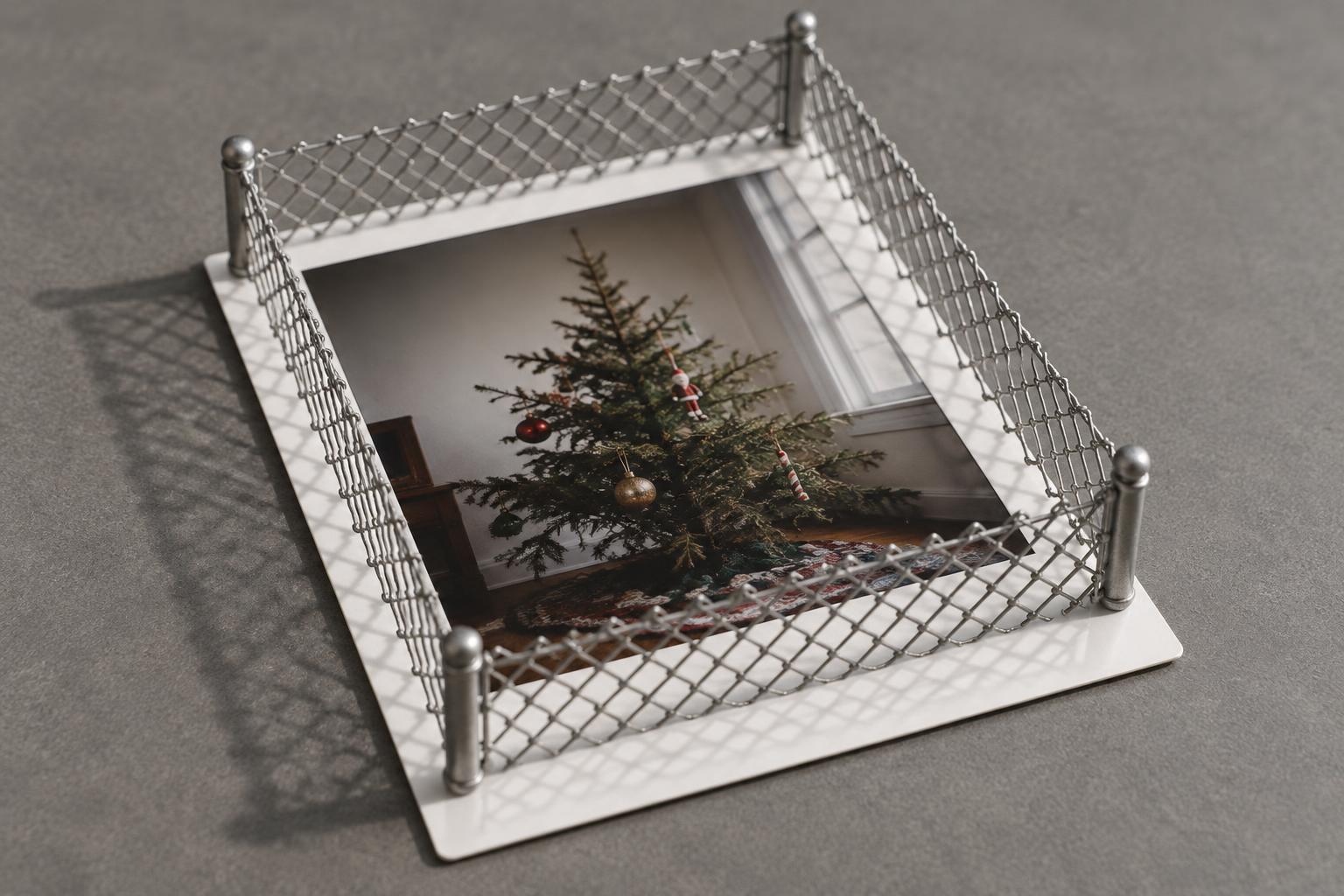
Matthew McConaughey now owns a trademark on a three-second clip of himself standing in front of a Christmas tree. It's one of eight trademark applications of his that were approved, and he's one of the people Cambridge Dictionary pointed to when it made "human" its word of the year.
The Cambridge Dictionary has named ‘human’ as the Word of the Year 2026 in response to a year “defined by global debates on what it means to be human when AI is blurring the boundaries between people and machines”. 👇
View on XNobody thinks the Christmas-tree clip is a masterpiece, and McConaughey doesn't claim it is. He says he wants "a clear perimeter around ownership."
I think he's being more honest than most of the "human premium" talk going around. A "made by a person" label tells you who owns something and who should be paid for it. It doesn't promise the thing is any good, and the first claim is the only one worth defending. The dictionary backs me up without meaning to. It defines human as "having the qualities, faults, and feelings that people have". The faults made it into the entry. The chief editor also said 2026 brought a new appreciation of the human factor "(with a consequent human premium)", in brackets, as though the price tag were a footnote.
So I'll take the dictionary's witnesses one at a time and ask each the same question: are you saying humans make better things, or are you saying this is mine?
McConaughey, as above. He wants to know that when his voice or likeness gets used, "it's because I approved and signed off on it." I know that rule from work. I've drafted a lot of quotes for other people, and a drafted line was never usable until the person approved it, however much it sounded like them. Sounds like him and he said it are different things, and what separates them is permission. Polish has nothing to do with it. Mine. Property 1, Profundity 0.
Scarlett Johansson. The dictionary cites her challenging "an assault on human creativity", which sounds like it's heading toward profundity. But the campaign she backed in January, along with hundreds of writers, musicians and performers, asks AI companies for licensing deals instead of scraping. A licensing deal is an invoice on nicer letterhead. Property 2.
Bill Gates. He has argued for "human reserved jobs", such as caregiving, and for a robot tax to fund retraining for people who lose their jobs to AI. He isn't saying a human carer makes better art. He's saying who keeps the job and who pays for the change. Property 3.
Geoffrey Hinton, the Nobel laureate often called the godfather of AI: "I'm willing to be selfish and choose humans." I love this one. The man best placed to argue that humans are superior chooses not to, and calls siding with his own species selfish. He's picking a team, and it's ours. Property 4.
The dictionary's list ends there, but the news kept adding witnesses. Nearly 300 unionized Reuters journalists in the US have just voted to authorize a strike. One thing they want is a share of the money Reuters makes licensing their stories to AI companies. One of them, Ax, said what they hadn't signed up for was their stories training models that might take their jobs: "That's the part of it that we're seeking to get a piece of." Property 5.
Morgan Freeman, asked about AI imitations of his voice, said he was "a little PO'd" and then made my whole argument in one sentence: "I get paid for doing stuff like that, so if you're gonna do it without me, you're robbing me." He didn't call the fake bad. He called it theft. Property 6.
The pattern ought to break here, because people buying art really do believe they're paying for depth. There's evidence about this, though not the kind they'd hope for. In a 2025 study, 127 students saw unlabelled pairs of pictures, one by AI and one by a person, and preferred the DALL·E 2 images over lesser-known works by famous painters. (They were small images shown online to a small sample, so take it as a hint, not a verdict. Still: a prompt beat the deep cuts of Monet and Cézanne.) Then a 2026 study found that when lay viewers couldn't tell which painting was which, a "human-created" label alone raised their preference.
So the feeling is real. I believe Malorie Blackman when she says she backs the UK's Human Authored scheme because of the connection a reader feels with a person. But that feeling comes from knowing who made the thing. The painting stayed the same and only the label changed, which makes this a fact about origin. The buyers think they're scoring for Profundity, and the point goes to Property anyway. Property 7.
The one witness who really does claim profundity is Pope Leo XIV, who has spoken of the "pressing duty to remain profoundly human." I'll give him the point: Profundity 1. Now try printing that on a book jacket. It's a duty, not a product feature, and nobody can certify that you've done it.
That brings me to the label that already exists.
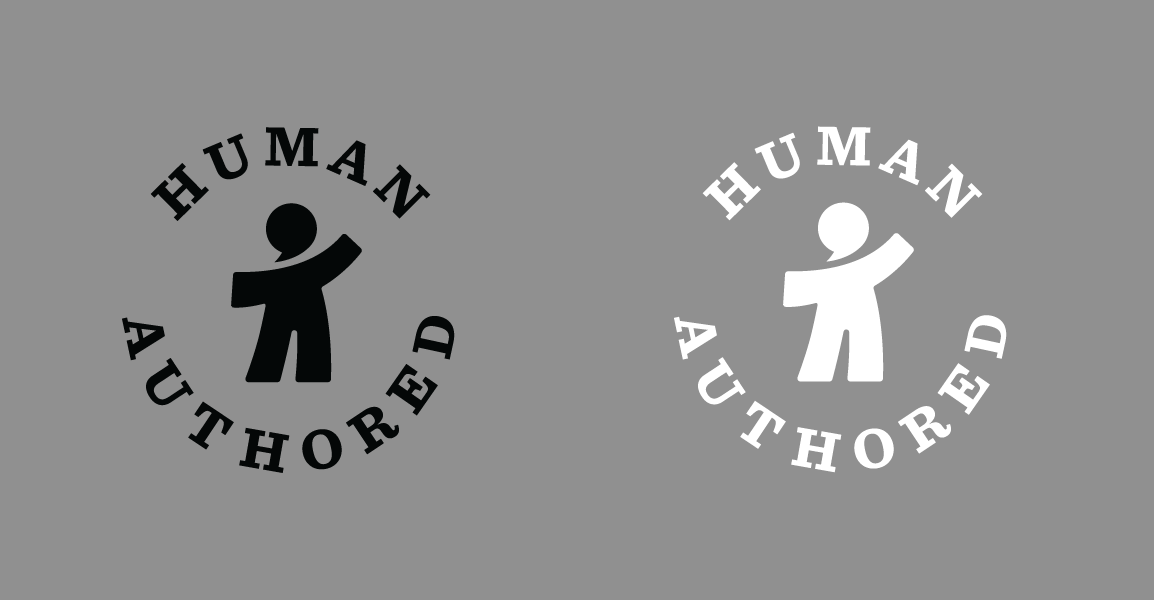
Human Authored is, in the Authors Guild's own words, "a registered certification mark." It's a trademark shaped like a person. The Guild launched it publicly on March 2, and the Society of Authors launched its version nine days later under a headline about livelihoods, with its CEO calling it "an important sticking plaster." The Guild is frank about the obvious problem: "we are not aware of any truly reliable way to test whether a work includes AI-generated material." So the mark doesn't check anything. You sign a warranty, and if you lied, the Guild comes after you under trademark law. The small print is lovely. AI may write your title and your index but may not draw your cover. And if you're not a member, you prove you're a person with an online ID check and pay $10 a title.
It's a contract, and it works. What it protects is your claim to the sentences, though, not the sentences themselves.
None of this is new, and that's the most useful thing about it. The first union label came from San Francisco cigar makers in 1874, and it was openly aimed at Chinese immigrant workers. So the AI boosters who'll call all this protectionism have a point: labels that mark territory can turn ugly. By 1880 the Cigar Makers International Union's label was attacking "filthy tenement-house workmanship," which was a claim about pay dressed up as a claim about quality. I expect to see that trick again as "human-made" starts being sold as cleaner rather than simply as someone's. The garment workers' famous 1975 jingle was at least honest: "our wages going to feed the kids and run the house." Even Fairtrade, the model academics now want to copy for a human-made symbol, started on 15 November 1988 because coffee prices were collapsing. It certified how farmers were paid. It never said the coffee tasted better.
A sticker on its own is fragile, too. Union shops shipped 2.7 billion garments in 1968 and 1.7 billion in 1975, by which time inflation had squeezed shoppers out of paying extra for the label. A premium that relies on buyers' goodwill goes the moment money gets tight.
A right doesn't go anywhere. Tennessee worked this out in 2024 with the ELVIS Act: "Every individual has a property right in the use of that individual's name, photograph, voice, or likeness in any medium in any manner." In October Denmark introduced a bill that would put ordinary people's faces and voices into copyright law. It isn't law yet, and the minister hopes it takes effect in early 2027.
That's the version of "human" I'd defend. I don't mean a promise that we're deep, because we often aren't. I mean a rule that my face, my voice and my work belong to me, and that you pay to use them. Being human was never proof of quality. It's turning out to be a pretty good title deed.
Comments