

Point two of the declaration Trump, Putin and Xi signed in Shenzhen says the three countries "reaffirmed the importance of stable energy flows." A few hours later, Russian missiles damaged three bridges in Kyiv and knocked out heat, power and water in parts of the city. They killed at least three employees of Kyiv's water utility and injured around 15 other people in the capital.
The order of events matters here. Ukraine hit the Crimean Bridge first, on November 17, and Putin promised a response "far more painful" than that strike. He also said he'd discussed a "possible ceasefire in a number of areas" and dropped it after the bridge attack. So nobody should have been surprised by the night that followed. And I don't think it makes the declaration hypocritical. The document did what it was written to do. The energy flows it worries about are the ones the Iran war is choking for the world's fuel buyers, and it doesn't name that war either. Water going into a Kyiv apartment in November was never part of what it covered.
Here's what I think the document is. When the strongest powers sign a "peace" declaration that doesn't name a single war, they've agreed to keep the peace among themselves. That's worth something, and I'd much rather they talk than not. But it isn't a settlement of anyone's war, and you can tell which kind of paper you're holding by what it bothers to make specific.
So read it the way you'd read a lease. Is anything dated? Is anything counted? Who's on the hook for what?
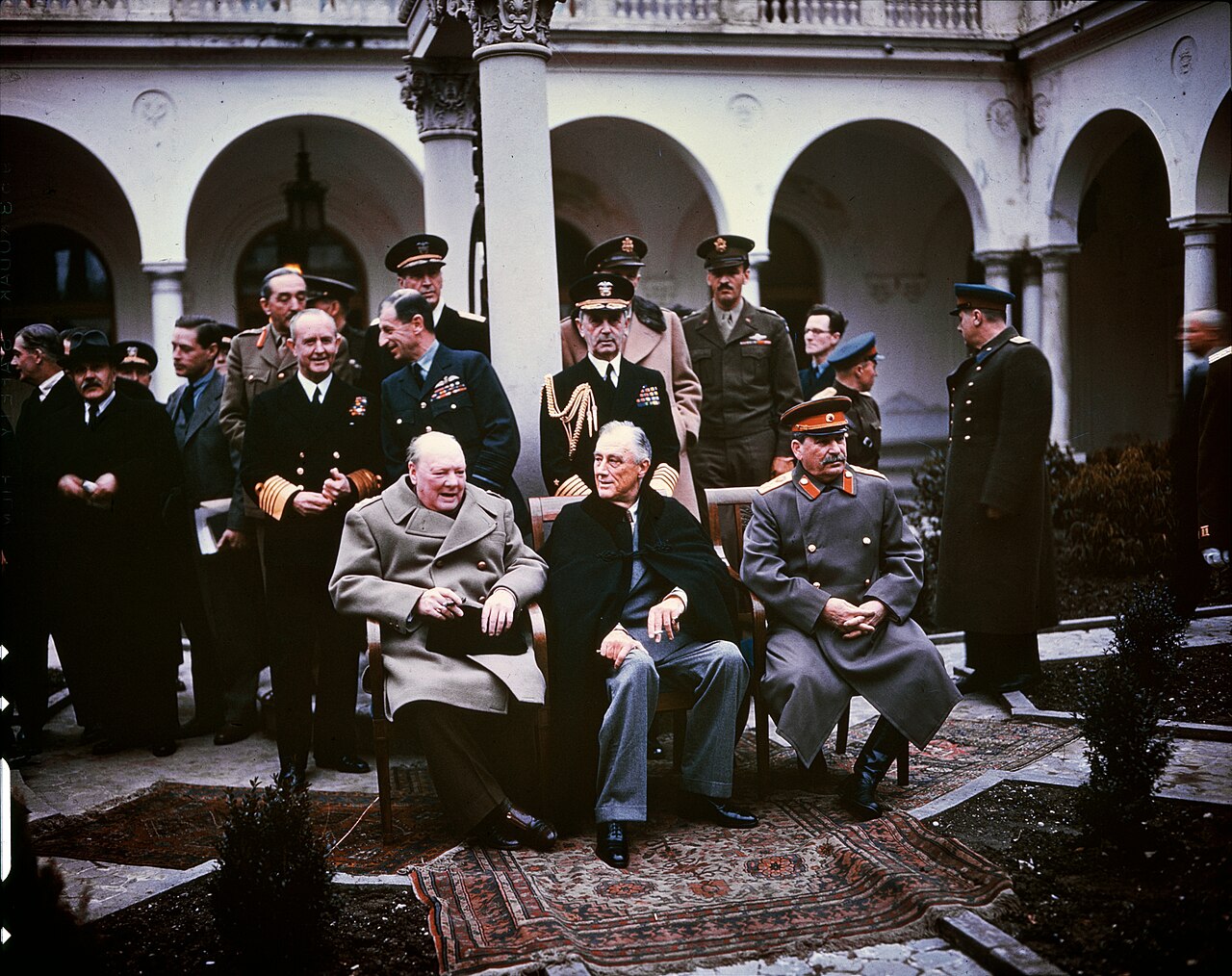
Point one: "As permanent members of the United Nations Security Council," the three commit to reforming the UN so it can "respond more effectively to global challenges." It gives no date and no proposal. Look at the credential they lead with, too. The permanent seats and the veto that comes with them were designed at Yalta, by three leaders, in 1945. Reforming the UN on the strength of your veto is a bit like the landlords drafting the new tenants' charter.
Point two: more refined petroleum "for the benefit of all nations." There are no volumes and no dates. The shortage comes from a war one of the signatories is fighting, and the war isn't mentioned.
Point four is the one people will call the substance: "a nuclear war cannot be won and must never be fought," plus a dialogue on nuclear risks that has no date attached. It's a reaffirmation, and the word is earned. The five nuclear powers signed the same sentence on January 3, 2022. Russia invaded Ukraine 52 days later. Those two facts don't contradict each other, because the 2022 statement was clear about its scope: "war between Nuclear-Weapon States." When Reagan and Gorbachev put the line on paper in Geneva in 1985, they were talking about "preventing any war between them."
Geneva is also the fair comparison, because that summit worked. Its statement named "the principle of 50% reductions," called for an interim agreement on intermediate-range missiles and talked about verification. It even admitted that "Serious differences remain on a number of critical issues." Two years later came the INF Treaty. Shenzhen kept the famous sentence and left out all the follow-up work.
Trump's defense of the friendliness is honest, at least: "it's nice to have people that have 4,000 nuclear weapons as a friend as opposed to an enemy." Fair enough, but that logic only covers countries with nuclear weapons. Ukraine gave its up under the Budapest Memorandum in 1994.
Then there's point three, the only clause that reads like someone cared how it was worded:
The three heads of state recognized that the principle of state consent and respect for immunities of State officials are of paramount importance, and concurred that the International Criminal Court and other similar bodies must not abuse their jurisdiction.
"Paramount" is the strongest word in the whole document. It's attached to the safety of officials, and it names an actual institution. One of the signatories has been under an ICC arrest warrant since March 2023. The warrant says he's allegedly responsible for the unlawful deportation of children from occupied areas of Ukraine to Russia, and Moscow rejects the allegation. So a peace declaration that never mentions Ukraine has, as its one firm clause, the line most useful to the man wanted over Ukrainian children. Afterwards Putin said nobody would be forced to comply with the declaration's decisions. I believe him. The only body it sets out to restrain is a court.
Xi stated the theory behind all this better than I can: "History tells us that when major powers live in harmony, the world is at peace." The young Henry Kissinger made the same case in 1954. Legitimacy, he wrote, means acceptance by all the major powers, and it shouldn't be confused with justice. It's a coherent view. What it means in practice, Putin explained the same day. Europeans should come to Moscow first, "And after that, we will decide in what format we will continue the dialogue with Ukraine."
That arrangement has been tried before. At Yalta, the three leaders drew Poland's eastern frontier themselves and noted that the new Polish government's opinion "should be sought in due course."
Putin defended Yalta this week as having "codified the existing reality." Trump called Shenzhen "bigger than Yalta," and he meant it as a compliment. In Berlin, Friedrich Merz handed each of the more than 40 delegations at his summit a piece of the Berlin Wall, which he said is "what Yalta represented." That's a heavy party favor, but at least it says what it means.
"A Yalta format will not bring peace," German Chancellor Friedrich Merz said at the end of a Coalition of the Willing meeting in Berlin just hours after Trump, Putin and Xi held talks in China.
View on XJared Kushner says Russia has agreed to multilateral talks with Europe at the table. Maybe so. But Moscow "has not committed to a multilateral format," and the man whose idea of a format is that the Europeans come to Moscow first is the one who decides.
Getting Ukraine into the room isn't magic, though, and here my own argument has to give a little. Ukraine signed the Budapest Memorandum. In it, Russia pledged to respect "the existing borders of Ukraine." Beyond a promise to consult, the remedy it named, for the gravest case of aggression involving nuclear weapons, was to seek action from the UN Security Council, where Russia holds a veto. Ukraine had a seat at that table and the promise failed anyway. So having a seat isn't enough. A settlement needs paper the affected people can use, enforced by someone other than the party it's meant to bind.
Helsinki is the better example, warts and all. In 1975, 35 states signed a Final Act that critics said accepted the Soviet Union's borders. But it also wrote in "the right of the individual to know and act upon his rights," and monitoring groups across the Soviet bloc used that line against their own governments. Helsinki handed citizens a text to hold up against their rulers. Shenzhen hands rulers a text to hold up against a court.
Even Kissinger moved on. Sixty years after his first book, he wrote that a world order has to be accepted as just by citizens as well as by leaders if it's going to last. Trump scored the meeting a 12 out of 10. As a review of how three powerful men got on with each other, I'd believe that. The people who have to live with whatever comes next weren't asked to score anything.
Comments