

You get home from a long ride and there's an email that would take ninety seconds to answer. You can read it. You know exactly what to say. You don't say it. You make a sandwich, and an hour later you look at the email again like it owes you money.
Most people call that being too tired to think. I don't think it is, and a new study from the National University of Singapore is on my side. I think the tired version of you is more like a contractor who has quietly doubled his rates. Can he do the job? Sure. He just wants a lot more for it, and if you pay, the work comes out fine. Tiredness changes what things seem worth before it changes what you can do. So it's a decent guide to whether to take on more tonight, and a lousy guide to anything bigger or further off.
The study, led by Stijn Massar with Christopher Asplund, ran two experiments. Each person rode a bike for 50 to 60 minutes on two separate visits. On one visit they rode at a pace that felt "somewhat hard," and on the other at "extremely light." The whole time they did a sustained-attention task, the kind where you watch for something and respond quickly when it shows up. Afterwards came the offers: this much more work, physical or mental, for this much reward. Yes or no?
After the harder ride, people wanted more before they'd say yes. That was true for more pedaling, which you'd expect, and also for more thinking, which you might not. And their attention scores were no worse than after the easy ride.
My favorite detail is in the second experiment. One of each person's choices was drawn at random and actually carried out, so saying no wasn't a survey answer. It was a real refusal of real work. Massar argued years ago that you can't measure motivation by asking about it, because people don't always admit they've lost it, or don't notice. So he watches what they turn down.
When the team modeled the choices, exertion had "lowered the threshold beyond which effort was no longer worthwhile." Heart-rate signals tracked the size of that drop: the more the body showed it had been working, the further the bar fell. That's a correlation, not proof, but it fits.
The body isn't sending a fuel reading. It's sending a quote.
None of this matches how most of us learned to think about being tired. The version I grew up with was a fuel tank, and it came with a famous experiment. Roy Baumeister and his colleagues brought hungry students into a room that "was filled with the delicious aroma of fresh chocolate." Some got to eat the cookies. The rest were told to eat radishes, and the researchers watched through a window, noting that a few of the radish group were "picking up the cookies to sniff at them." Then everyone got puzzles that couldn't be solved, to see who quit first. The theory was that resisting cookies burns up a limited supply of willpower, so there's less left over for puzzles.
It's a lovely story, and it largely failed to replicate. When 23 labs ran a version of it, the effect couldn't be told apart from zero. The Singapore result is the kind of thing a fuel tank can't explain. If the tank were running low, attention scores would drop, and they didn't. The contractor still had all his tools. He'd just printed a new rate card.
And the rate card covers every kind of job. Samuele Marcora and his colleagues gave people either a demanding computer task or some calm documentaries. Then each of them rode a bike until they couldn't keep going. After the mental work they quit sooner: 640 seconds on average, against 754 after the documentaries, with a lot of variation from rider to rider. Their hearts, lungs and muscles responded much the same either way. What changed was how hard the ride felt. Thinking made pedaling more expensive, the same way pedaling made thinking more expensive in Singapore. It's one contractor quoting for both trades.
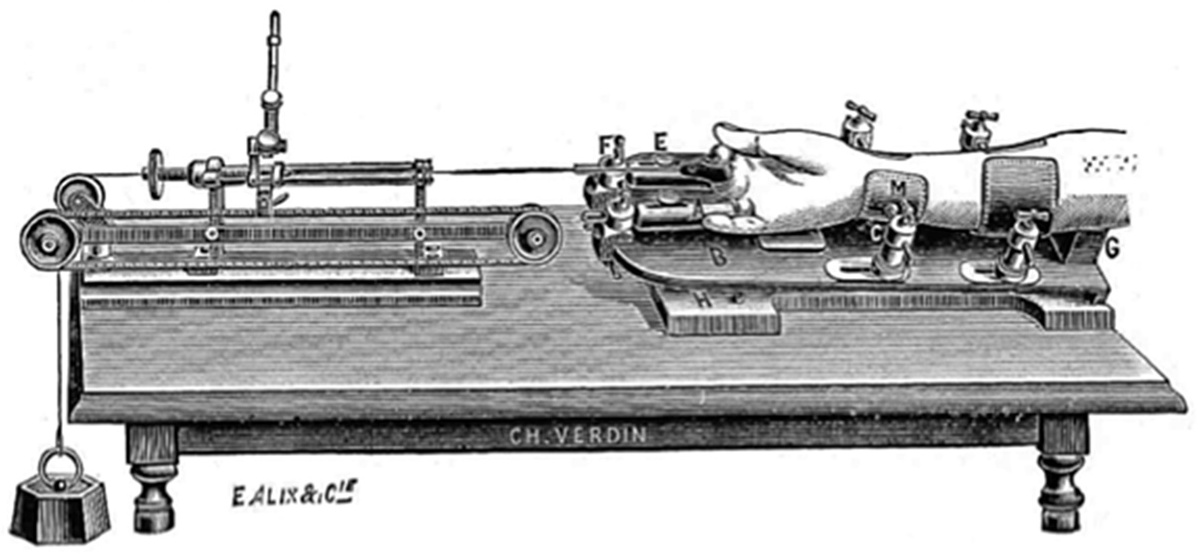
So should you just ignore the quote? I don't think so. The best case for listening to it comes from Angelo Mosso, who measured fatigue with a gadget called an ergograph. It tied your finger to a weight and counted how many times you could lift it before the finger gave out. His subjects included professors, whose fingers gave out sooner after long lectures and oral exams. His view was that tiredness rises faster than the damage it warns you about, so it stops you before you get hurt, and he counted this among the body's most marvellous perfections. That's a very warm thing to say about a feeling while you're tying professors' fingers to weights.
He has a point, though. When the rate goes up after an hour of hard work, that tells you something real about tonight: you've spent a lot, and more will cost more. Tim Noakes later went much further and called these sensations "illusionary," as if the contractor were making up his numbers. I wouldn't go that far. A contractor who charges more on a Friday after a long week isn't lying. He's tired, and he's right about Friday. He goes wrong when you ask him to quote for next year.
People have known this for a long time. Edward Thorndike wrote in 1900 that "we can feel mentally fatigued without being so," and that the feeling tells us to stop "long before our actual ability to work has suffered any important decrease." That's the Singapore finding, 126 years early.
One of Thorndike's students at Columbia, Tsuru Arai (later Tsuruko Haraguchi), tested herself for her dissertation. It was called "Mental fatigue," and it made her the first Japanese woman to earn a PhD. First she spent several months practicing multiplying pairs of four-digit numbers in her head, until she stopped getting any better. Then came the real test. She multiplied pairs of four-digit numbers in her head, twelve hours a day, for four days straight.

She did get slower, and concluded that "difficult and disagreeable continued work brings about a decrease in the efficiency of the function exercised." I don't want to skip past that, because it means work that's hard enough does eventually wear the machine down. The new evidence isn't airtight either. The Singapore samples are small, and in another study men with tired arms felt more fatigued but chose no differently about leg work (they were just slower to decide and less sure of themselves). But when graduate students later repeated her experiment, their performance drop was "measurable but slight," much smaller and less consistent than the extreme weariness they described. Afterwards one of them said she "[w]ould not repeat these 4 days" for $10,000.
That's the contractor quoting for the future. Not tonight's rate but the rate for ever, set at the moment the job felt most expensive. She had done the work, and done it well, and still named a figure that meant never.
An opportunity cost model of subjective effort and task performance, Behavioral and Brain Sciences (Kurzban, Duckworth, Kable, Myers)pmc.ncbi.nlm.nih.gov
In one of the earliest studies of mental effort, Arai (1912) practiced multiplying pairs of four-digit numbers in her head until, after several months, she had reached a plateau in performance. She then completed a 4-day marathon of solving multiplication problems continuously, 12 hours per day, observing that it took her longer to solve problems over each successive day’s session and concluding that “difficult and disagreeable continued work brings about a decrease in the efficiency of the function exercised” (p. 114). Huxtable et al. (1946) replicated Arai’s experiment with three graduate student participants. Performance decrements over the course of each day were measurable but slight in magnitude and not as consistent as participants’ reports of extreme weariness, restlessness, and boredom. In retrospect, one participant commented that she “[w]ould not repeat these 4 days for \$10,000” (p. 52).
I've given that kind of quote myself. In January 2012 I ran a marathon whose last six or seven miles were much harder than I expected. Afterwards I had battered feet, sunburn and very little enthusiasm for moving my legs. A friend took photographs, and I slept through much of the evening. I was glad I'd done it, and my verdict was very clear: I could not imagine wanting to run another one.
As a reading of that evening, it was spot on. Moving my legs was expensive that night, and the sensible thing was to stay on the sofa. As a forecast, it was useless, because it came from the contractor at his priciest. Robert Hockey, who wrote the modern book on fatigue, says it looks like "an unwillingness to continue with an activity that was unrewarding, rather than an inability." He also lived with a condition related to chronic fatigue that made it hard to follow the plot of a film, while he could still run marathons. That's a different illness altogether, and nothing here suggests anyone with it is simply short on motivation. What I'm describing is healthy legs after one hard effort.
For those legs, the rate model has good news that the grind crowd misses. The reluctance isn't weakness, because the body is tracking a real cost. And it doesn't last. A study found that one part of fatigue "subsides after short amounts of time spent resting." The contractor sleeps, comes back, and quotes you his normal rate. So rest is just how you get the old rate back, and there's no reason to feel guilty about it.
The tired me had quoted a rate of never. A year later, the rested me signed up anyway.
In January 2013 I ran the Dubai Marathon, on a route near the Burj Khalifa. After that came ultramarathons, and three full Ironmans. None of them would have happened if I'd taken that evening's quote as final.



Comments