

Steven Rattner was the Wall Street banker running Obama's auto task force. On 27 March 2009, before General Motors' Friday night board call, he got a few minutes alone with Rick Wagoner and told GM's chief executive to step aside. As the awkward conversation went on, Wagoner suddenly asked whether the government was going to fire the head of the autoworkers' union too. Rattner, startled, said: "I'm not in charge of firing Ron Gettelfinger." He knew where his power stopped because he knew where it came from. GM had lost $13 billion of taxpayer money in three months and was asking for more. The government was its only source of fresh money, and if a company needs your cash to make payroll, you get a say in who runs it.
Last Sunday a president dialed into Nvidia's board meeting to get Jensen Huang his job back. Washington wasn't lending Nvidia a cent. I think that should worry us more than the bailout ever did. When the government paid for its say over GM, it took a stake, wrote down its limits and eventually sold out. At Nvidia its say came from the licenses and investigations it controls. That gives it more pull than an owner would have, and it never had to pay, put anything in writing or plan a way out. I've started keeping a small ledger for episodes like this, with three columns: what the government paid, what it wrote down, and how it got out. Nvidia's page is blank.
The Nvidia story took eleven days. Huang resigned on 12 November after reports of affairs. One of them was with Alice Huang, a former executive at Megaspeed, a Singapore cloud company. US officials suspect her of being a Chinese spy. China calls that groundless, and Megaspeed says she left in August 2025. On a Tuesday, Nvidia's chair, Harvey Jones, said Huang had broken the code of conduct and had no future at the company. Six days later he changed his mind.
Incompetent or pragmatic? Nvidia board's rehiring of Jensen Huang splits corporate governance experts | Fortunefortune.com
On Tuesday, Nvidia’s board chair said that Jensen Huang had violated the company’s code of conduct and that the former CEO had no future at the company. On Monday, the chair welcomed Huang back with open arms.
The board's side is a real one, and it deserves a fair hearing. Huang founded Nvidia 33 years ago and ran it with as many as 60 people reporting directly to him. There was no succession plan. The company didn't even have a board chair until Huang quit, so Jones had held the job for less than two weeks when he had to make the call. Colette Kress, the finance chief, became interim CEO and told analysts on the 17 November earnings call, "we've got this." Nvidia then beat expectations, and the stock fell anyway. Six days after "we've got this," Kress was back in the finance office. A board with no plan B doesn't have much room when the market is that clear about wanting one man. Huang may well be the right person to run Nvidia, and I'm not arguing otherwise.
My problem is the Sunday call. Trump told CNBC on Monday morning that he had dialed in to advocate for Huang's return. Then the White House gave Fortune a statement that takes the credit and hands it back in the same breath.
So the president was "totally involved," and it was also "a great decision by the Nvidia board." The stock closed up 31.5% that day, adding nearly $1 trillion. Harvard's Jesse Fried said the board had served its shareholders because "the stock market's reaction was very positive." On his own terms he's right. But the rally answered one question: is Nvidia worth more with Huang in charge?
It didn't ask whether a president should help pick him, and it can't tell you what happens the next time a president wants to.
Plenty is still open. The board's own investigation, run by the law firm Wachtell Lipton and the former prosecutor Joon Kim, now reports to the man it's investigating. Fried expects it to turn "less harsh," and he thinks the full report will probably never be published. The SEC is reportedly looking at Nvidia's accounting. The Justice and Commerce departments have a criminal investigation into Megaspeed. Huang testifies to the House behind closed doors on 1 December. And on the same Sunday as the board call, Treasury Secretary Scott Bessent said of Nvidia's chip sales to China, "We will see which level of the business knew about this." That weekend, Bessent's boss was helping put the top level of that business back in charge, and he said the government saw no national security risk in Huang's return. So one administration was investigating Nvidia and vouching for its CEO on the same day.
Then there's the money. Nvidia can only sell its advanced chips to China if Washington grants an export license. Trump has turned that license into a toll. From August 2025, the government was to get 15% of the money from sales of one chip, the H20, in exchange for allowing them. In December 2025 Trump announced it would get 25% of future sales of a more powerful chip, the H200. So the president who argued for Huang on Sunday also decides whether Nvidia can sell in China and how big a share of those sales the government gets. In May I wrote that power over AI now sits in that permission layer of licenses and approvals. I didn't expect it to reach the CEO's chair. No shareholder has leverage like this, and this leverage moves with one man's mood. At a White House AI summit in July 2025, Trump described his first reaction to Nvidia.
He had wanted to break it up.
Remarks on Signing Executive Orders at the Artificial Intelligence Summit, The American Presidency Project (UCSB)presidency.ucsb.edu
I said, "Look, we'll break this guy up." This is before I learned the facts of life. I said, "We'll break him up." They said, "No, sir, he's very hard."
The "facts of life," it turns out, were mostly Jensen. It was the same president and the same company, and no law changed between the breakup talk and the board call. Only his opinion of the man changed. At the same summit he said he didn't like the word artificial, "because it's not artificial. It's genius." "Protect our geniuses" is that sentence turned into policy: talent the country needs becomes a reason for the state to step in.
Now look at the GM ledger. When Obama announced the auto rescue on 30 March 2009, he didn't say his task force had removed Wagoner. He said, "GM is announcing today that Rick Wagoner is stepping aside," and in the same speech, "We have no intention of running GM."
The government that was about to own GM put the firing in the company's mouth. The government that owns nothing of Nvidia brags that it was "totally involved." And GM's board needed Washington's money to survive, yet it still didn't take the news quietly.
The Auto Bailout: How We Did It (originally in Fortune), Steven Rattner / Fortunestevenrattner.com
When I spoke with the GM board by conference call that Friday night, the reaction was violent, including veiled suggestions of mass resignations. The directors felt that one of their most important responsibilities — hiring and firing of the CEO — had been usurped by the government without any warning or consultation.
Then came the receipts. GM went through bankruptcy, and Treasury put in more than $50 billion of bailout money.
The Role of TARP Assistance in the Restructuring of General Motors (CRS R41978), Congressional Research Servicecongress.gov
In exchange for this financial support, the U.S. Treasury received 60.8% of the new company
Treasury picked the new company's first board. It also said in writing that as a shareholder it would vote only on "core governance issues," meaning things like electing the board and big deals. It had sold its last shares by December 2013, and taxpayers came out $10.5 billion short. It paid a lot, it put its limits on paper, and it had a way out with a date on it. You can hate the bailout and still see that every bit of control came with a price and a way out. Wagoner was actually pushed out before Treasury owned any shares, when it was only the lender. But the lending was the whole justification. Rattner wrote that he was stunned anyone thought "the government, GM's only source of fresh capital," had no business asking.
Nvidia isn't the first case. In August 2025 Trump posted that Intel's CEO, Lip-Bu Tan, was "highly CONFLICTED and must resign, immediately," because of his reported ties to China. Four days later, after a meeting, Tan's rise was "an amazing story." Eleven days after that, the government took 9.9% of Intel for $8.9 billion.
Intel will give the U.S. government a 10% stake, Trump says, NPRnpr.org
"He walked in wanting to keep his job, and he ended up giving us $10 billion for the United States," Trump said.
On the ledger, Washington did pay this time. But the deal gave it no board seat and, in Intel's statement, no "governance or information rights." The influence was never in the stake. The CEO's job was the thing being bargained over. And watch how the China worry moved. In 2025 a CEO with alleged ties to China had to go immediately. In 2026 a CEO who'd had an affair with a suspected Chinese spy had to come back. The worry follows whatever the president thinks of the man, which is what discretion looks like when there's no rule behind it.
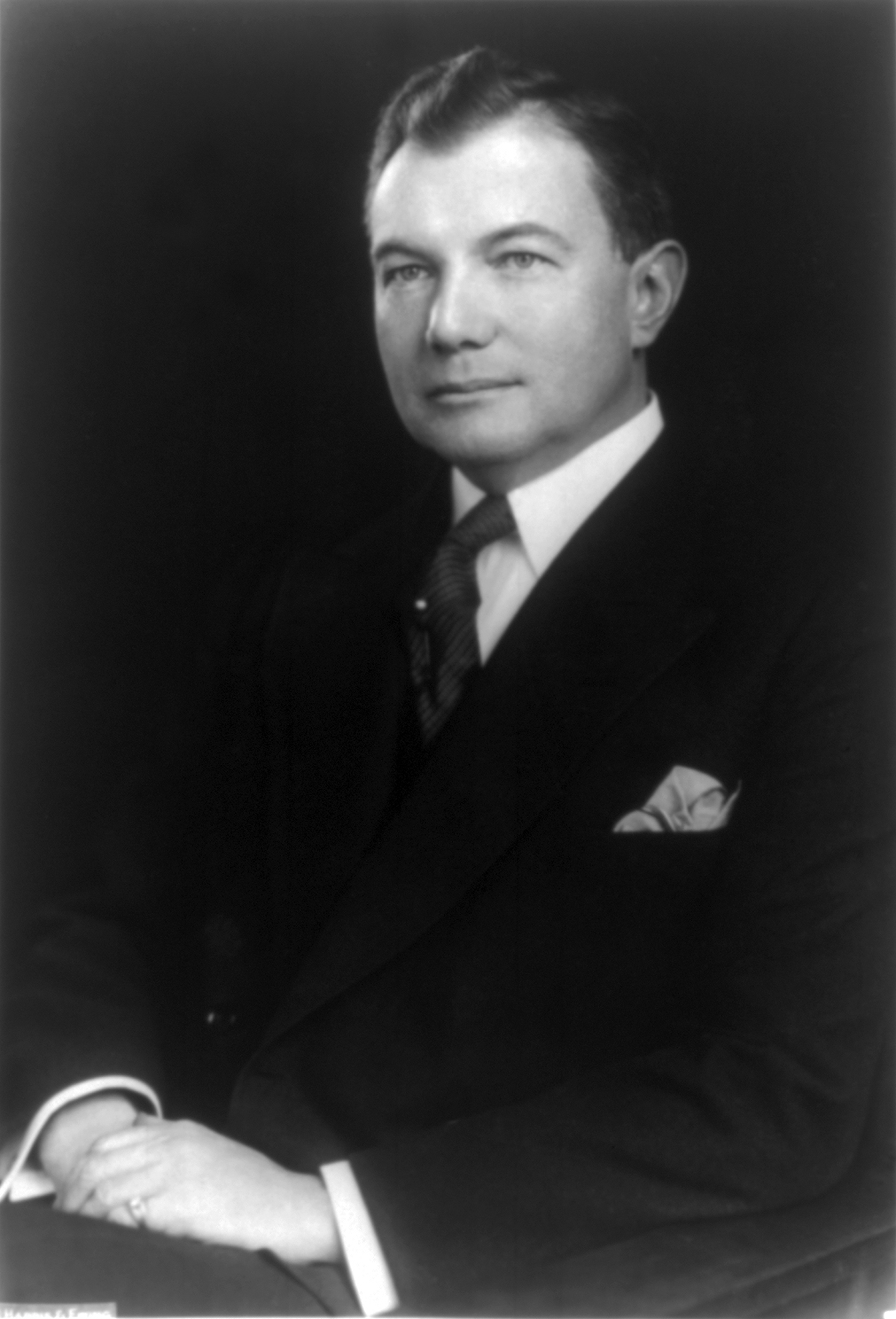
The best reply to all this is that it worked: Nvidia has its CEO back, and shareholders have their trillion. The answer to that reply was written in 1952. Harry Truman seized the country's steel mills by executive order, and the Supreme Court struck the order down 6–3. Justice Robert Jackson's concurrence reads as if he'd been sent a copy of the White House statement. He wrote that a president has no power, without support of law, to seize persons or property "because they are important or even essential." He also saw the gap that matters now.
Youngstown Sheet & Tube Co. v. Sawyer, 343 U.S. 579 (1952), Jackson concurrence, U.S. Supreme Court (via Wikisource)en.wikisource.org
Party loyalties and interests, sometimes more binding than law, extend his effective control into branches of government other than his own and he often may win, as a political leader, what he cannot command under the Constitution.
Truman's seizure was an order on paper, so a court could read it and strike it down. A president who "advocates" on a call while the board does the voting leaves a court nothing to strike. Jackson's other worry fits too: "No one, perhaps not even the President, knows the limits of the power he may seek to exert." So does his remark that emergency powers "would tend to kindle emergencies." If a sell-off justifies a presidential phone call, every future sell-off becomes a reason to make one.
Trump's defenders say presidents have always leaned on boardrooms, and they point to John F. Kennedy and U.S. Steel in 1962. They have a point: Kennedy used discretionary power against a company. But look at how he did it. At his press conference on 11 April 1962 he said that the Justice Department and the Federal Trade Commission "are examining the significance of this action in a free, competitive economy," and that the Pentagon was reviewing its buying. The fight was about a price increase, he named his levers on camera, and he gave reasons anyone could argue with. Nobody has named the levers in the Nvidia case. Everyone just knows they're there.
And they won't leave office with the man who used them. The opposition's answer so far has been to promise to use them too.
The Trump Administration’s rush to reinstate Jensen Huang underscores the need for Congress to act. Trump is putting his own financial interests and the needs of his billionaire buddies before our national security, emphasizing that he’s learned nothing from his resounding election defeat. Democrats will wield their full power to investigate any wrongdoing by the Trump Administration, Jensen Huang, other NVIDIA executives, and anyone selling out our national security for financial gain. We'll also work on a bipartisan basis to continue advancing policies that stop the flow of our most powerful technology to the Chinese military and other adversaries.
View on XSo the next board that gets a call like this will have no stake to point to, no written limits to read and no exit date to wait for. It will have a company whose licenses, investigations and China sales all run through the person on the line, and a market that will cheer if that person happens to pick well. Rattner could say exactly where his power stopped. Nobody can say where Sunday's stopped, and the next president will have the same levers.


Comments